
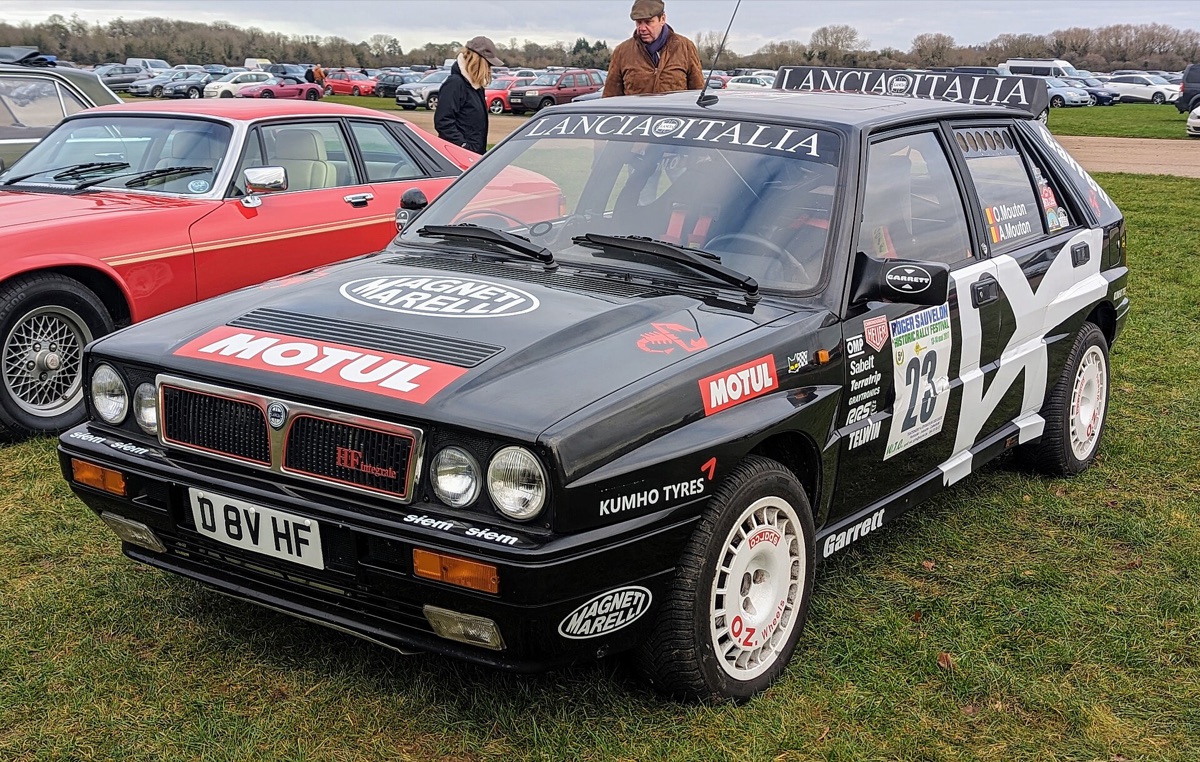
Which rally car deserves the highest place: the Lancia Delta family that collected an extraordinary run of manufacturers’ titles, or the Audi Quattro that changed expectations of four-wheel drive? This ranking makes an editorial choice and invites a different answer. Our number one is the Delta, but the Quattro, Peugeot 205 T16 and Lancia Stratos all have strong cases when the criteria change.
We compare ten competition car families associated with the World Rally Championship, from the 1970s through the 2000s. Our first criterion is their contribution to rallying’s history: results, duration of success and the way a car changed expectations. Next come engineering distinction and the character of its competitive story. Last comes how clearly the car represents its era to a reader today. We reviewed championship and manufacturer sources on November 19, 2026. This is a selective historical ranking, not a measured speed test or a claim that cars from different rulebooks could be directly compared on one stage.
The Delta comes first for sustained achievement across successive Group A versions. The Quattro is second because its competition success helped make four-wheel drive central to the sport. Some readers will reasonably reverse them: a technical turning point can matter more than a longer title streak. The 205 T16, third, demonstrates another route to greatness through a purpose-built Group B design and championship success. The Stratos, fourth, offers a compelling argument for a car conceived around rallying itself.
Rules and seasons matter. Group B and Group A imposed different conditions, and the World Rally Car regulations that followed also shaped how teams built and developed their machines. A championship crown belongs to a manufacturer or driver under the season’s rules, not to every example of a model in every year. A car family often evolved through several specifications. We distinguish a family’s story from the exact version shown in a photograph, and do not assume that a modern display car is an untouched original or the precise car that won a particular event.
Drivers, co-drivers, engineers, service crews and organizers all influenced the results. A vehicle’s record cannot be separated neatly from the people who prepared and drove it, the routes on the calendar or the reliability of its rivals. Likewise, one famous livery does not prove a car’s competition history. Historic photographs and surviving cars can be restored, rebuilt or displayed in tribute colors; each image here identifies the visible model or event without claiming a specific chassis identity unless its source establishes it.
Our shortlist is limited to ten. The Alpine A110, Ford Escort and Citroën C4, among others, offer credible alternatives; a list weighted toward early innovation, individual drivers or later domination might include them instead. Subaru’s Impreza and Mitsubishi’s Lancer Evolution also make a particularly close comparison: both contributed to a memorable rivalry, but the positions reflect our overall criteria rather than a claim about which road car a reader should buy.
Rallying has also changed its approach to safety. Group B’s spectacular cars belonged to a period that ended after fatal accidents in 1986; celebrating engineering should not erase that history or invite unsafe driving on public roads. The competition machines discussed here were built for regulated events and are different from road-going versions with similar names. For another perspective on performance-car history, see our Japanese performance cars ranking. Which car would you place first, and which omission most deserves a spot?
Photo: Calreyn88 · CC BY 4.0; resized and recompressed. Lancia Delta Integrale; a later photograph. Image does not establish exact competition provenance.
