
Pixar movies often begin with a question that sounds simple enough for a child: what if toys had lives of their own, monsters needed children’s screams, or emotions ran a control room inside a girl’s mind? Their appeal comes from the way these ideas become stories about friendship, growing up, family and loss. For a viewer choosing a movie night, the studio’s long catalogue can also make the first decision surprisingly difficult. This guide ranks ten Pixar feature films and explains what kind of experience each offers.
Our number one is Toy Story, followed by Ratatouille and WALL-E. The order is an editorial judgment based on storytelling, character, visual imagination and how well a film rewards another viewing. We also consider the way a film communicates its ideas to different ages, but this is not a guarantee that every title is suitable for every child. It is not a list of box-office totals or a claim that one film has objectively better animation. A family looking for a fast adventure might choose The Incredibles; a viewer seeking a story about memory and music might place Coco first.
The selection is limited to Pixar feature films released by 17 November 2026. It includes original stories and a sequel, Toy Story 3, because a sequel can be judged on the same storytelling criteria as its predecessor. Short films, television series and films produced by other animation studios are outside the scope. The film descriptions and release years are checked against Pixar’s own catalogue. Awards can provide useful context, but winning an award does not determine our ranking, and popularity does not make a personal favorite less valid.
Toy Story earns the top position because its rivalry between Woody and Buzz turns an imaginative premise into a clear, funny story about friendship and insecurity. Pixar identifies the 1995 film as its first feature and a landmark in computer animation. Its technical place in history matters, but our choice also depends on the characters: the relationship remains understandable even to a viewer who knows nothing about how the film was made. Someone who values a more recent visual style or a different emotional theme can reasonably choose another winner.
Ratatouille places a rat who loves cooking in a Parisian kitchen, using food and ambition to explore creativity and belonging. WALL-E takes a quieter route, following a small robot through a largely visual story that begins on Earth and expands into space. Those films rank just below Toy Story because of their distinctive storytelling and memorable central characters. Inside Out, Coco and Finding Nemo present equally strong alternatives for viewers who prefer emotional clarity, music and family history, or an ocean adventure.
Different ages can respond to the same scene in different ways. Up deals with grief; Coco involves death and family memory; Toy Story 3 contains moments of danger; and some children may find the monsters or action in other entries intense. These brief descriptions are not a substitute for local age classifications or a parent’s knowledge of a child. Check the rating, content information, language options and availability in your region before making plans. Streaming catalogues and rental terms change, and a movie advertised as family entertainment will not be equally comfortable for every family.
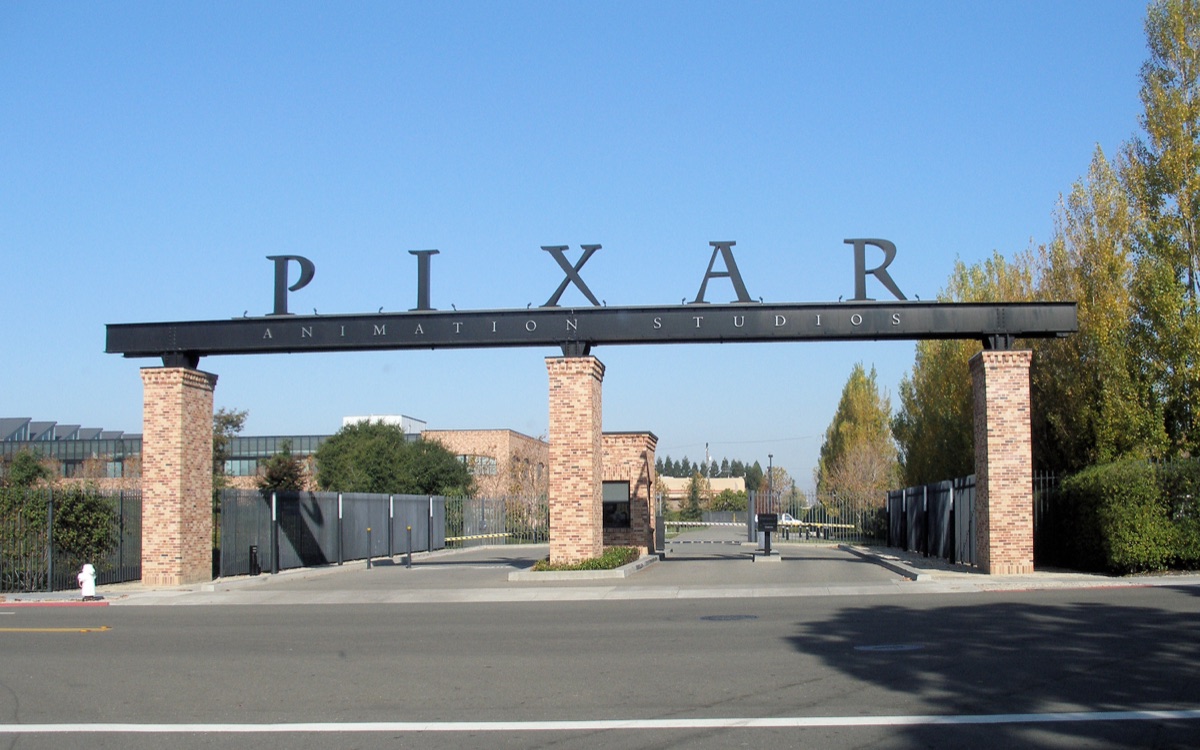
We have kept plot descriptions brief to preserve surprises. The same contextual photograph of Pixar’s Emeryville studio entrance appears throughout; it is not a still from any of the films. Sources are the studio’s film pages and the Academy’s awards records, consulted on 17 November 2026. Our related film museum guide offers another way to explore cinema beyond the screen. Which Pixar film would you put at number one, and would you choose it for its story, its characters or the memory of watching it?
Photo: Coolcaesar; Commons edit by Maximilian Schönherr; resized and recompressed. Wikimedia Commons · CC BY-SA 3.0. Pixar’s Emeryville studio entrance in a 2007 contextual photograph, not a film still.
