
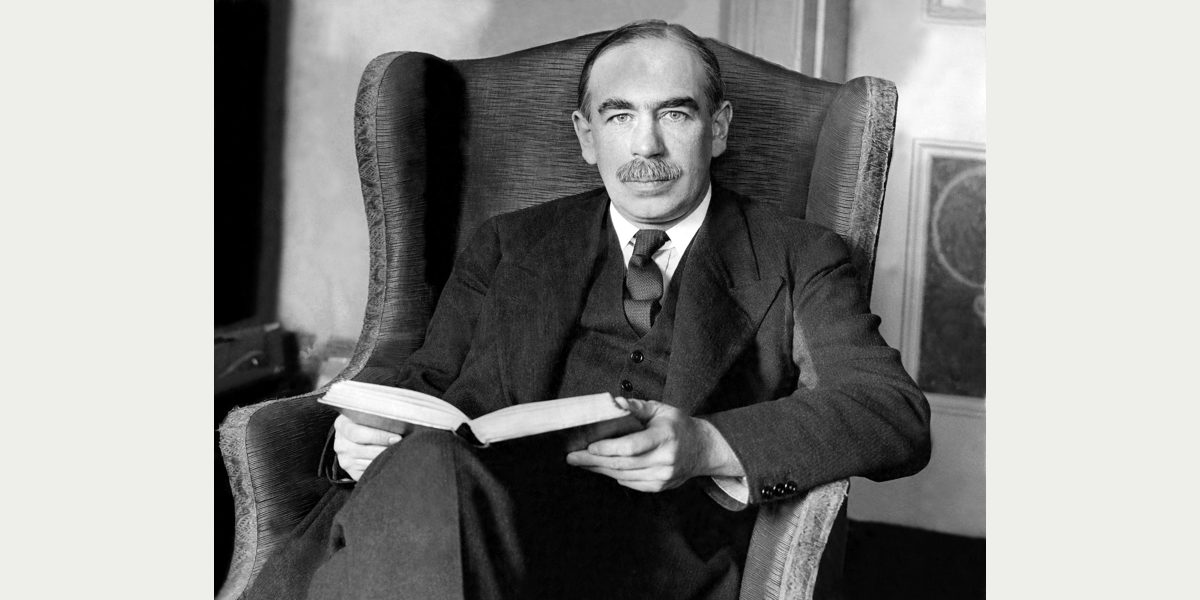
Who belongs at the top of a ranking of economic thinkers: Adam Smith, John Maynard Keynes, or someone who changed the questions altogether? Our choice is Keynes, with Smith a close second. That is an editorial judgment about useful intellectual influence, not a claim that one person solved economics. The ten entries offer contrasting ways to think about production, trade, market power, employment and human welfare. Read them as a conversation between approaches rather than a collection of instructions for managing your money or voting for a particular policy.
This list uses three qualitative criteria: how durable an explanatory lens is, how widely it opens questions across economic life, and how useful it remains for structuring disagreement. We give particular weight to arguments about an economy as a whole, which explains the final ordering. We have not calculated citation totals, surveyed economists, or measured policy success. The reference date is 27 October 2026. The selection spans different traditions but is not a complete world history of economic thought; its European and North American institutional emphasis is a material limitation. Important missing voices could change the conversation substantially.
There is a timely reason to revisit the subject. The University of Glasgow is marking 250 years since the publication of Smith’s Wealth of Nations in 1776. An anniversary makes a useful invitation to read, but age alone cannot decide a ranking. A foundational book and a later challenge to its intellectual descendants are doing different jobs. Smith earns his strongest case through the breadth of questions about production and exchange. Keynes takes our first place because we prioritize the relationship between spending and employment when comparing frameworks for whole economies. Neither description captures the entirety of either author’s work.
The middle of the countdown makes the criteria more visible. Ricardo offers a disciplined comparison of relative advantages. Robinson directs attention to competition that falls short of an ideal model. Schumpeter asks readers to think about economic change through innovation. Hayek and Friedman provide different reasons to investigate coordination and money. These are distinct analytical starting points, not interchangeable slogans about whether markets are good or bad. When reading any entry, ask which problem the thinker addresses and what assumptions would need checking before applying that idea to an actual place or period.
Ostrom and Sen also challenge what a ranking should reward. If you care most about how people govern shared resources, Ostrom could move much higher. If the central question is how to evaluate poverty and welfare, Sen has a strong competing claim. Marx belongs near the top here because a critique centered on capital and wage labor creates a very different set of questions from a theory centered on voluntary exchange. His placement recognizes the importance we assign to that challenge, not an endorsement of every conclusion or of governments that later claimed his name. Intellectual reach and correctness must be considered separately.
For a productive comparison, choose one imagined problem, such as a town losing jobs, and ask what each approach would examine first. Spending, skills, incentives, ownership and local rules could lead to different investigations. This exercise does not determine the right remedy; it reveals the evidence you would need. Our financial-terms guide can clarify basic vocabulary, while our US-economic-indicators article helps distinguish a theory from a statistical measure. Follow the linked original writings, publishers and institutional accounts for further context. Which criterion would you change first, and would that put Smith, Marx, Ostrom or someone else above Keynes?
Sources: University of Glasgow · Keynes, General Theory, chapter 3.
Image: John Maynard Keynes seated with a book; photograph dated 1929 — Unknown photographer · Public domain. Scaled down and placed on a neutral canvas to preserve the full portrait; recompressed as JPEG, without additional cropping or upscaling. Original license or public-domain status retained; no endorsement implied.

