
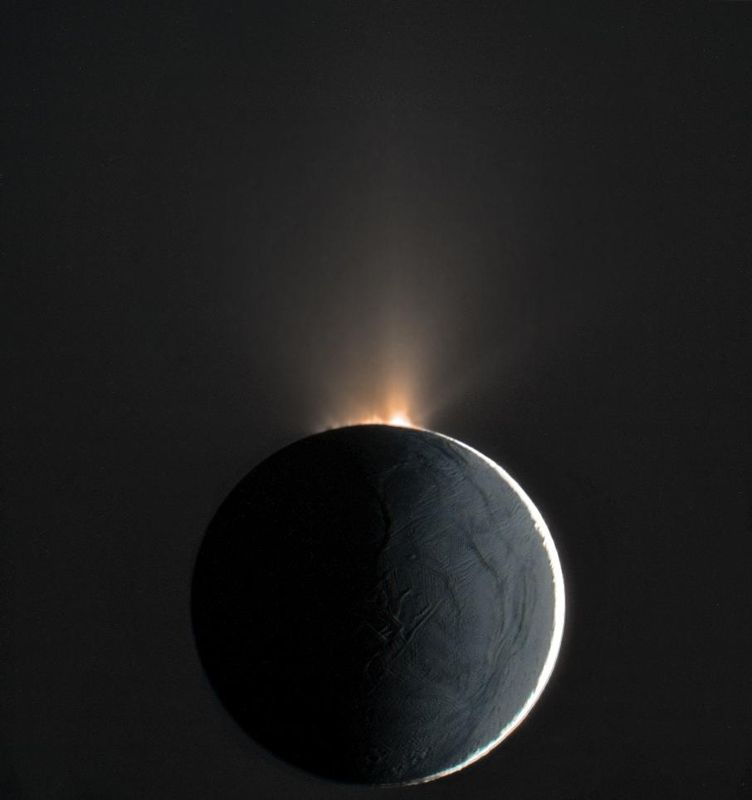
Cassini observed Enceladus’s south-polar plumes beginning in 2005. Later measurements of the moon’s small wobble supported a global liquid-water ocean beneath the ice, reported in 2015. This belongs in the list because a small icy moon became a major target for studying potentially habitable environments. Water and organic chemistry motivate research, but do not establish that life exists. The ocean is inferred from converging measurements, not photographed through the crust.
Source: Enceladus hides a global ocean.
Image credit: john.purvis · CC BY 2.0. Resized and JPEG compressed.
.jpg)