
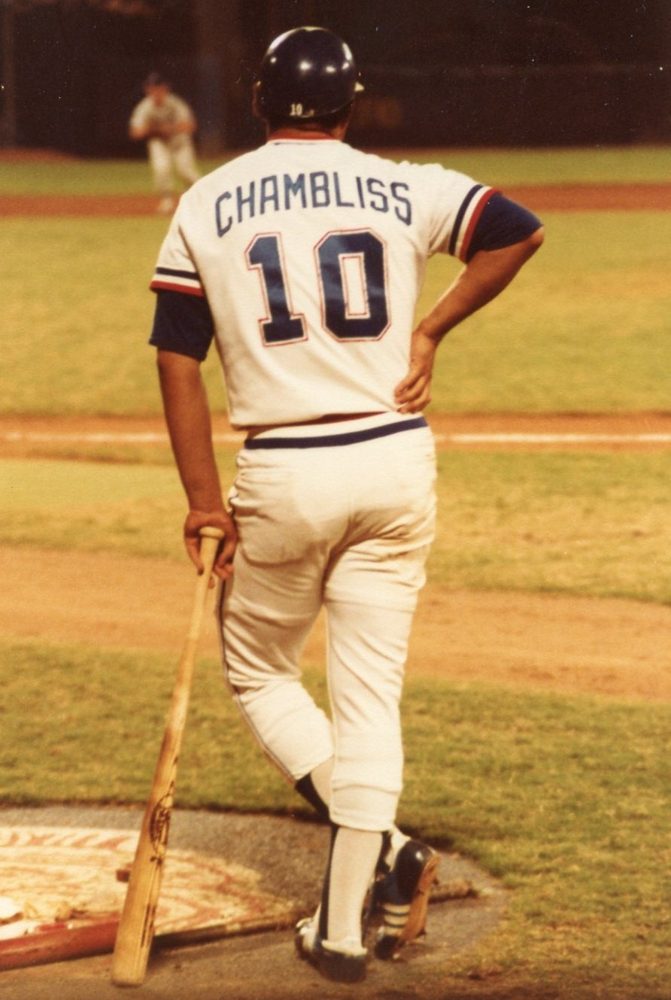
Chris Chambliss takes third for a home run that provides an unusually clean answer to the question of immediate consequence. In the deciding fifth game of the 1976 ALCS, his ninth-inning shot off Mark Littell sent the Yankees past Kansas City and into the World Series. The series format matters. A Game 5 in a best-of-five contest is not a preliminary stage simply because a modern viewer associates decisive championship-series games with Game 7. It was the final available game. The pennant was directly at stake, giving this swing a stronger immediate series conclusion than a home run that merely forces another night.
That makes Chambliss an essential control in this debate. Without him, a comparison between Boone and Ortiz could collapse into a discussion of the most repeatedly revisited Boston–New York rivalry images. His case asks us to apply the same standard outside that particular pairing. A walk-off in the deciding game has a specific competitive meaning regardless of how often later broadcasts replay it. Choosing third does not deny that meaning. It recognizes that all three selections have strong cases and that this list also weighs the wider narrative a moment carries for readers encountering the history now.
Finality beyond the rivalry
The official historical footage is also useful for separating the result from the imagery surrounding it. The crowd's response makes the event look chaotic, but the ranking does not award extra sporting value for people entering the field. The achievement is the pennant-winning hit, not the loss of separation between spectators and players. That distinction matters when revisiting archival sport: a memorable scene can draw attention without becoming something the article endorses or asks modern supporters to imitate. Watch the baseball action first and treat the surrounding celebration as historical context rather than an additional scoring category.
There is a strong argument for moving this entry higher. If a home run's greatness should be determined primarily by what it clinches at the time, Chambliss and Boone both outrank Ortiz. The decisive format also eliminates the need to speculate about a future game. Nothing later in that ALCS could undo the winner. A reader who prefers that narrow definition can coherently put Chambliss first without disputing our facts. The difference would be the chosen weighting of finality against the rivalry setting and the subsequent significance emphasized by the other two entries.
The argument for a higher place
Our reason for leaving him third is comparative rather than dismissive. Boone combines the same direct pennant-winning effect with the particular tension of an extra-inning Game 7 against Boston. Ortiz combines immediate survival with an exceptional later series reversal. Chambliss offers a beautifully complete finish, but under our three-part method the others provide stronger additional dimensions. This is an editorial tradeoff, not a claim that one hitter overcame a quantifiably greater amount of pressure. No invented psychological measurement is needed to explain why different viewers might order these endings differently.
The most useful way to revisit this swing is to ask what the format allowed before the pitch and what remained after it. Before, the championship series was unresolved; after, New York had won the pennant. That is an extremely high bar for a third-place selection and establishes the strength of the shortlist. Keep the distinction between ALCS success and World Series success intact: advancing is one achievement, winning the next round is another. Chambliss belongs here because this home run decisively accomplished the former. Its position is open to debate, while that fundamental consequence is not.
Photo: Chris Chambliss.jpg · jimmyack205 · CC BY 2.0. Archive image, not the ranked game; resized and recompressed. Original image license retained.
