
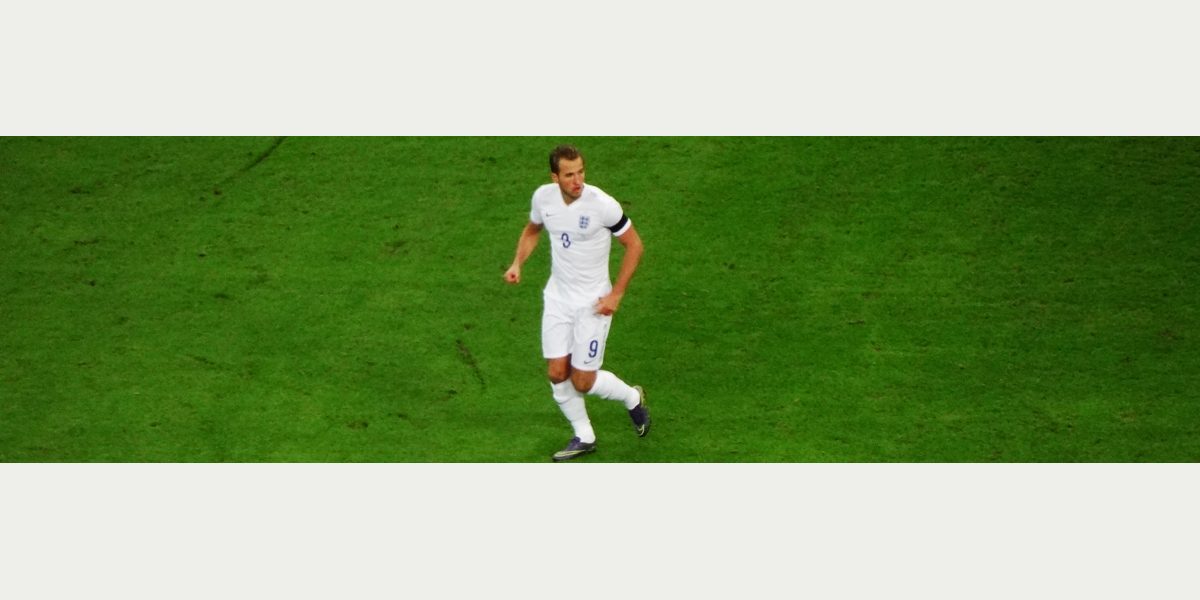
Harry Kane’s 2026 Ballon d’Or invites a bigger Bayern Munich question: where does a brilliant present belong beside a completed club legacy? Our Top 3 puts Kane third, Robert Lewandowski second and Gerd Müller first. This is an editorial ranking of Bayern’s central-striker legacies, not a repetition of the award vote or a league table of current ability. Müller wins because we give the greatest weight to sustained club contribution and European achievement. Readers who value the strongest modern peak more heavily have a credible reason to choose differently.
The immediate news is confirmed by UEFA: Kane won the men’s Ballon d’Or on 26 October 2026. Google Trends provided the reason to revisit the subject, not proof of the award itself. When inspected on 27 October, the United States Trending Now table for the past 24 hours, all categories, sorted by search volume, showed the “harry kane” group at 1M+ searches and 1,000% growth. Those are rounded trend-group figures for that window, not monthly keyword demand, individual-player votes or a measure of sporting quality. The group included Ballon d’Or winner and ranking queries, which make a comparison with Bayern predecessors a natural next question.
Our criteria are the depth of a player’s Bayern scoring record, the duration of his contribution and the importance of his work within the club’s European story. We use those criteria qualitatively; there is no invented points system. Only performances for Bayern determine the order. International honors help explain the current conversation but do not add imaginary club goals. For Kane, the performance comparison closes with the completed 2025/26 season; the ongoing 2026/27 campaign is not projected forward. The reference date for the article and the award context is 27 October 2026.
Keeping statistical scopes separate matters. Kane’s 61 goals in 51 Bayern appearances during 2025/26 cover all club competitions, while his 36 league goals describe just the Bundesliga part of that season. Neither number should be compared directly with a league-only record and called the same achievement. Lewandowski’s 344 goals in 375 competitive Bayern matches describe his club career, not one year. Müller’s club Hall of Fame records 566 goals in 607 competitive appearances. These figures answer different questions, so the ranking does not pretend they form one perfectly controlled experiment.
The European dimension also requires care. Bayern’s three consecutive European Cup wins from 1974 through 1976 belong to a team achievement in which Müller participated. Lewandowski’s Bayern honors include the Champions League. A trophy is not a solo performance score, and counting medals cannot capture every tactical contribution or difference between eras. We still place European achievement near the center because this is a club-legacy comparison. To broaden the context, our European Cup clubs ranking explains another way to compare institutions, while our football-players ranking shows how changing the scope changes the discussion.
This shortlist deliberately compares three center-forward reference points; it is not an exhaustive ranking of every Bayern attacker or a list of the club’s three highest career scorers. Players with broader attacking roles and other celebrated number nines deserve their own cases. Kane’s short Bayern history is a reason for caution, not a forecast of what he will or will not accomplish. Lewandowski challenges Müller through a remarkable modern scoring standard; Müller stays first through the combination we prioritize. Read the linked club and league records, then decide which criterion matters most. Should one extraordinary peak outweigh a longer legacy, and has Kane already done enough to change your order?
Sources: UEFA · FC Bayern · Bundesliga · Google Trends.
Image: Harry Kane playing for England against France at Wembley, 17 November 2015; archival match photograph — Ben Sutherland from Crystal Palace, London, UK · CC BY 2.0. Scaled down and placed on a neutral canvas; optimized JPEG. No additional cropping or upscaling. Source crops retained. No endorsement implied.
