
Who is the greatest football manager: Alex Ferguson, Pep Guardiola or Carlo Ancelotti? The answer changes with the question. A coach can win the biggest European competition repeatedly without founding a tactical school. Another can transform how teams create space yet spend fewer seasons collecting titles. This ranking puts Ferguson first because rebuilding successful club teams over a long period receives the greatest emphasis. Guardiola has the strongest competing case through the combination of repeatable attacking ideas and sustained winning. Ancelotti leads the argument when the European Cup itself becomes the decisive test.
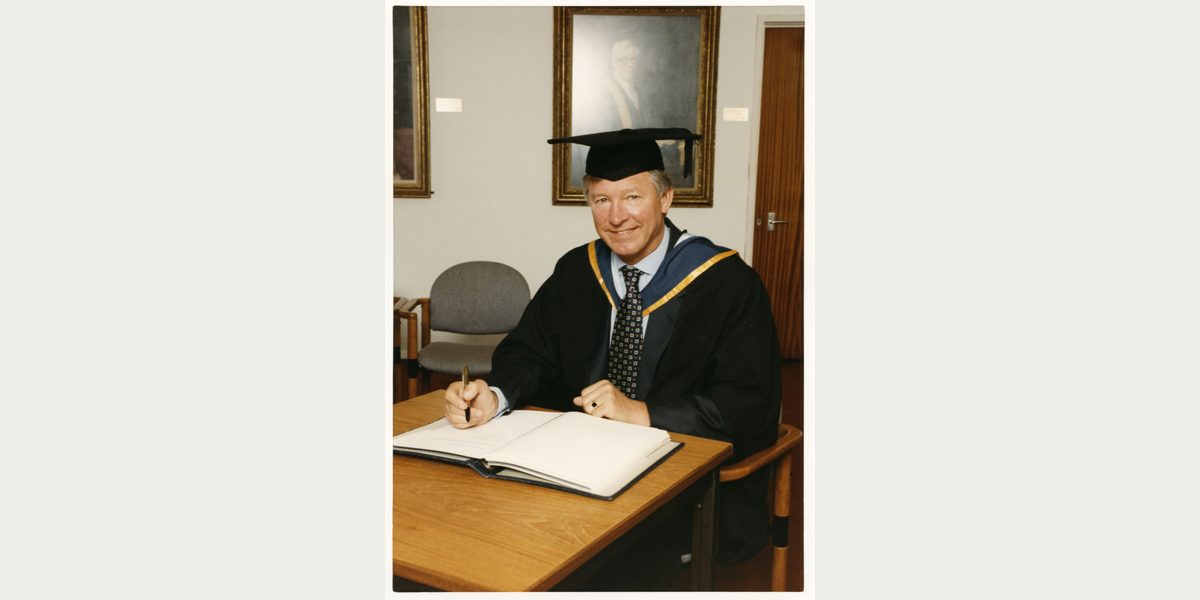
Our scope is men's European club coaching from the inaugural European Cup era in 1955 through 27 October 2026. European describes the clubs, not the nationality of their managers. International careers and achievements as players do not contribute to these positions. Thus Michels's work with Ajax matters here, while his Netherlands results do not. Cruyff's reputation as a footballer cannot substitute for his coaching record. Historical photographs sometimes show a different stage of a person's career; their captions identify that context rather than suggesting every picture documents a ranked achievement.
We compare three connected qualities: sustained competitive success, the ability to renew a successful team, and the influence of a coach's methods beyond that team. They are qualitative criteria, not an invented points model. Sustained renewal breaks close calls, which explains Ferguson's position above Guardiola. European titles supply a particularly clear cross-border reference, but simply adding trophies would turn this into another list. Domestic leagues differ, competition formats changed, and the resources available to an elite club in one decade cannot be treated as identical to those in another. We acknowledge those limits rather than pretending to calculate a fair financial adjustment from incomplete evidence.
The records also need careful labels. Ferguson's thirteen Premier League titles are titles in that competition, not all of Manchester United's league championships. Wenger's unbeaten 2003/04 league season consisted of thirty-eight games; Arsenal's longer unbeaten sequence is a different measurement. Michels coached Ajax to the 1971 European Cup, while the club's next two wins came under Ștefan Kovács. Ancelotti's five European Cup/Champions League wins as a manager, split between Milan and Real Madrid, make him the record holder in UEFA's final statistics at our reference date. These distinctions matter more than a dramatic but misleading total.
The order deliberately allows different routes to greatness. Wenger appears for his combination of domestic excellence and a recognizable attacking identity. Herrera represents a coherent competitive model rather than a caricature of defensive football. Paisley's concentrated Liverpool record challenges the premium we give to longevity. Sacchi, Michels and Cruyff receive considerable credit for the ideas their club teams made persuasive. Mourinho's wins with Porto and Inter offer a counterargument to rankings dominated by long dynasties at one institution. These are comparisons between achievements, not claims that the managers worked without outstanding players, assistants or club support.
Read the countdown from ten to one, and use each short entry as a statement of the case and its principal limitation. Our European Cup clubs ranking supplies the separate trophy-table perspective, while the greatest football players list asks a different question about individual performance. Neither should be used to transfer a club's entire history or a star's brilliance to one coach. Zidane's three Champions League wins are an obvious challenge to any shortlist; exclusion means that our broader criteria favored another body of work, not that those wins were unimportant. Which should determine first place: Ferguson's renewal, Guardiola's playing model or Ancelotti's European record?
Primary records: UEFA · Premier League · FC Barcelona.
Image: Alex Ferguson receiving an honorary degree at Salford, 1996; not a football trophy ceremony — University of Salford Press Office · CC BY 2.0. Optimized on a neutral canvas without upscaling; original image rights retained, no endorsement implied. No additional crop.
