
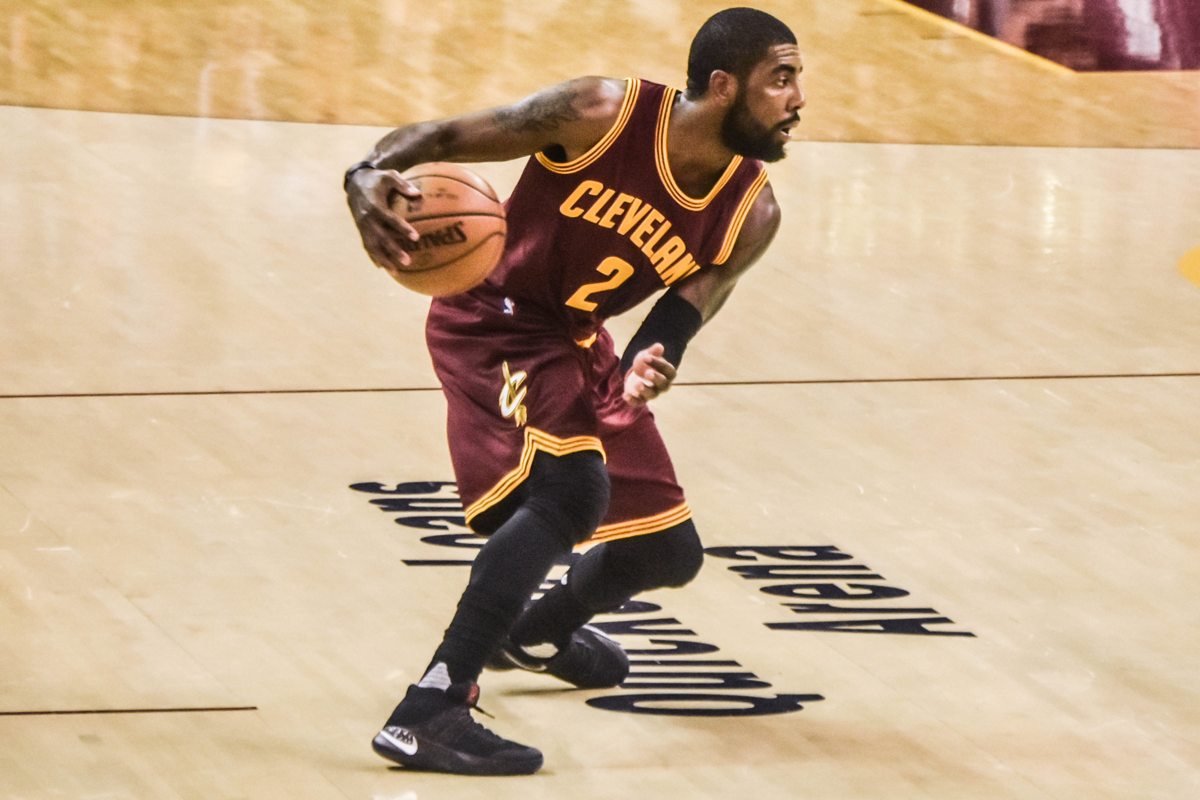
Which winner-take-all NBA Finals game deserves to be called the greatest? Our choice is Cleveland's 2016 win at Golden State, followed by New York's 1970 victory over Los Angeles and Boston's 1969 win over the Lakers. The task is deliberately narrow: NBA Finals Game 7s, not every playoff elimination game, not entire Finals series and not the separate WNBA competition. The list includes games through the 2026 Finals; New York won that series in five games, so it supplied no Game 7. A championship is at stake in every entry, but the ways those nights unfolded were very different.
The ranking is an editorial judgment. We weigh the drama of the deciding game first, then the distinctiveness of its decisive moments, then the historical meaning of the result. We also use the road to Game 7 as context, but do not quietly treat a great Game 6 as if it were played in Game 7. There is no invented formula or claim that these contests can be measured on a single objective scale. A close final score is useful evidence of tension; it is not automatic proof that every minute was equally close or that a wider victory had no emotional force.
Cleveland's 2016 case combines a four-point final margin with a late defensive play and a decisive shot, after the Cavaliers had trailed the series 3–1. New York's 1970 case is different: Willis Reed's return from injury supplied an unforgettable moment, even though the final margin was larger. Boston's two-point victory in 1969 carries a different kind of historical weight. Those comparisons illustrate the trade-off: a reader who rewards overtime or a narrower score above all else could place Boston's 1957 double-overtime win first. That disagreement is not a factual error if the changed criterion is made explicit.
The eligible games reach across very different eras. Rules, travel, preparation, media and the number of teams changed. Footage and first-hand memories are unevenly available, so we do not pretend our ability to watch a modern replay is a neutral measure of an older game. We have chosen ten examples rather than suggesting every omitted Game 7 was ordinary. Houston's 1994 win and San Antonio's 2005 title are credible omissions; readers who prioritize defensive pressure or a particular rivalry may place them in the ten. The purpose is to compare stated reasons, not to reduce basketball history to a definitive mathematical table.
A series and its final game must be kept separate. Miami's 2013 Game 7 followed a famous Game 6, but that earlier drama is a reason to understand the setting, not a basket credited to the deciding night. Similarly, Oklahoma City's 2025 Game 7 is included for its championship context even though its twelve-point margin places it lower under our suspense-first weighting. A player can perform brilliantly in a loss, and a winner can benefit from many teammates' work. One memorable photograph or a single highlight cannot establish the value of a whole team or settle which matchup was best.
Scores and historical context were checked on 5 November 2026 against NBA game records, league histories and its Game 7 information guide. The official 2026 Finals page is used to set the scope, not to invent a deciding game. The photographs illustrate people or teams associated with each story; their captions state dates and make clear they do not depict the actual Finals games. The 1966 image of Bill Russell and Wilt Chamberlain is historical context for two entries, not a photograph of their 1962 or 1969 decider. For related perspectives, explore our greatest NBA players and classic Knicks legends. Read from ten to one, then choose: does 2016's late tension outrank 1970's emotional return and 1957's two overtimes?
Sources: NBA Finals Game 7 guide · NBA 2026 Finals · NBA game or history record 2016 · NBA game or history record 1970 · NBA game or history record 1969 · NBA game or history record 1957.
Photo: Erik Drost · CC BY 2.0. Image resized and recompressed as optimized JPEG; the linked license remains. No endorsement implied.
