
Star Wars: Knights of the Old Republic takes third place for a story that lets a player inhabit the moral language of Star Wars rather than merely watch familiar symbols pass by. BioWare’s original 2003 game is set long before the films and builds its own party-based adventure within that universe. That historical distance is useful: the story can draw on Jedi, Sith and the Force while giving the player room to meet a particular group of companions and discover a particular conflict. It is not necessary to treat every recognizable reference as the main reward. The strength is how a large mythology becomes a sequence of personal encounters.
Character creation and dialogue let you establish an approach before you know everything about the world. A generous response, a suspicious question or a decision to pursue an advantage can express a role you want to maintain. The point is not that every line creates a new plot branch. Often the value lies in consistency: you begin to recognize the person you are playing through repeated choices. That makes conversations part of the adventure’s substance, rather than a corridor between combat encounters. It also means two players can remember the same location differently because they brought different intentions and expectations to the people they met there.
Choice, companions and the competing case
Companions give that role a social audience. A party member’s concerns can make an apparently straightforward objective feel less simple, and learning about someone can change the meaning of traveling together. The game’s combat uses underlying role-playing rules rather than asking visible animation alone to determine an outcome. The official manual explains that structure; a new player should use it to understand why character development and party composition matter. Our narrative judgment does not require claiming that the interface has become effortless with age. Someone who dislikes its pace or rules can appreciate the writing while preferring a different game to spend time with.
The strongest argument for first place is the connection between identity, moral choice and the adventure’s larger shape. We will not disclose the famous revelations to make that case. A story can become more powerful when an earlier exchange gains a different meaning, and Knights is an excellent candidate for discussing that effect after playing. Its third place here reflects our preference for Origins’ more explicit social starting positions and Mass Effect 2’s concentrated companion structure. That preference does not mean licensed worlds are less creative. Working within an established mythology presents its own demanding problem: make a personal journey feel consequential without reducing it to borrowed recognition.
How to approach the story
On a first playthrough, resist turning every conversation into a search for the mechanically optimal reply. Consider what your character would defend and what might make them reconsider. Then notice whether the game lets that position become visible to another person. This approach can reveal why role-playing is not identical to maximizing rewards. It also helps protect the experience from a guide that gives away information before the story is ready to supply it. You can consult basic controls and rules without reading a complete plot explanation. The goal is informed play, not eliminating every uncertainty that gives a conversation its dramatic force.
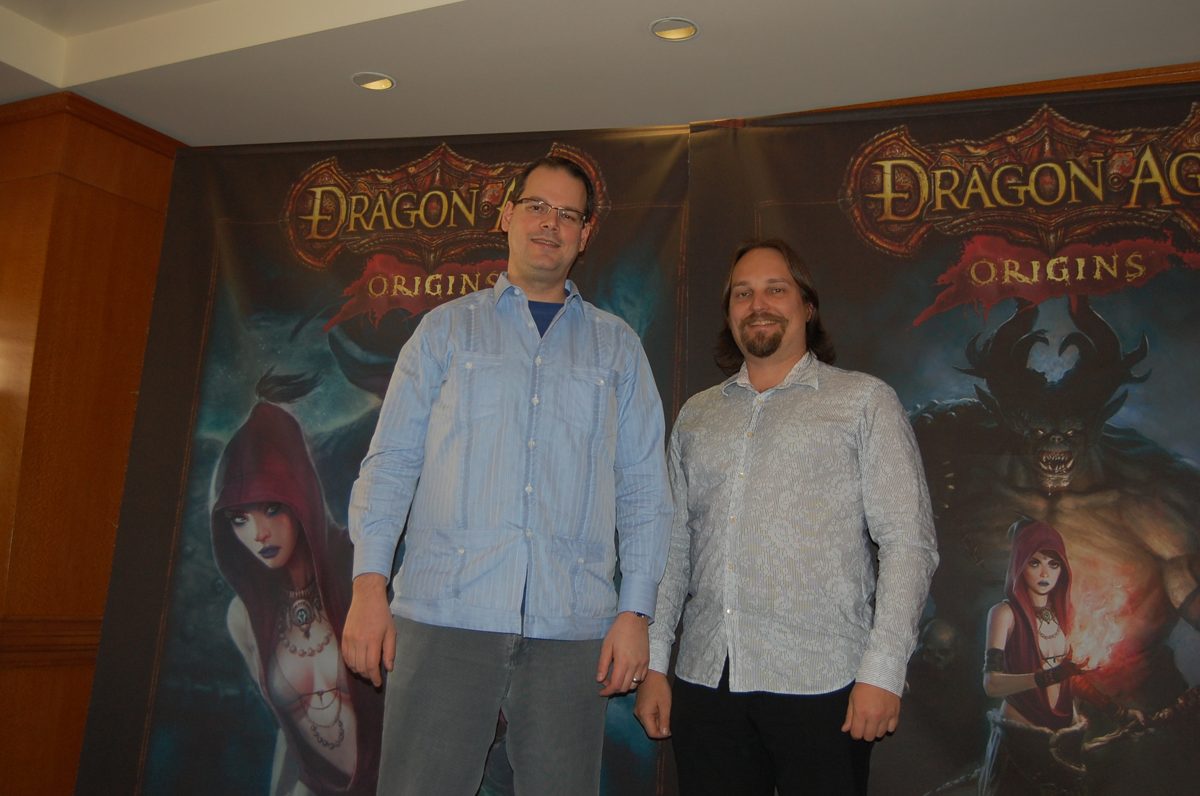
Knights ranks below Origins because our criteria give slightly more weight to a background that visibly situates the protagonist within the society they must navigate. It remains the strongest option here for someone who wants their role-playing to engage directly with Star Wars’ questions about power and responsibility. The accompanying 2009 photograph shows Ray Muzyka and Greg Zeschuk as historical BioWare context, not the game’s characters or a production scene. If you place Knights first, identify the reason without revealing the ending: is it the companions, the relationship between your choices and identity, or the way a familiar universe makes your own small decisions feel unusually important?
Source: Official source 1 · Official source 2 · Official source 3.
Photo: vonguard · CC BY-SA 2.0. Ray Muzyka and Greg Zeschuk, 27 March 2009; historical BioWare context, not a Knights of the Old Republic screenshot. Resized/recompressed, full source frame retained; no crop or upscaling.
