
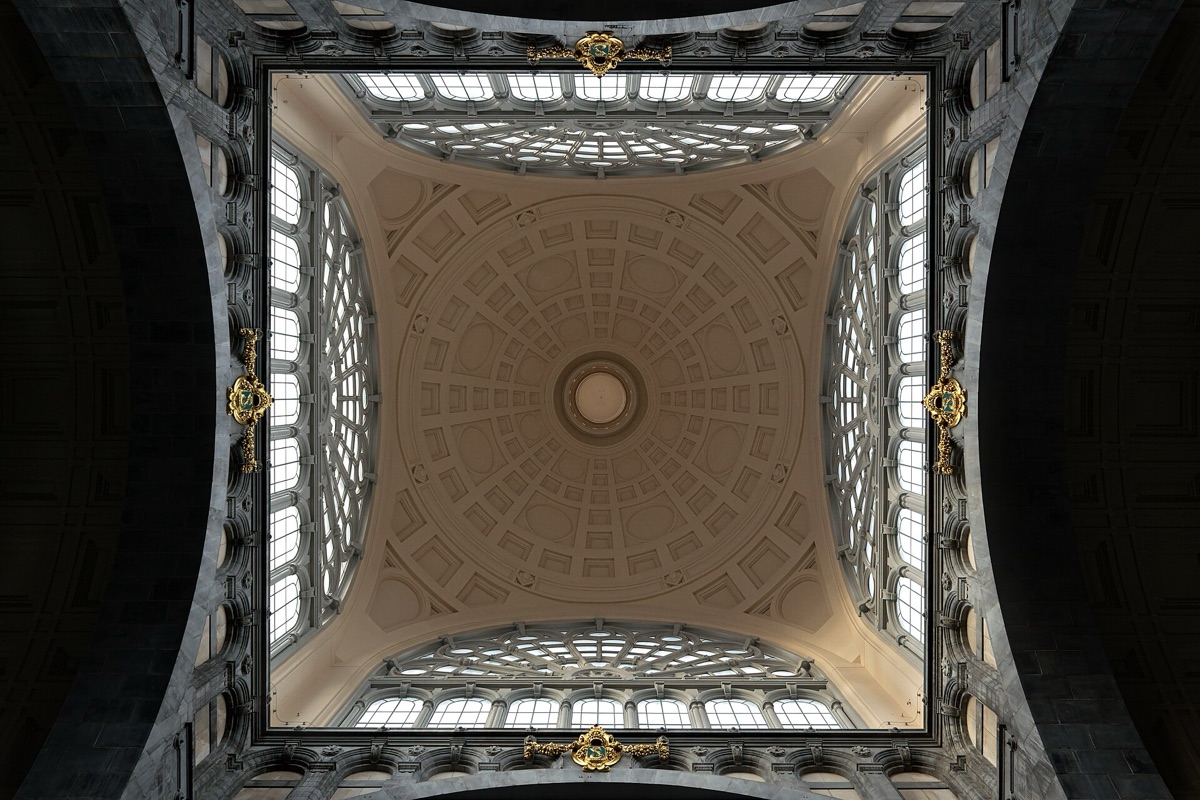
A railway station can be more than the place where a journey starts. A great hall frames the first view of a city, a clock tower makes a meeting point easy to find, and a tiled waiting room can turn a connection into a small cultural visit. This list ranks ten European stations that reward a traveler who looks around as well as a traveler catching a train. The focus is on publicly visible architecture and the experience of arriving, rather than the fastest route or the cheapest ticket.
Antwerpen-Centraal takes first place for the combination of its monumental stone entrance and its great train shed. London's St Pancras follows for the contrast between its Gothic hotel facade and the vast iron-and-glass roof; Porto's São Bento is third because its tile panels make the entrance hall an unusually memorable introduction to the city. These positions are editorial judgments. Someone who loves gardens may prefer Madrid Atocha, while a traveler who values a compact city-center stop may put São Bento first. A station's appearance is not a measure of how well every journey will go.
We compare three things: the distinctiveness of a station's public spaces, the visual or historical story a visitor can understand there, and its value as a gateway to the surrounding city. We give more weight to what can be appreciated as part of an ordinary visit than to a claim that a building is the biggest or busiest. The list covers ten different cities and includes both main halls and exterior views. It is not an accessibility audit; entrances, routes, facilities and assistance vary, so consult the operator directly for individual needs.
Stations are working transport facilities. Before stopping for photographs, leave space for passengers and keep doors, escalators and platforms clear. Access to platforms or particular interiors may require a ticket or be restricted, and security rules, maintenance and opening hours can change. A historic photo does not promise that a space will look identical on the day of a trip. Check the station operator's current information and the relevant transport provider before traveling. We do not promise particular train services, prices or connections.
Look beyond a single facade. Antwerp's masonry entrance and the steel covering over the platforms are related but distinct parts of the station. At St Pancras the restored train shed and the former hotel tell different sides of the same railway story. São Bento's tiled vestibule illustrates scenes from Portuguese life and transport; Madrid's old Atocha hall has been adapted to contain a tropical garden. Helsinki's granite station and lantern-bearing figures show another approach to the same task of giving a railway entrance civic presence.
The list also leaves room for places whose appeal comes from scale or urban setting rather than a single decorative feature. Milan's central station makes a grand entrance into the city, Leipzig combines a substantial sandstone exterior with a transport hub, and Wrocław's neo-Gothic building gives the journey an unmistakable beginning. These buildings have been altered over time, and the relationship between historic spaces and current trains is different at each one. Read the linked official station or city sources for details checked on 21 November 2026. For a journey as well as a destination, see our European scenic train ranking. Which station would you add to your own route?
Photo: Trougnouf · CC BY 4.0; resized and recompressed. Antwerpen-Centraal: the main hall ceiling.
