
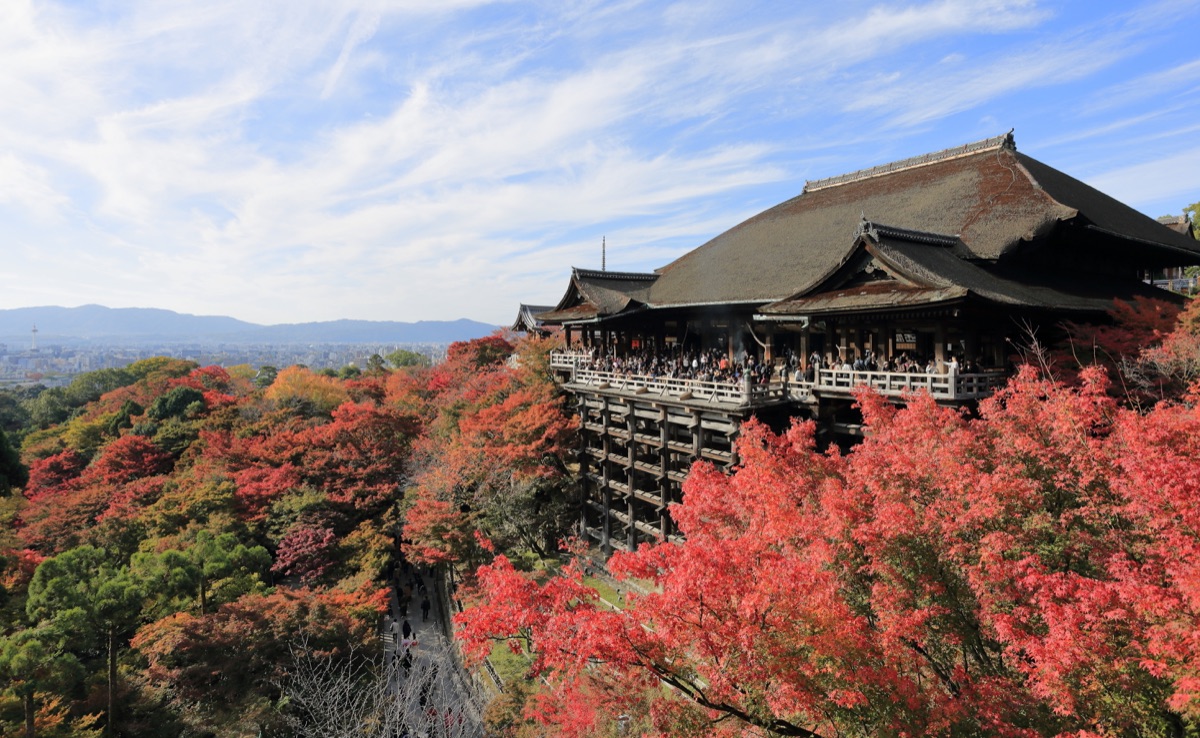
If your first trip to Japan gives you time for only one city, should you pick Tokyo or Kyoto? We put Kyoto first for the concentration of historic places within an accessible urban base, and Tokyo second for its extraordinary range of neighborhoods, museums, food and transport connections. Osaka takes third for its food culture and its usefulness as a base for exploring Kansai. This is an editorial judgment for a first-time visitor, not a measurement of the cities or a claim that every traveler should follow the same route.
Our ranking weighs the variety and distinctiveness of things a newcomer can experience, how easy it is to incorporate a city into a first itinerary, and the value of spending more than a brief stop there. It also asks what a visitor may have to give up: longer journeys, crowded landmarks, seasonal weather or a tightly packed schedule. The order is subjective. Tokyo could reasonably take first for someone who wants contemporary urban culture or arrives with limited time. A traveler who values food and a single base for day trips might choose Osaka instead. The Japan National Tourism Organization's itinerary includes Tokyo, Kyoto, Osaka and Hiroshima, but it does not endorse our ranking.
A first journey is not a checklist that needs ten cities. Distances on a map can hide the time required to reach a station, change trains, find a hotel and recover between outings. Two or three bases may offer a richer experience than a different hotel every night. Nara is easy to consider alongside a Kansai stay, while Sapporo and Nagasaki make more sense when the route allows time for their regions. Transport routes, schedules, fees and reservations change; consult the operator and the attraction before making commitments rather than treating an editorial ranking as a current timetable.
The list uses city names as starting points, with individual examples identified in each entry. Hiroshima's Peace Memorial Park and Nagasaki's Peace Park commemorate people killed by atomic bombings in 1945; they deserve time and respectful attention, not just a quick photograph. In Kyoto, temples and neighborhoods are living places as well as visitor attractions. Respect signs and photography rules, keep access clear for residents and avoid assuming that every street or building is open to visitors.
Seasons change the experience. Sapporo's winter and warmer months offer different reasons to visit, while gardens and outdoor walks throughout Japan look different as the weather changes. Popular periods can bring crowds, and rain or heat can make an ambitious walking plan less pleasant. Check local conditions, accessibility, opening hours and local events close to departure. A restaurant, museum or train that suited another traveler may not fit your budget, mobility needs or interests.
Ten cities cannot represent the full variety of Japan, and an itinerary with smaller towns or rural areas might be a better fit. We include Kanazawa for gardens and craft, Fukuoka for a gateway to Kyushu and its yatai food stalls, and Kobe for its port setting; each has a credible case for a higher place if those are your priorities. Our sources are destination and attraction guides, mainly JNTO, checked on 11 November 2026. They describe possibilities rather than guarantee an experience, and the order is ours. For a different comparison of cultural city breaks, see our best European cities. Would you start with Kyoto's historical sites, Tokyo's variety, or Osaka's food and Kansai connections?
Photo: Martin Falbisoner · CC BY-SA 4.0. Resized and recompressed.
