
A car dashboard can display several numbers at once without explaining what kind of question each number answers. A large speed reading describes the present journey, an odometer records accumulated distance, and a remaining-range figure estimates something that has not happened yet. Learning those differences makes an unfamiliar instrument panel much easier to understand. This guide ranks ten common displays by their usefulness as a beginner's learning sequence, with the most immediately useful distinction at number one. It is an editorial teaching order, checked against manufacturer explanations on 26 October 2026, rather than a ranking of vehicles, instrument accuracy or warning severity.
Start with three questions: what is being described, which unit is being used, and what period does the reading cover? A distance in kilometres is different from a speed in kilometres per hour. An average since a reset is different from a momentary reading. An estimate of distance still available is different from a record of distance already travelled. Those distinctions sound simple, yet they are especially easy to miss when a digital screen puts several values in similar typefaces. A useful exercise, with the car safely parked, is to describe each display in a complete sentence instead of memorizing where it appears.
Our scope is ordinary passenger-car instrument information, particularly conventional fuelled cars, with a few comparisons that also help explain hybrid and electric displays. Equipment differs by model, year, market and powertrain. Not every car has every gauge in this selection, and an electric power meter should not be interpreted as an engine tachometer. We cite specific Ford, Honda and Hyundai manuals as examples of definitions, not as proof that every vehicle shares the same screen, menu or normal operating range. Your own vehicle's supplied manual remains the source for its controls, messages and required responses. This article gives vocabulary, not repair instructions.
The order gives priority to information used to understand the car's immediate state, then to planning estimates and summaries, and finally to background context. That puts the speedometer ahead of the fuel gauge, while trip records and outside temperature appear earlier in the countdown. There is a credible alternative: someone comparing journeys might put the trip meter and average consumption much higher. Someone learning a manual transmission might focus on the tachometer. These different needs do not change the definitions. They show why a teaching order is more honest than pretending that ten unlike displays can be graded on a single scientific scale.
Two distinctions deserve particular care. A fuel gauge describes an approximate amount remaining, while distance to empty is a prediction influenced by conditions and use. Neither should be mistaken for a promise of a particular remaining journey. Likewise, the outside-temperature display and engine-coolant gauge concern different things. An outdoor reading is not a direct measurement of the road surface, and a coolant display is not a cabin-comfort setting. Do not use this countdown to decide that a warning can be ignored because its related display has a low rank. Follow the vehicle's instructions for alerts and consult the manual while safely stopped, rather than exploring menus on the move.
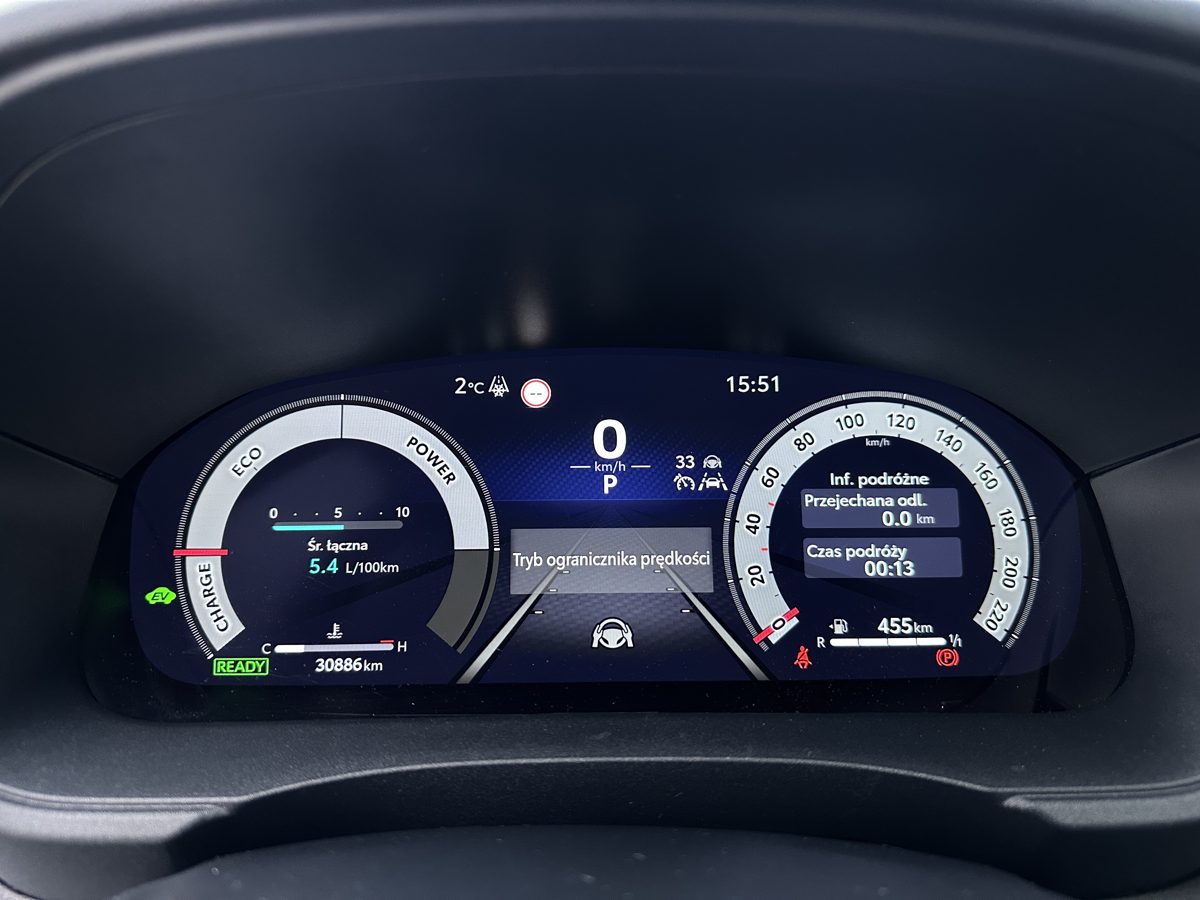
The photographs show an older Maruti Suzuki Alto dashboard and a Toyota Yaris Hybrid instrument cluster as contextual examples. They are not a claim that either car contains every display described here; the hybrid power dial is not an RPM gauge. For practical preparation beyond reading the panel, our winter-car-checks article covers a different topic, while our European car-museums guide offers a way to explore the history behind changing cabin designs. Read from number ten toward number one and compare the questions each display answers. Which is more helpful when learning an unfamiliar car: a clear digital number, a familiar analogue needle, or an explanation of what the number actually means?
Sources: Ford · Honda (PDF) · Hyundai (PDF).
Image: Toyota Yaris Hybrid GR Sport instrument cluster, February 2026; stationary contextual photograph, hybrid power dial is not an RPM gauge — Acgskup · CC BY 4.0. Resized and recompressed as JPEG without cropping or upscaling; original CC license retained. No endorsement implied.
