
What makes a British sports car great: the way it looks, the idea beneath its bodywork, or the kind of driving it invites us to imagine? Our Top 10 puts the Jaguar E-type first, the McLaren F1 second and the Lotus Elise third. That order deliberately favors a convincing union of design, engineering and cultural identity over a simple contest of speed. The field is postwar road-car families introduced before 2000 by British marques. We include grand tourers and supercars within a broad sports-car definition, while excluding dedicated racing cars, one-off prototypes and modern reinterpretations of old names. Facts were checked on 3 November 2026.
Our criteria begin with the strength of the complete road-car idea: how clearly the shape, technical choices and intended experience belong together. Engineering distinctiveness comes next, followed by historical resonance. These are ordered editorial priorities, not measured scores or a claim that every car was driven in a controlled comparison. The E-type wins because it makes the strongest all-round statement under that standard. The F1 is the obvious alternative if technical ambition receives the greatest weight. The Elise can lead if a compact, lightweight approach matters more than visual grandeur. A useful ranking should explain those competing answers rather than hide them behind a verdict.
The choice also reflects a real search-interest check. At approximately 04:52 UTC on 3 November 2026, we inspected Google Trends Explore for the United States, past 90 days, all categories and Web Search. “classic cars,” “British sports cars” and “Jaguar E Type” displayed relative averages of 72, 0 and 2. A zero on that comparison is not proof of no searches. Related rising queries included “classic british sports cars” at +70% and “british car brands” at +60%. Those are relative signals within the chosen window, not monthly search volumes. We found a useful historical reading angle, not evidence of a seasonal cause or a recommendation to buy a collectible.
Comparing these cars requires separating an engineering fact from an impression. A backbone chassis, bonded aluminium structure or carbon-fibre monocoque can be verified in a manufacturer history. Calling one solution more compelling is our interpretation. Similarly, a model's public debut is not always the year customer deliveries began. We identify the original Elan separately from the later front-wheel-drive car bearing the same name, and use the Elise's 1995 public unveiling when discussing its arrival. Model families also changed over time and across markets. One engine specification cannot describe every variant, and a later photographed example does not establish the details of an earlier launch car.
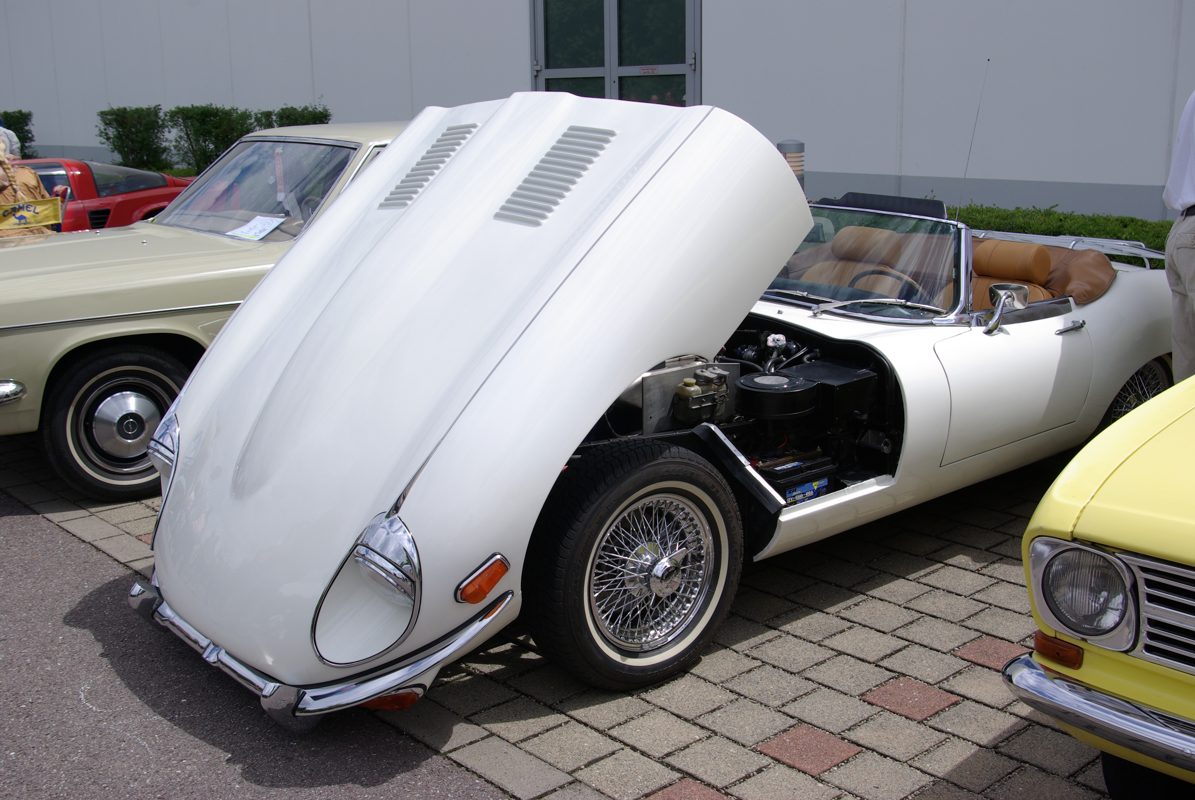
The photographs show real vehicles at shows, in collections or in other documented settings. They are illustrations, not evidence of our testing. The DB5 picture shows competition preparation, while the E-type appears with its bonnet raised; neither should be mistaken for an untouched launch specification or a road-test result. Contemporary manufacturer descriptions are useful for design and engineering context, but promotional superlatives do not decide our ranking. We avoid turning historic performance claims into a modern safety comparison. Condition, originality, maintenance and ownership costs are separate questions requiring vehicle-specific evidence, so this article offers neither price forecasts nor a universal buying recommendation.
For another national tradition, compare Topnilo's Japanese performance-car ranking; for a focused marque history, read our most important Porsche road cars. The value of this countdown is the contrast between different answers to the same problem: a distinctive machine for the road. A fan of restrained proportions can reasonably prefer the Elan; a defender of traditional character can argue for the Morgan. Read from tenth to first and decide where your own priorities differ. Does the E-type's complete design argument outweigh the F1's engineering ambition, or should the Elise's lightweight clarity beat them both?
Sources: Lotus Elan · Lotus Elise · McLaren F1 · Jaguar E-type.
Photo: Berthold Werner · Public domain. 1969 Jaguar E-type with bonnet raised, photographed on 20 July 2008. Image downscaled without cropping or upscaling and recompressed as optimized JPEG. No endorsement or road-test claim.
