
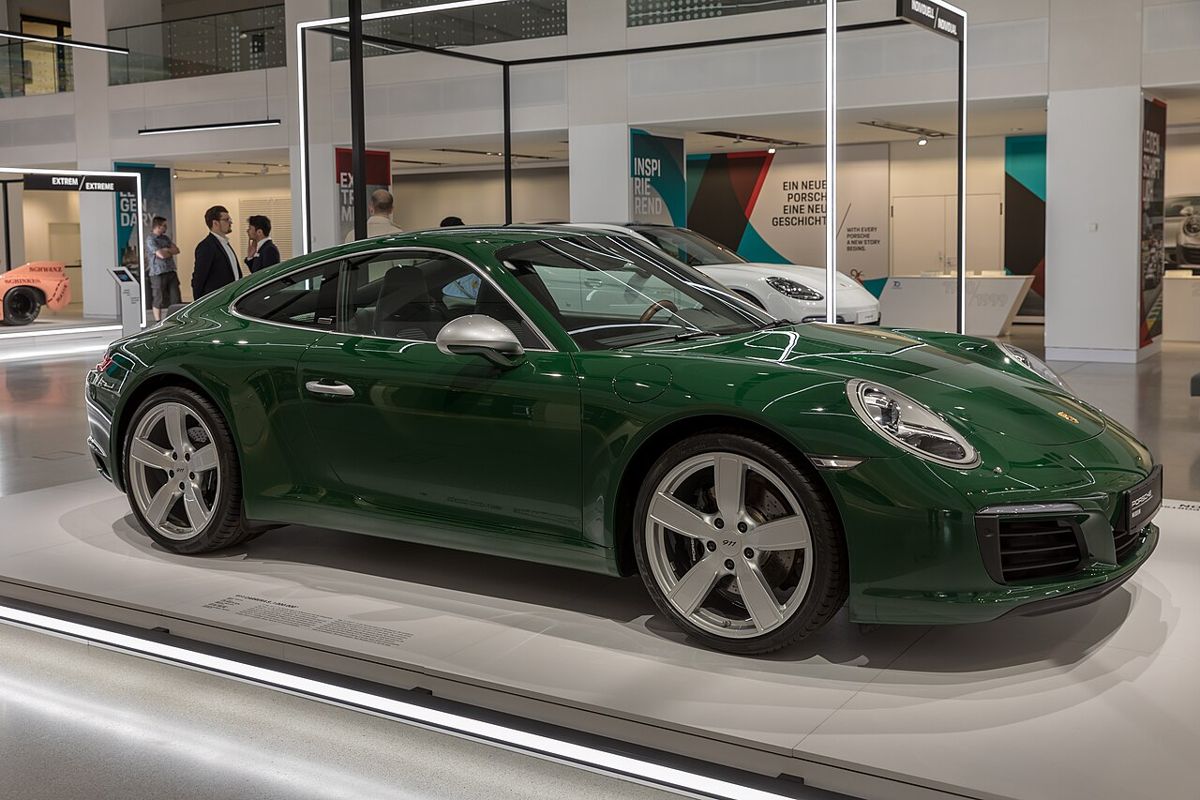
Porsche history makes more sense when the cars are placed beside one another rather than reduced to a sequence of faster 911s. This Top 10 chooses road-car families and landmark production models that explain how the company changed its engineering, its customers and its idea of a sports car. The scope runs from the 356 to the Taycan, with facts checked on 19 October 2026. Pure racing cars and unrealized concepts are excluded. The order is our editorial judgment, giving priority to lasting influence on Porsche's identity, then the clarity of the engineering change and the model's usefulness as an introduction to the wider story.
The 911 wins because it connects the brand's recognizable shape with a long, changing technical lineage. The 356 has the strongest alternative case as the foundation of the marque, while the Cayenne could rise dramatically if commercial expansion were the main criterion. These choices are deliberately different from ranking acceleration, auction prices or personal ownership appeal. A historical landmark need not be the fastest or most expensive car in a collection. Nor does the survival of a model name mean that its engineering remained unchanged. Understanding the differences within a familiar name is part of the pleasure of studying the cars.
Evidence and anniversary context
Current search interest helped shape the entry points. Google Trends Explore, inspected on 19 October 2026 for the United States, past ninety days, all categories and Web Search, showed the related query 1989 porsche 911 3.2 speedster rising 750%, and 1998 porsche boxster for sale rising 600%. Those are relative query-growth signals, not monthly search volumes, a valuation forecast or votes for this ranking. We use them as evidence that readers are asking about older models, not as proof of a car's mechanical condition or future value. Unrelated and speculative queries were not treated as verified product announcements.
There is also a separately documented anniversary context. Porsche's 2026 historical coverage marks fifty years of the 924's series-production story; the Boxster's European production launch in 1996 makes this its thirtieth-anniversary year. Neither fact establishes why an individual searched. Together they suggest a useful alternative to a catalogue of current specifications: compare how an entry model, a grand tourer, a technological showcase and an SUV could all belong to the same manufacturer. Our European car-museum guide provides another route into seeing these changes in physical objects, with current exhibition details to be checked separately before visiting.
Compare layouts, dates and generations
Three simple distinctions help with every page. Engine position describes where the power unit sits relative to the axles; it is not the same thing as which wheels are driven. A concept's public appearance, a production model's unveiling and a customer's delivery can happen in different years. Finally, a family photograph may show a later variant rather than the first example. The captions preserve those limits. Historical road-car significance does not depend on pretending a museum display is an original launch photograph, or on applying the performance figure of a later derivative to every vehicle carrying the same badge.
Read the countdown through comparisons. The 914 and Boxster explore mid-engine accessibility, the 924 and 928 show two versions of the transaxle idea, and the 959 and Carrera GT offer different approaches to a technological flagship. The Cayenne and Taycan broaden the question of what a Porsche can be. These are starting points for looking and reading, not claimed driving tests. Which history matters most to you: the continuity of the 911, the foundation laid by the 356, or the models that challenged established expectations? The answer can change your order without changing the dates and mechanical distinctions on which the discussion rests.
Source: Google Trends · Porsche · Porsche.
Photo: Millionth 911 displayed in Berlin, 15 April 2018; later generation, not the 1963 debut. Matti Blume · CC BY-SA 4.0. Existing optimized local image reused; no new modifications. CC BY-SA 4.0 retained.
