
Which Legend of Zelda game deserves first place? We choose Breath of the Wild, followed by Tears of the Kingdom and the original Ocarina of Time. This is an editorial judgment about mainline adventures, not a poll or a measurement of sales. We give the most weight to the pleasure of discovery and the freedom to respond to a problem, then consider the design of puzzles and spaces and the game's historical influence. Those priorities favor an open landscape, but they do not make a different answer wrong.
The immediate search context is Nintendo's anniversary hardware. On 5 November 2026 at about 18:18 UTC, Google Trends Trending Now showed the United States group ‘switch 2 zelda edition’ at 50K+ searches and 200% growth for the past 24 hours, with all categories and search-volume sorting selected. The group bucket is rounded and is neither a monthly search estimate nor an Explore score. Nintendo says the Zelda 40th Anniversary Switch 2 edition was released on 29 October 2026 and does not include a game. Interest in a console is a reason to discuss the series, not proof that any particular game is best.
Our first choice, Breath of the Wild, began on Switch and Wii U in 2017. Its great strength is the connection between seeing a place and finding a way there. Climbing, weather, equipment, shrines and food invite players to make decisions while moving through Hyrule. A mountain can become a destination without an elaborate instruction. That freedom also has trade-offs: someone who prefers elaborate, tightly ordered dungeons might find its broad landscape less satisfying than an older game's directed sequence. We value the curiosity it creates more than the size of the map alone.
Tears of the Kingdom, released on Switch in 2023, returns to the same world and makes building a central part of the journey. Ultrahand joins objects, while Fuse combines materials with equipment. Those tools let the player build a bridge, improvise a vehicle or approach a familiar obstacle differently. It has a strong claim to first if invention is your main criterion. We place it second because our ranking gives slightly more weight to the initial feeling of discovering that open Hyrule; that preference is a judgment about experience, not a claim that the sequel has fewer possibilities.
Ocarina of Time began on Nintendo 64 in 1998, and its separate 2026 Switch 2 remake updates presentation and controls. Our comparison refers to the original adventure and its design, while recognizing that different versions can shape a newcomer's experience. Nintendo's developers describe the original's Z-targeting, which helped players engage with enemies in a three-dimensional environment, and its continued role in later 3D Zelda games. Its dungeons, music and movement between Link's younger and older periods offer a different rhythm from the open landscapes above it. Give structured progression and historical influence greater weight and it can reasonably lead.
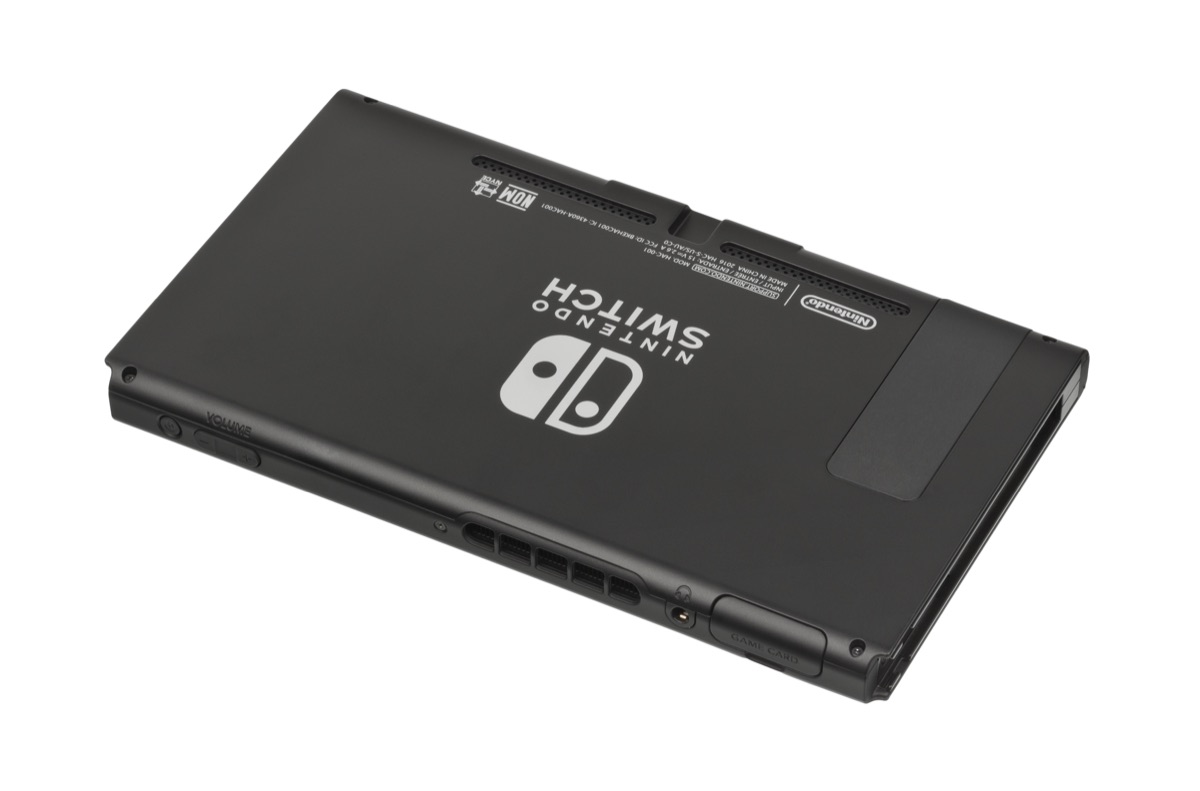
Three places cannot represent every approach in a series this varied. A Link to the Past is a persuasive alternative for readers who prefer two-dimensional spatial design; a favorite may also depend on the version played, available hardware and tolerance for older conventions. We have not ranked review averages, invented scores, measured accessibility, or assumed that the most recent release is automatically better. Photographs illustrate the original Switch and Nintendo 64 hardware, not screenshots or the 2026 anniversary console. For a related view of hardware history, see our retro game consoles ranking. If you value dungeon structure, creative building or open exploration most, which Zelda game would you put first?
Sources: Nintendo 1 · Nintendo 2 · Nintendo 3 · Nintendo 4 · Nintendo 5.
Photo: Evan-Amos · Public domain. Resized and recompressed.
