
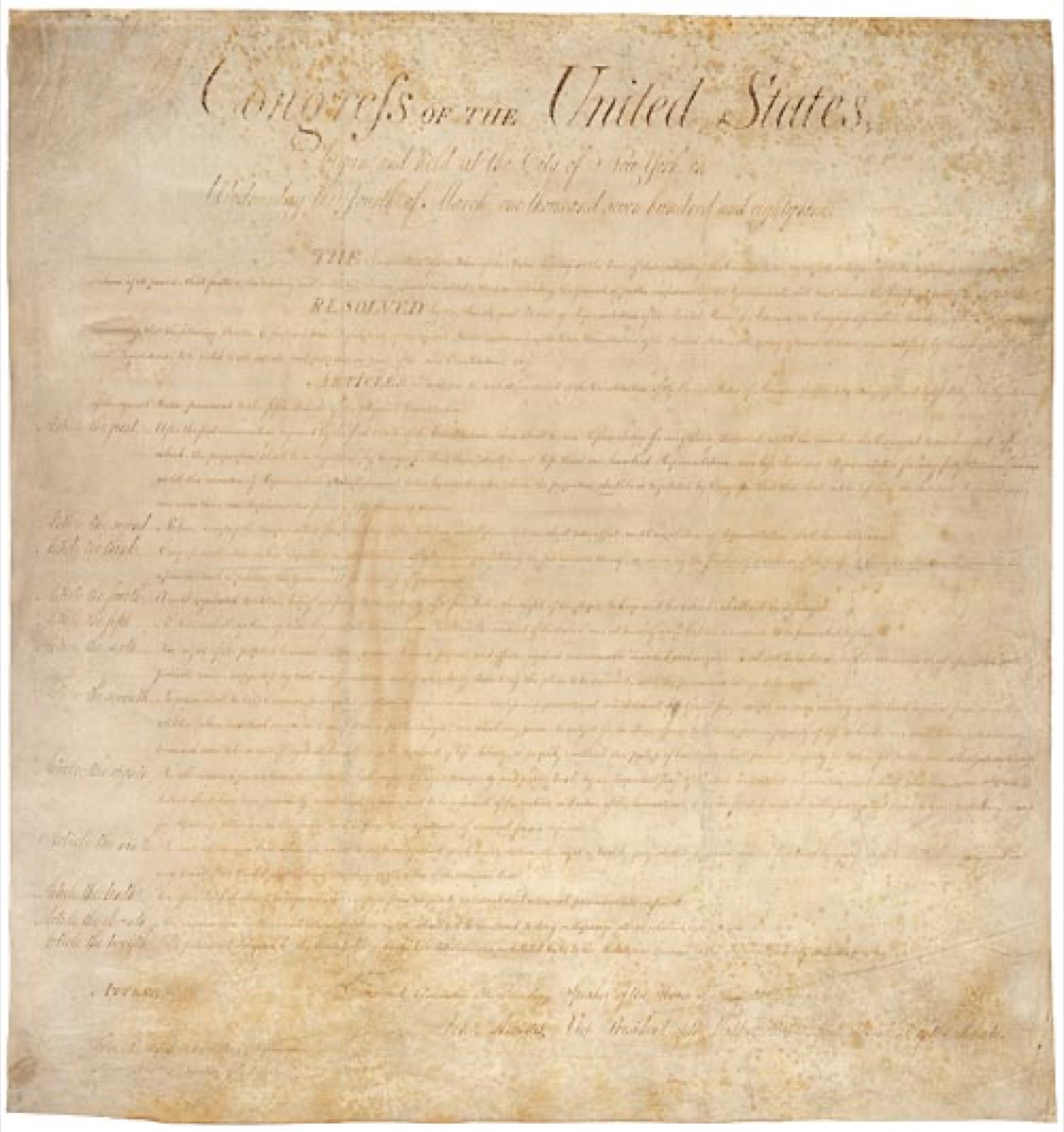
The 1st Amendment addresses religion, speech, the press, peaceful assembly and petitioning government. We rank it first for its usefulness in understanding public debate and democratic participation, not because its protections are unlimited or more legally valid than others. The text begins by restricting Congress; later doctrine addresses many questions of application. Its precise reach depends on context and judicial interpretation.
Sources: National Archives.
Image: National Archives · National Archives; public domain. The 1789 enrolled proposal contains twelve proposed amendments, ten ratified in 1791; resized and recompressed.