
What do the First, Fourteenth and other amendments to the United States Constitution actually address? This guide introduces ten of the 27 ratified federal amendments as of 7 November 2026. We rank them for a reader beginning to follow public institutions, constitutional rights and the history of voting: the First comes first, the Fourteenth second and the Fifth third. The order is an editorial teaching choice based on breadth of introductory discussion and historical context. It is not a legal hierarchy: all valid constitutional provisions matter, and a different question can make a different amendment the best place to start.
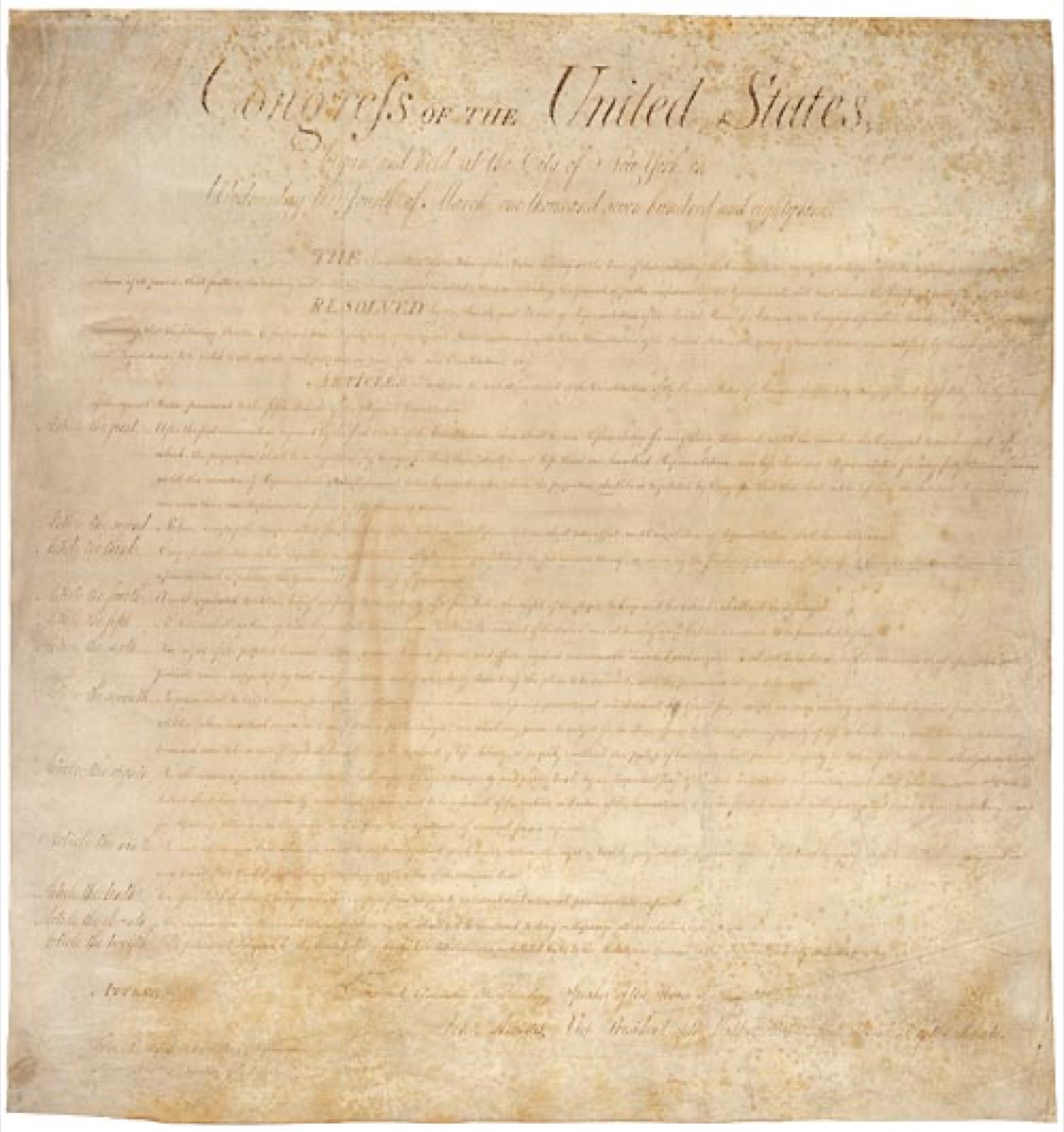
The first ten amendments are known as the Bill of Rights. The National Archives explains that Congress proposed twelve amendments in 1789, ten of which were ratified in 1791. Later amendments changed or added constitutional provisions through different historical processes. The photograph accompanying this guide shows the 1789 enrolled proposal, not the text of the later Reconstruction or voting amendments. A photograph of an old document is useful context, but a readable transcript and a current authoritative explanation are better places to examine exact wording. The Archives links below provide the text, dates and background used for this introductory comparison.
Our top three illustrate why the wording of a legal text matters. The First addresses religion, speech, the press, peaceful assembly and petition. The Fourteenth includes citizenship language and restrictions on states concerning due process and equal protection, among other provisions. The Fifth contains several distinct clauses, including due process and protection against compelled self-incrimination in a criminal case. These descriptions are starting points, not complete statements of modern doctrine. They do not establish how a right applies in a particular dispute, who wins a case or what a person should do. Courts, later law and the facts of a case shape interpretation.
The list also includes the Fourth and Sixth Amendments, which concern different aspects of searches and criminal proceedings. It is misleading to reduce either to an unconditional slogan: the Fourth's prohibition concerns unreasonable searches and seizures, while rules about warrants have been interpreted in court; the Sixth describes several protections for accused people in criminal prosecutions. Reading the text alongside a reliable explanation helps distinguish what an amendment says from a headline about a specific judicial decision. Our related guide to Supreme Court decisions offers another route into that distinction.
The Thirteenth, Fifteenth, Nineteenth, Twenty-fourth and Twenty-sixth show how constitutional change and the history of participation are connected, but they have different language and scopes. The Thirteenth prohibits slavery and involuntary servitude with an exception for punishment after due conviction. The Fifteenth and Nineteenth prohibit specified grounds for denying or abridging citizens' voting rights; the Twenty-fourth concerns taxes in specified federal elections, and the Twenty-sixth addresses age for citizens 18 and older. Ratification did not automatically eliminate every barrier in practice. Enforcement, discrimination and later legislation are essential parts of the history, not details that should be erased by a date.
Other amendments deserve serious attention. A reader studying arms policy may begin with the Second; someone comparing federal and state power might select the Tenth. Their absence does not mean they are unimportant or outside the Constitution. Our list covers the United States at the federal level, rather than the distinct amendments voters may consider under state constitutions. It was checked against National Archives material on 7 November 2026. This is general educational information, not legal advice or a determination of eligibility or rights in an individual case. Which amendment would you put first for a newcomer, and what criterion would you use?
Sources: National Archives: Bill of Rights · National Archives: Amendments 11–27.
Image: National Archives · National Archives; public domain. The 1789 enrolled proposal contains twelve proposed amendments, ten ratified in 1791; resized and recompressed.