
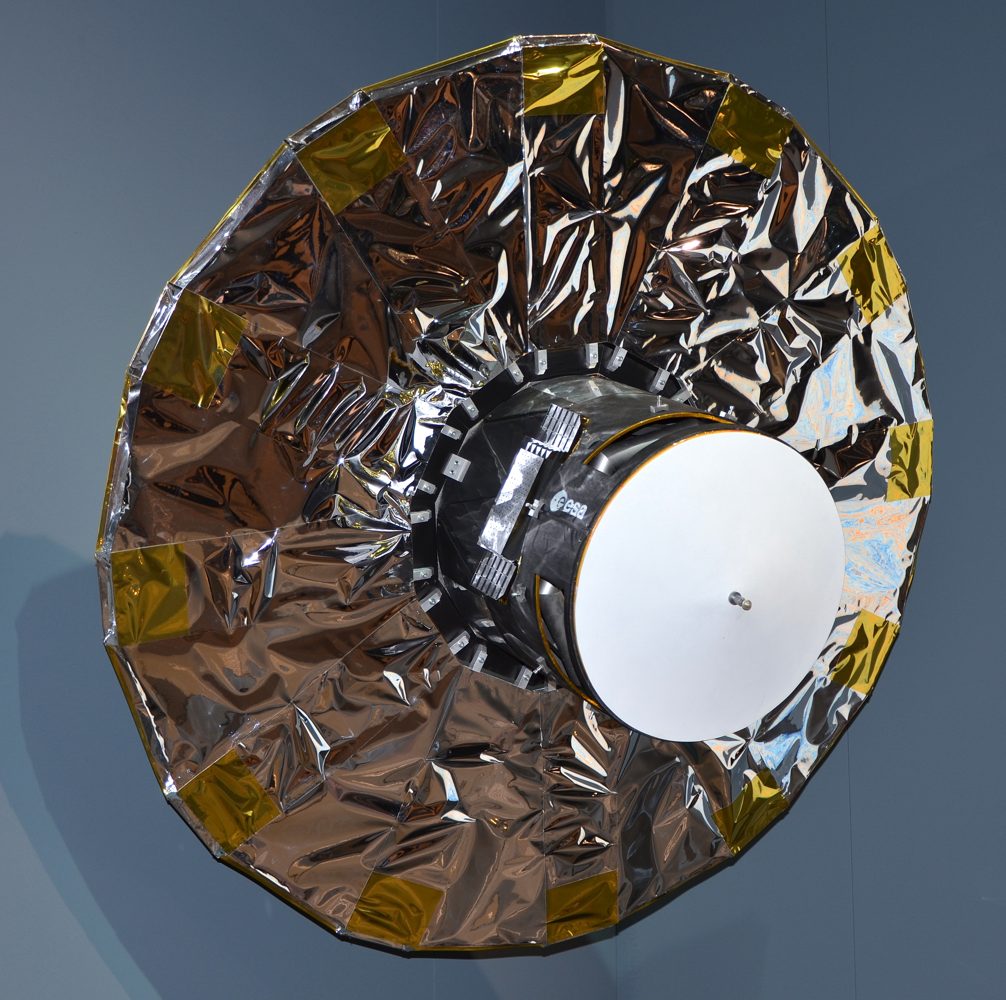
Gaia surveyed nearly two billion objects to build a three-dimensional account of our Galaxy, measuring positions, motions and other properties. That shared map supports many investigations rather than one spectacular target. It places fourth for turning precision into widely reusable astronomical infrastructure. Kepler narrowly leads under our criteria because its planet census changed a particularly fundamental question about our place in space. A researcher who depends on stellar distances could reasonably put Gaia first.
Source: Official mission account.
Image: Gaia exhibition model at Le Bourget, 23 June 2013; not the flight spacecraft — Pline · CC BY-SA 3.0. Resized and recompressed as JPEG without cropping or upscaling; original license/status retained. No endorsement implied.
