
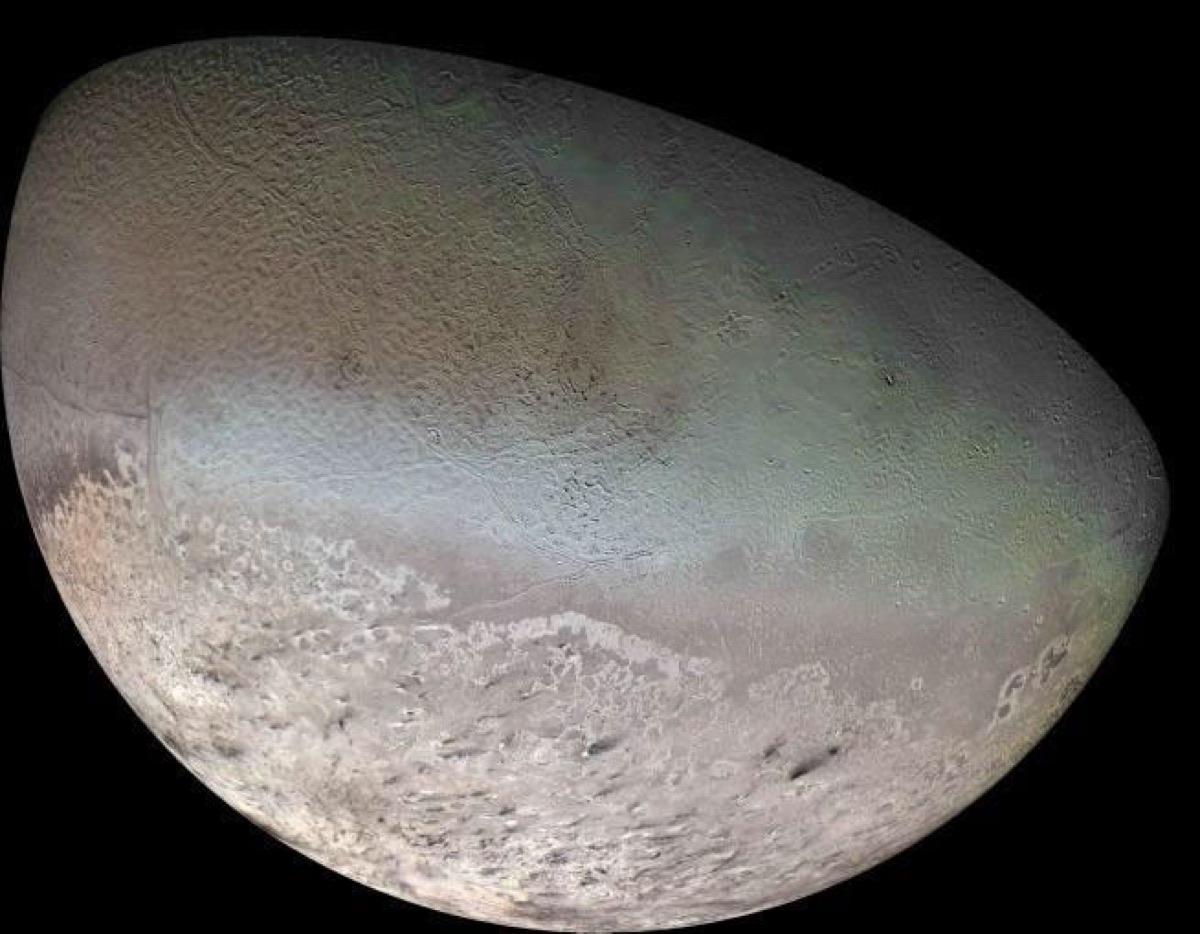
Mean diameter: approximately 2,705 km · Orbits Neptune.
Neptune’s largest moon travels around its planet in the opposite direction to the planet’s rotation. This retrograde orbit supports the interpretation that Triton was captured rather than formed alongside Neptune.
Voyager 2 observed active geysers during its 1989 flyby. Its nitrogen frost and unexpectedly active surface make Triton a reminder that distant, cold moons can still be dynamic worlds.
Sources: NASA moon guide · JPL size data.
Image source: NASA/JPL/USGS; reuse terms. Resized and JPEG-compressed.