
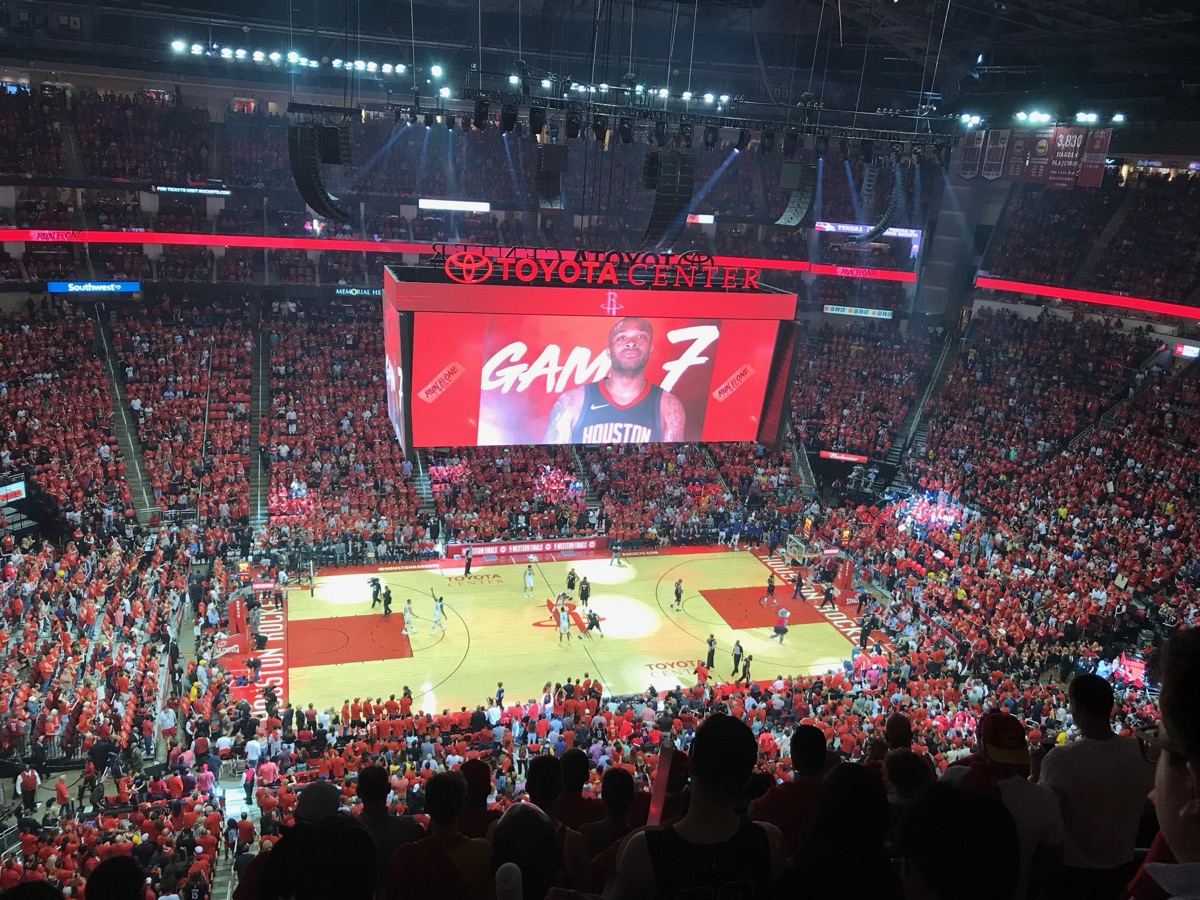
A Golden State–Houston matchup can bring back several different versions of the same rivalry. There was the meeting between Stephen Curry’s Warriors and James Harden’s Rockets at the height of their Western Conference competition. There was also a later series in which a younger Houston team pushed Golden State to a seventh game. The names and circumstances changed, but the appeal remained: talented teams facing one another repeatedly, with a season ending for one of them.
This list ranks three NBA playoff series between the Golden State Warriors and Houston Rockets through 12 November 2026. It is an editorial choice based on drama across the whole series, the stakes of the round and the impact of decisive performances. It is not a ranking of the best teams, a prediction about a future matchup or an objective measure of which supporters suffered most. Golden State won all three selected series; that does not erase the quality of Houston’s performances or imply that every series was equally comfortable for the winner.
The 2018 Western Conference finals take first place because they combined a trip to the NBA Finals, a seven-game contest and a reversal after Houston led the series. The 2025 first round comes second: Houston forced Game 7 after falling behind 3–1, and Buddy Hield delivered a remarkable shooting performance in the decider. The 2019 Western semifinals place third, with Curry’s decisive second half in Game 6 providing a memorable finish. A reader who values the closeness of individual games over the stage of the tournament could reasonably put 2019 higher.
There are other defensible choices. The teams’ 2015 Western Conference finals sent Golden State to its first NBA Finals in four decades, and its place in the beginning of that championship run gives it a strong case. But it ended in five games, while the two higher-ranked series here went the full seven. That distinction reflects our chosen criteria, not a claim that a short series cannot contain excellent basketball or historic consequences.
A series score is useful, but it tells only part of the story. A 4–2 result can include tight games and dramatic swings, while a Game 7 can be decided by a substantial final margin. The round matters too: winning a conference final brings a team directly to the championship series, whereas winning a first-round matchup still leaves several steps ahead. We weigh those differences explicitly instead of ranking by the number of games alone.
Availability also changes a series. Chris Paul missed the final two games of the 2018 conference finals after a hamstring injury; the result is recorded, but no one can know with certainty what would have happened had he played. In 2019, the Warriors had to close out Houston without Kevin Durant in Game 6. These facts help explain the setting without treating an injury as an achievement or reducing the opposing team to a footnote.
The NBA’s box scores and team recaps provide the results and individual numbers cited below. Rankings of excitement and historical significance remain ours. As with any sports debate, different memories deserve room: a Rockets supporter may remember the pressure of a comeback differently from a Warriors supporter, and a neutral viewer may prefer a different decisive game.
The countdown runs from number three to number one. For a primer on how basketball statistics are recorded, see NBA box-score stats explained. Which series would you put first: the conference-finals stakes of 2018, the seven-game comeback of 2025, or the dramatic close of 2019?
NBA.
Photo: Hhk1989 · CC BY-SA 4.0 · 2018-05-28. Resized and recompressed. Toyota Center before Game 7 of the 2018 Western Conference finals.
