
Tampa Bay defeated Houston 4–2 on 17 October 2020 in Game 7 of the American League Championship Series at Petco Park. It was a pennant-winning result, and on consequence alone it has a powerful claim to second place or even first. This list places it third because the two games above it offer either a more compressed late turning point or the special weight of the club's first pennant. Third is therefore a comparison of three strong selections, not a criticism of the achievement. The game remains an excellent introduction to the difference between controlling a single evening and surviving the emotional shape of an entire series.
The series supplied the pressure before the first pitch of the finale. Tampa Bay had taken a three-games-to-none lead, then Houston won the next three to force a deciding game. That sequence changes how an audience experiences a new contest: an early advantage can feel less secure because it follows days in which a larger series advantage disappeared. Yet the previous games do not put runs on the scoreboard in Game 7. A useful rewatch holds both ideas together. The recent losses explain the stakes and the surrounding anxiety, while the actual plays explain how the Rays won. Neither requires guessing what any individual privately felt.
An early lead still needs defending
Randy Arozarena hit a two-run home run in the first inning. From a viewing perspective, the early lead gives this game a different structure from a late-tie classic. Instead of waiting for one breakthrough near the finish, watch whether the team can protect an advantage while opportunities for the opponent remain. An early home run is a beginning rather than a conclusion. It can establish direction without deciding the result, and the subsequent innings test whether that direction holds. That is why a short highlight reel is an incomplete substitute: the first dramatic image tells the viewer what must now be defended, not how easy the defense will be.
Charlie Morton supplied five and two-thirds scoreless innings. The fraction deserves reading correctly: it means five full innings and two outs, not a decimal measurement of elapsed time. His work gives a rewatch a second focus beyond the home run. Observe how a starter's contribution fits into the full sequence of twenty-seven defensive outs, and how much remains after the starter leaves. Pitching success is not simply the absence of memorable offense; it can be the mechanism that makes an early scoring event meaningful. You do not need to invent a tactical explanation for every pitch to appreciate how long a small lead asks a defense to remain effective.
The competing case for a higher place
Houston's final two runs are also a reminder to distinguish a winning margin from an effortless win. Four to two is a completed result, not a description of how comfortable every inning felt. The serious alternative case for this selection rests on its prize and its series context: it closed the door on a comeback and sent Tampa Bay to the World Series. Someone ranking by the magnitude of the achievement should reasonably put it above the Division Series game. Our order instead gives additional weight to a late direct confrontation in a close decider. Both arguments can use the same facts without pretending that preference is a statistic.
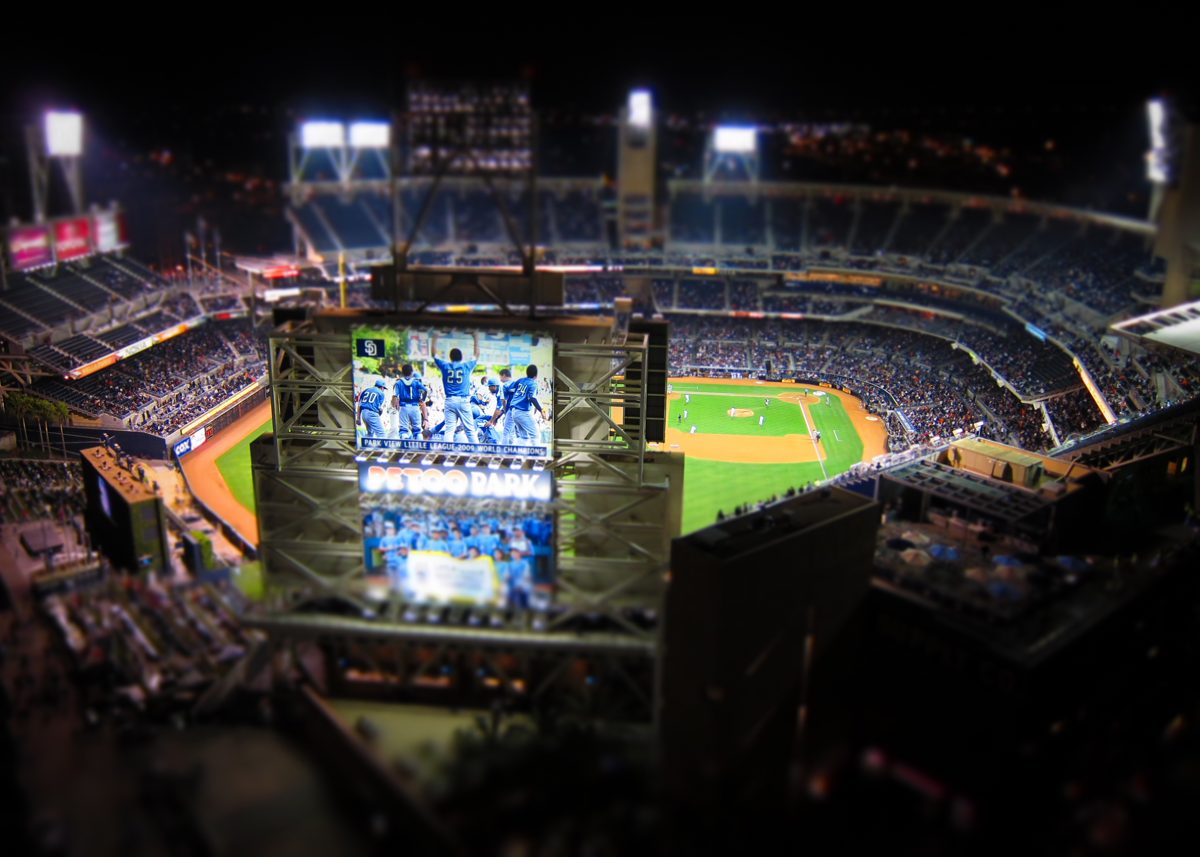
For a first rewatch, start with the series position, follow the first-inning change, then keep track of the outs still required after Morton's departure. That simple route avoids reducing the story to either collapse avoided or one player's highlight. It gives offense and run prevention distinct jobs in the same result. The 2010 Petco Park photograph is contextual venue imagery, not an image of this 2020 contest. The game earns its place as the selection about protecting a renewed opportunity: a team that could no longer rely on its earlier series lead had to finish the job in one final game, and did.
Photo: Nan Palmero, MBA · CC BY-SA 3.0. Petco Park, 10 September 2010 (Exif); archival venue context, not the ranked 2020 games; original selective-focus effect retained. Resized and recompressed; no new crop; adapted image remains CC BY-SA 3.0.
