
Which Lakers championship team would you choose to represent the franchise at its most formidable? Our three-team countdown puts the 2000–01 Lakers first, the 1986–87 Lakers second and the 1971–72 Lakers third. The question concerns a single championship season, not an entire dynasty or the individual careers of its stars. We restrict the field to Los Angeles title teams through the 2024–25 season, with historical facts checked on 2 November 2026. This is an editorial comparison of completed seasons. It does not predict the current team's results or claim that an imagined meeting across eras can be settled with certainty.
Our first criterion is dominance during the championship playoffs. Sustained regular-season strength comes next, followed by the clarity of the team's basketball identity: how its leading players and supporting roles fit together. We use this order of priorities rather than inventing numerical weights or a composite score. A season with fewer regular-season victories can therefore finish first when its title run makes the strongest case. Readers who value the full schedule above the postseason should find a serious alternative here, especially in the 1972 team. The ranking is useful precisely because the disagreement can be traced to a stated choice.
The timely starting point is a basketball search group, rather than evidence about these historical teams. At approximately 17:57 UTC on 2 November 2026, we inspected Google Trends Trending Now for the United States, past 24 hours, all categories, sorted by search volume. “raptors vs lakers” showed a rounded 200K+ bucket and 1,000% growth. Its breakdown mixed several NBA matchups and included “lakers vs raptors.” Higher groups included tragedy and injury searches; those were unsuitable foundations for this ranking. The displayed bucket describes the trend group, not monthly keyword volume, an exact audience size or demonstrated demand for a historical Lakers comparison.
The factual foundation comes from the Lakers' season records and official media guide, with NBA historical season reviews supplying context. We keep the measurements separate from the interpretation. Wins and losses describe what happened within a particular competition; they do not automatically account for changes in rules, schedules, opponents or playoff formats. Comparing the number of playoff wins alone would be especially misleading when the tournament required different numbers of victories. A strong argument should explain why a record matters, then acknowledge what that record cannot establish. We do not claim to have adjusted every era into an identical laboratory.
It also matters to distinguish a team ranking from a collection of famous names. A recognizable star can make a season easier to remember without proving that its roster was the strongest version of the Lakers. Our reading favors a convincing collective result and a clear way of producing it. That leaves room for competing choices: a fan could prefer a different title season because of resilience, a particular opponent or the balance between offense and defense. The three selected teams are finalists under our criteria, not a claim that every other champion lacked a persuasive case. The photographs identify associated players at other moments; none documents the selected championship run.
For background, Topnilo's guide to essential NBA rules explains the actions behind familiar basketball language, while our greatest NBA players ranking changes the unit of comparison from teams to careers. Keep that distinction in mind while reading the countdown. Before moving a team up or down, decide which criterion you would change and apply that change to all three. Would you put the championship playoffs first, choose the strongest full regular season, or favor the team whose style best expresses what Lakers basketball means to you?
Sources: Lakers season records · Official Lakers media guide · NBA: 1972 · NBA: 1987 · NBA: 2001.
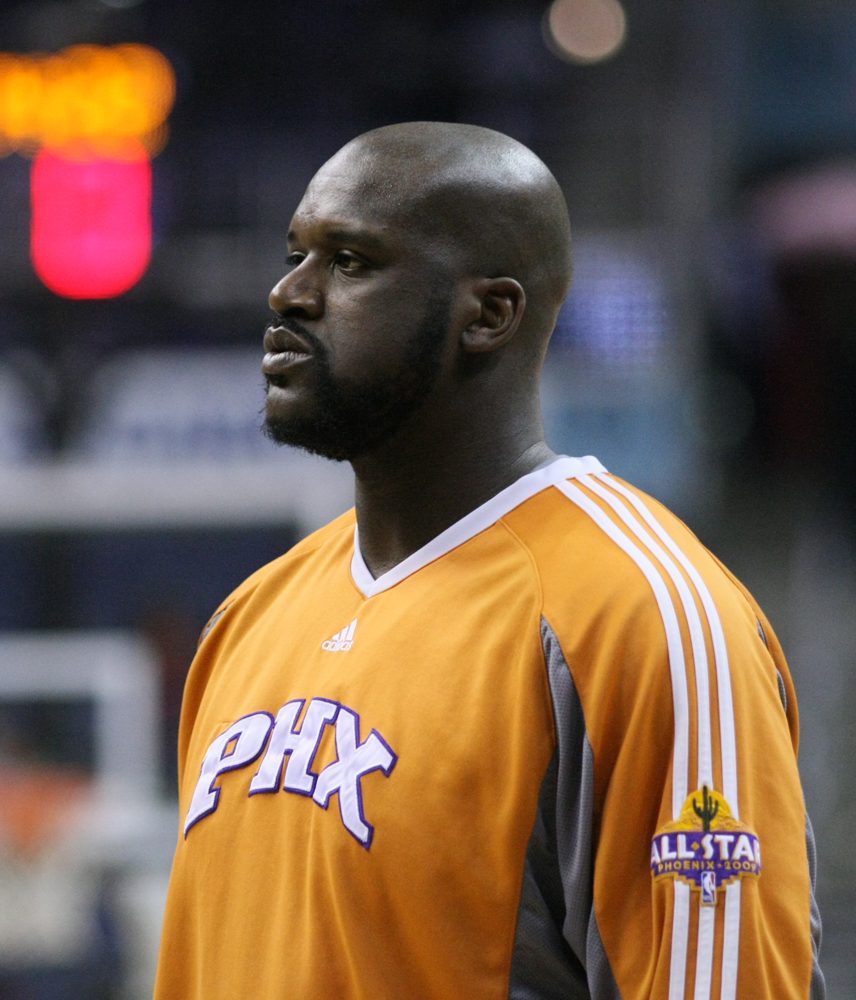
Photo: Keith Allison · CC BY-SA 2.0. Shaquille O’Neal on 26 January 2009; a later photograph, not the 2001 championship. Existing source crop and optimized JPEG reused unchanged; no endorsement implied.
