
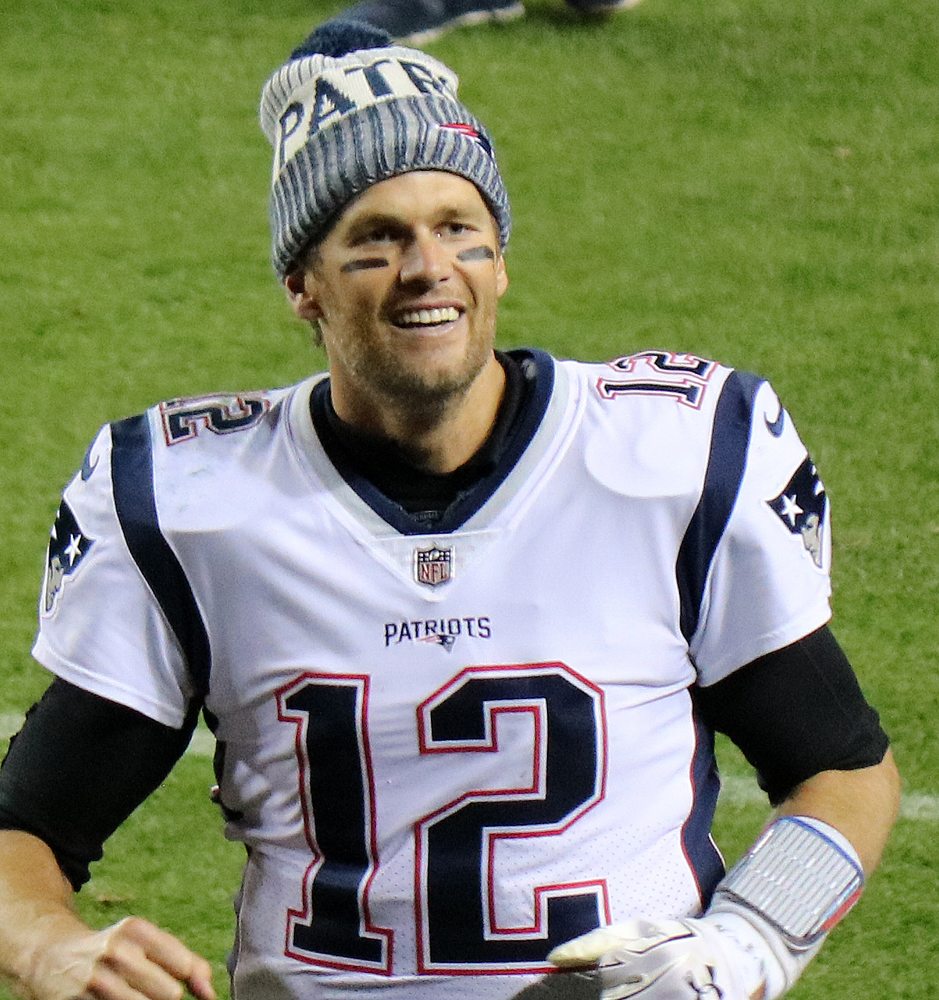
Tom Brady finishes first because his Patriots career satisfies all three of this ranking’s priorities together: sustained responsibility, an exceptional peak and repeated postseason achievement. The team’s Hall of Fame records twenty New England seasons, from 2000 through 2019, six Super Bowl championships and nine AFC titles. Those are franchise-specific achievements. His later championship elsewhere is outside this comparison and must not be added to New England’s total. Keeping that distinction clear does more than correct a number. It ensures that Brady is being measured under the same boundary applied to Grogan and Bledsoe, whose work for this particular club is the subject of the countdown.
The length of the record matters because an extraordinary short period and an extraordinary long career answer different questions. A peak can demonstrate what is possible when circumstances align; a long period of responsibility tests whether high-level contribution can survive change. That is our interpretation of the value of sustained achievement, not a claim that one player personally caused every successful season. Quarterbacks work within organizations. Coaches design and revise systems, teammates execute assignments, and defensive or special-teams performances can decide close contests. Brady’s first place remains strong when those facts are acknowledged. It does not require turning a collective sport into a solitary accomplishment.
The evidence and its limits
Six championships also carry more meaning when considered alongside repeated conference-level success rather than treated as isolated souvenirs. The Hall’s nine AFC titles establish that the Patriots reached the final stage more often than the six winning seasons alone would suggest. A loss at that stage does not become a victory, but neither should reaching it be erased because the last result disappointed supporters. This distinction helps evaluate postseason records consistently. If Bledsoe receives credit for reaching Super Bowl XXXI without being given a championship, Brady’s broader case should likewise retain both the achievements and the difference between competing for a title and winning one.
For a viewing guide, look beyond the dramatic finish and ask how an offense keeps a possession workable. A short completion, a decision to avoid a dangerous throw or a change in the available answer can matter even when it does not become a famous clip. These are analytical questions for examining footage, not a list of unseen actions we assume Brady performed on every snap. The distinction is important: reputation can make viewers imagine perfection before they have watched the play. First place should invite closer scrutiny, not exemption from it. Errors and unsuccessful possessions belong in any serious assessment of an athlete’s career.
The strongest competing case
Neither rival has to be diminished to explain the gap. Grogan offers longevity with a different balance between running and throwing; Bledsoe offers a concentrated period in which passing responsibility and renewed contention support a strong second-place argument. Brady’s advantage is that his Patriots record combines exceptional duration with a much larger set of championship-level outcomes. To move either rival above him under these criteria would require a persuasive account of why those combined strengths should count for less. Simply preferring an earlier era, or assigning every later success to teammates, would apply a different standard only when it becomes convenient.
The most useful disagreement therefore concerns the definition of greatness and the order behind him. A fan may value identification with a club, aesthetic preference or the emotional force of an earlier team more than this list does. Such preferences can produce an honest personal favorite without changing the historical record. Brady is our best Patriots quarterback because the stated criteria point in the same direction, not because popularity decides the question. After reading all three cases, which trade-off would you defend: Bledsoe’s concentrated role in contention or Grogan’s longer, more distinctive association? Keeping that second-place debate open makes a seemingly obvious number one a richer discussion about what a franchise remembers.
Source: Patriots Hall of Fame historical record 1.
Photo: Jeffrey Beall · CC BY 4.0. Tom Brady on 12 November 2017; historical context photograph. Existing source crop retained; resized/recompressed, no further crop or AI enhancement. No endorsement.
