
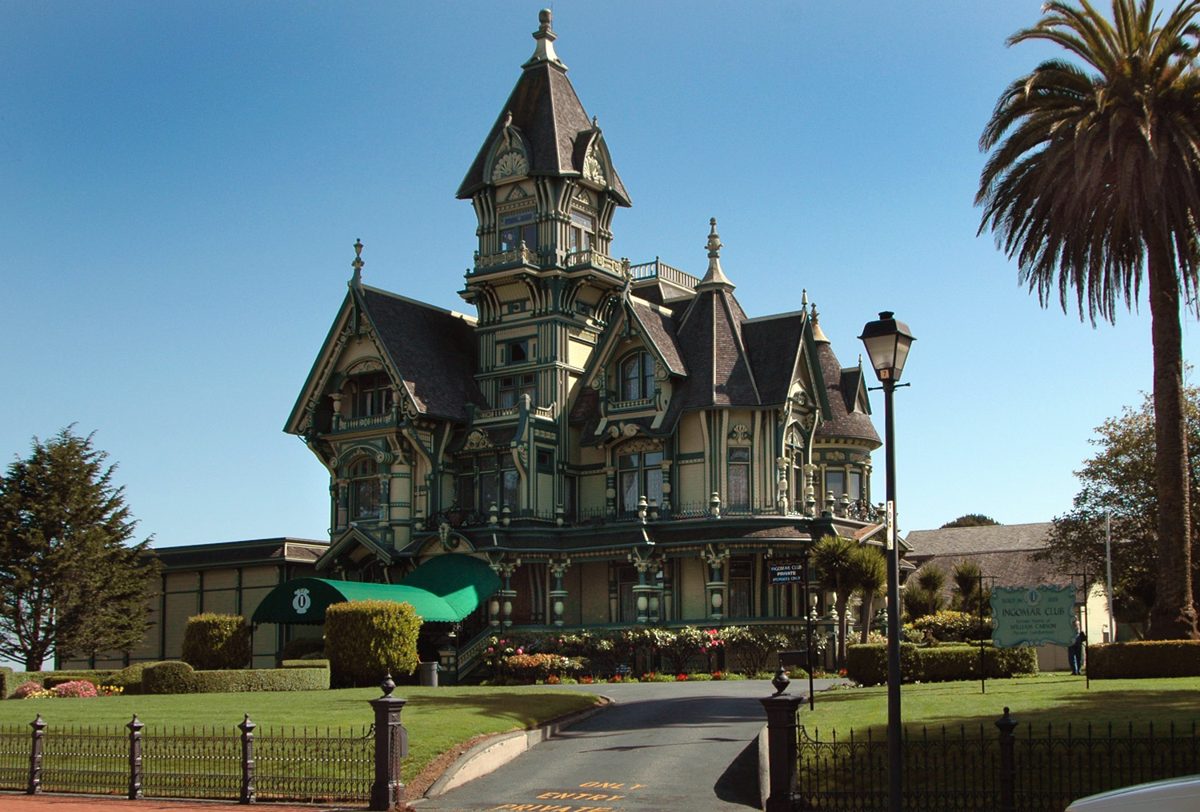
A neighborhood walk becomes more interesting when a roof, porch or window starts to tell you what kind of house you are seeing. This guide introduces ten architectural styles and revival traditions found in the United States, with photographs that let you compare their visible clues. It is a beginner’s shortlist, not a complete history of American housing. The countdown gives the highest positions to especially memorable exterior combinations, finishing with the mansard roof associated with Second Empire houses. The order is an editorial learning aid, rather than a ranking of beauty, value, popularity or historical importance. Sources were checked on 26 October 2026.
Start by looking at the whole shape before reading the ornament. Is the roof low and spreading, sharply gabled, or broken into an upper and lower slope? Does the front appear balanced around a central doorway, or does it assemble several projecting parts? Then examine the transition between the wall and roof, where brackets, exposed rafter ends or deep overhangs may become useful evidence. Finally, compare windows and porch supports. This sequence prevents a single decorative detail from doing too much work: one bracket or one pointed opening rarely explains an entire building by itself.
A style is a grouping of related design choices, not a construction certificate. Houses can combine influences, acquire additions or lose details. A replacement surface may hide the material you expect to see; a later porch may change the balance of the front. Record the features you can actually observe before assigning a label. “Low roof, wide eaves and a broad porch” is a stronger first note than a confident guess based only on paint. A building can also be ordinary or regionally distinctive without fitting neatly into any of these ten categories.
Several names need particular care. Victorian describes an era and a broad context, rather than one universal house shape; this list therefore separates Queen Anne, Italianate and Second Empire examples. Revival means that a design draws on an earlier tradition, so a Tudor Revival house is not automatically a surviving Tudor-period building. Dutch Colonial Revival belongs to a wider revival family, while Shingle Style names an overall architectural approach, not every house covered in wood shingles. The aim is to learn how labels differ, while keeping room for buildings that cross their boundaries.
The photographs are selected examples from different places and dates, not a survey of every regional variation. Compare the feature discussed in an entry with the larger building in its image, and notice which features are less visible from that angle. The captions identify the locations and retain historical photo dates where known. A photograph supports observation of what it shows; it does not establish an unseen floor plan, the condition of a structure or whether the interior is open today. This is a visual learning guide, not restoration, purchasing or building-work advice. For a visit, check the property’s own current access information.
You can make the exercise practical without turning it into a test. Choose two houses you can see from a public place, write down three visible differences, and compare them with the entries. If the labels remain uncertain, keep the observations and look for a local historic inventory or a building history. Our architectural-features guide supplies useful vocabulary for parts such as columns and pediments; the Chicago-buildings article offers a wider comparison of urban forms. After the countdown, return to the roofline before the decorative detail. Which clue made a house easier for you to read: its silhouette, its windows or the way its porch meets the street?
Sources: National Park Service · University of Vermont · Washington DAHP.
Image: Carson Mansion Eureka California.jpg — Cory Maylett · CC BY-SA 3.0. Resized and recompressed as JPEG without cropping or upscaling. Original license or public-domain status retained; no endorsement implied. This adapted image is freely available under CC BY-SA 3.0; further reuse must retain its license and original attribution.
