
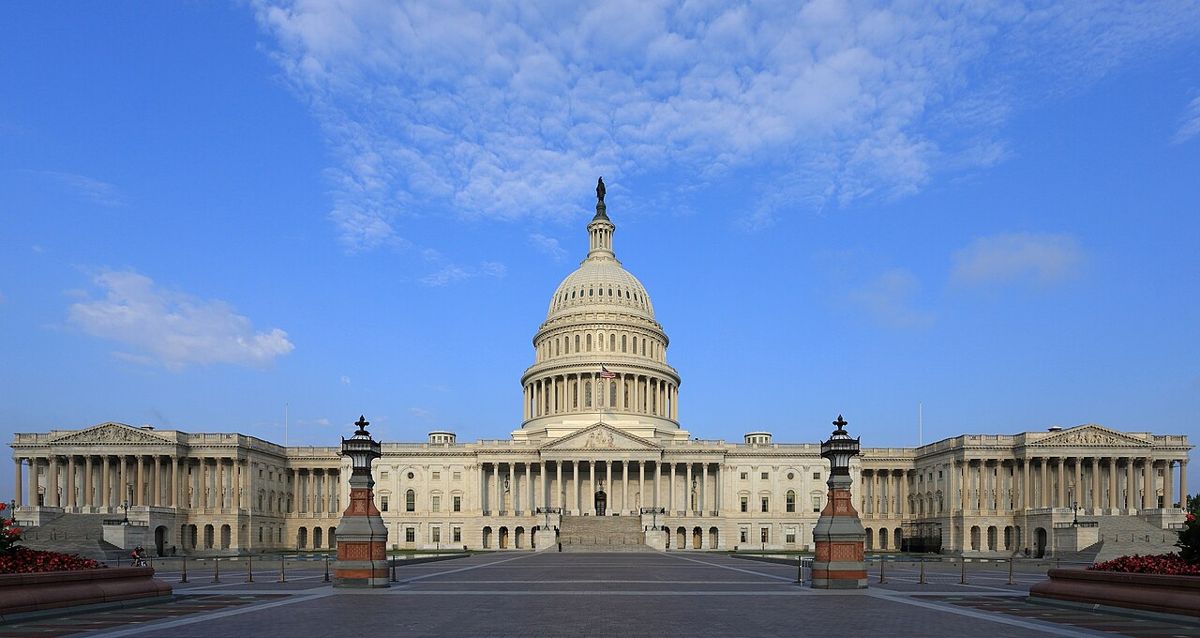
Washington, DC rewards looking beyond its famous silhouettes. A cast-iron dome crowns the Capitol, a marble temple frames the Lincoln Memorial, and a bronze-colored screen filters light into the National Museum of African American History and Culture. These buildings and monuments are products of different eras and purposes. Together they show how the capital has used architecture to express government, memory, culture and public life.
We rank ten landmarks in Washington by architectural interest, the clarity and originality of their design, their relationship to their setting, and what a visitor can learn by looking closely. This is an editorial comparison, not a measurement of beauty or a judgment of the historical figures commemorated. The Capitol comes first for the scale and evolution of its civic design; the Lincoln Memorial is a close second for the relationship between its temple form and the Mall. The National Gallery's East Building ranks third for its bold geometry and light.
Someone who prefers contemporary architecture may put the African American history museum or East Building first. A reader interested in engineering could favor the Washington Monument; another might choose the Library of Congress for its richly decorated interior. We include memorials, museums and government buildings because their architectural ideas can be compared, while recognizing that they serve different communities and purposes. The selection is limited to Washington, DC and is not a comprehensive history of its architecture.
Looking at a landmark as architecture involves more than identifying a style. Notice how a building meets the street, where visitors enter, how daylight moves across a facade, and what materials or shapes make the structure recognizable. At the East Building, triangles help organize a complex site. At the Lincoln Memorial, steps and columns prepare the approach to an interior chamber. At the Smithsonian Castle, red sandstone and varied towers distinguish a nineteenth-century institution from the pale classical buildings nearby.
Architecture also reflects choices and omissions. A memorial's appearance can express an ideal, while the history surrounding that ideal may be contested and incomplete. The National Museum of African American History and Culture uses its layered exterior to connect African and African American design traditions; its exhibitions explore histories much broader than a single facade. Looking at the building and learning from the institution are complementary experiences. Our ranking does not turn design excellence into a verdict on political history.
Dates and design credits are checked against the National Park Service, the Architect of the Capitol, the Smithsonian, the National Gallery of Art and the Supreme Court, as of 14 November 2026. Large civic buildings are rarely the work of one person alone: designers, craftspeople, engineers, later architects and conservators all contribute. We mention credited architects where the sources support them, without implying that a single person built an entire landmark. The Capitol, for example, changed over generations; its familiar iron dome was designed later than the original building.
These are places to understand, not a fixed one-day itinerary. Opening hours, entry arrangements, security requirements and restoration work may change; consult each institution before visiting and respect its rules. Some exteriors can be appreciated without entering, while the experience of a library or gallery also depends on access to interior spaces. For more ideas, explore our free Washington museums and architectural features guide. Which landmark would you place first, and would you prioritize its public setting, its structure or the details inside?
Photo: Martin Falbisoner · CC BY-SA 3.0. Resized and recompressed. The east front of the US Capitol, photographed in 2013.
