
A car can warn that another vehicle is in its blind spot, display the area behind the bumper, or apply the brakes when a forward crash appears imminent. The names on a window sticker can make those capabilities sound similar. They are not interchangeable: a warning asks the driver to act, while an intervention may briefly steer or brake under conditions defined by its manufacturer. This guide explains ten common driver-assistance features and the questions to ask before relying on any of them.
Our countdown is an editorial teaching order, not a measured league table of crash reductions. We give greater weight to how directly a feature can alert the driver to an immediate hazard or help mitigate a collision. Automatic emergency braking for a vehicle ahead is our first topic; pedestrian automatic emergency braking and forward collision warning follow. Your needs can produce another order. A rear camera may be especially useful in a crowded driveway, for example, while a driver who frequently changes lanes may value a blind-spot warning. None guarantees a safe outcome.
The guide focuses on passenger-car assistance, drawing on information from the United States National Highway Traffic Safety Administration (NHTSA), checked on 14 November 2026. Systems differ by model, equipment, software and market. A shared name does not prove that two vehicles detect the same objects, operate at the same speeds or issue the same alerts. A feature might be standard, optional or absent. Check the exact vehicle's manual, settings and equipment list; do not infer its capabilities from a badge or advertisement.
The distinction between seeing a hazard and stopping is essential. Forward collision warning can alert the driver but does not itself brake. Automatic emergency braking can apply braking if its conditions are met; it may reduce the severity of a collision rather than prevent it. A pedestrian detection function is a separate capability that should be verified for the specific vehicle. Rear cross-traffic warning can alert about approaching traffic when reversing, whereas rear automatic braking is a different intervention. The camera itself displays a view and cannot see everything around the vehicle.
Lane departure warning and lane keeping assistance are another pair worth separating. The first alerts when a vehicle approaches or crosses a marking; the second may make a corrective steering input. Lane centering, which can provide continuous steering assistance, is a different function. Adaptive cruise control can adjust speed to maintain a selected following interval, but it does not make a car self-driving. The driver must remain attentive, monitor the road and be ready to steer and brake. Weather, lighting, road markings, sensors and system settings can affect performance.
Use the list as a reading aid, not a substitute for safe driving or a recommendation to test a feature on public roads. Learn its alerts and limitations from the manual, keep the relevant sensors and camera areas unobstructed as directed, and have faults inspected by a qualified professional. Mirrors, looking around, suitable speed and attention remain important. Do not assume a warning will always arrive or that automatic braking will prevent every impact. A feature may be temporarily unavailable or behave differently in an unfamiliar situation.
NHTSA's descriptions support the functions outlined here; its 2027 model-year testing announcement illustrates why checking a particular vehicle's results is more useful than assuming every implementation performs alike. Ratings and equipment can change, and a feature's presence alone is not a complete assessment of vehicle safety. For related reading, see our guide to dashboard numbers and winter car checks. Which explanation would be most useful before your next drive?
Sources: NHTSA · NHTSA 2027.
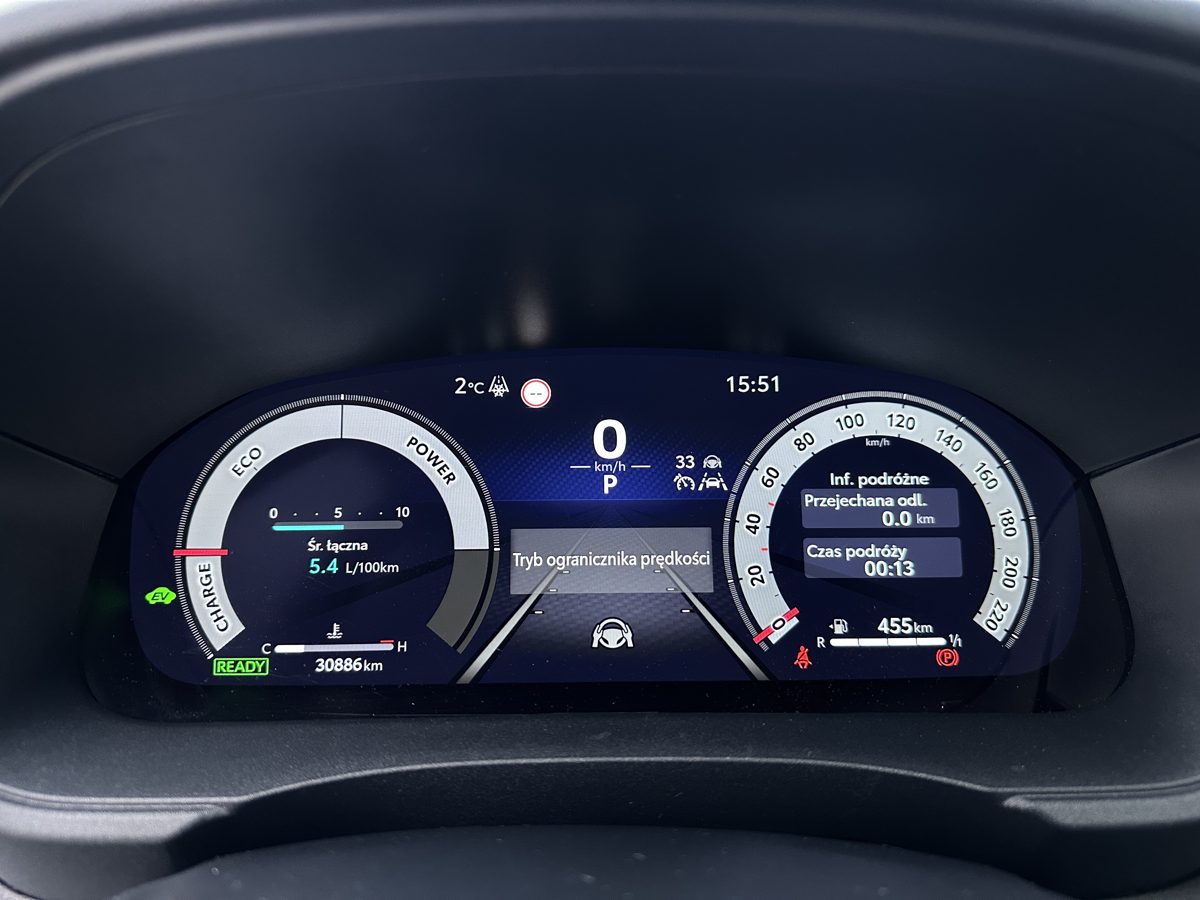
Photo: Acgskup; resized and recompressed. Wikimedia Commons · CC BY 4.0. Toyota Yaris digital instrument cluster photographed in 2026; contextual image, not a test of these features.
