
Durable-goods orders rank tenth because they illuminate business demand while requiring unusually careful separation of intention and completed activity. The Census Bureau's manufacturing survey distinguishes new orders, shipments, inventories and unfilled orders. An order is not a factory's finished output, and a shipment is not a consumer's final purchase. These stages can move differently without contradiction. A reader who learns the distinction here gains a useful method for interpreting many other business reports: identify the point in the process being measured before deciding what the change says about the wider economy or the timing of future production.
The release reports dollar values, so a higher total does not by itself establish that more physical units were ordered. Product mix and prices matter. An expensive aircraft order is different from a large number of smaller equipment purchases, even if both contribute to the same headline. Transportation categories can produce substantial swings, which is why readers often compare the total with a version excluding transportation. That comparison changes the scope; it does not reveal the one uniquely correct number. A report about transport manufacturing should not discard transport, while a question about broader equipment demand may reasonably examine a narrower grouping.
Prices, mix and a hypothetical order
Consider an imaginary manufacturer receiving orders worth 100 units of currency in one month and 120 the next. The increase is 20 percent, but the arithmetic does not explain why. It could reflect more products, a higher price per product, a different mix or a large contract arriving unevenly. The example is not US data and is not a forecast. Its purpose is to show the distance between calculating a percentage and interpreting an economic event. Before repeating the increase as evidence of a broad investment boom, inspect the categories and consider whether the movement is concentrated rather than widely shared.
Cancellations and backlogs add another layer. The Census description specifies new orders net of cancellations, and separately reports the end-of-month order backlog. A strong new-order month need not produce an immediate matching shipment if manufacturing takes time. Conversely, shipments can remain strong while companies work through orders received earlier. This does not make the report useless; it makes it a report about several related stages. A useful reading exercise is to describe each column in a short sentence without substituting one for another. If the sentences sound identical, the distinctions have probably been lost somewhere between the table and the headline.
Backlogs and the boundaries of investment
A narrower capital-goods category can help frame questions about equipment, but it is not the same thing as the complete investment component of GDP. Buildings, intellectual property and other economic activities belong elsewhere in the accounts. Nor should a single order release be read as a precise timetable for future growth. Timing, cancellation, delivery and revisions can all matter. The ranking therefore puts this indicator below broad output and consumption measures for a general reader, while recognising that someone studying manufacturing could reasonably give it much greater attention than its position here suggests.
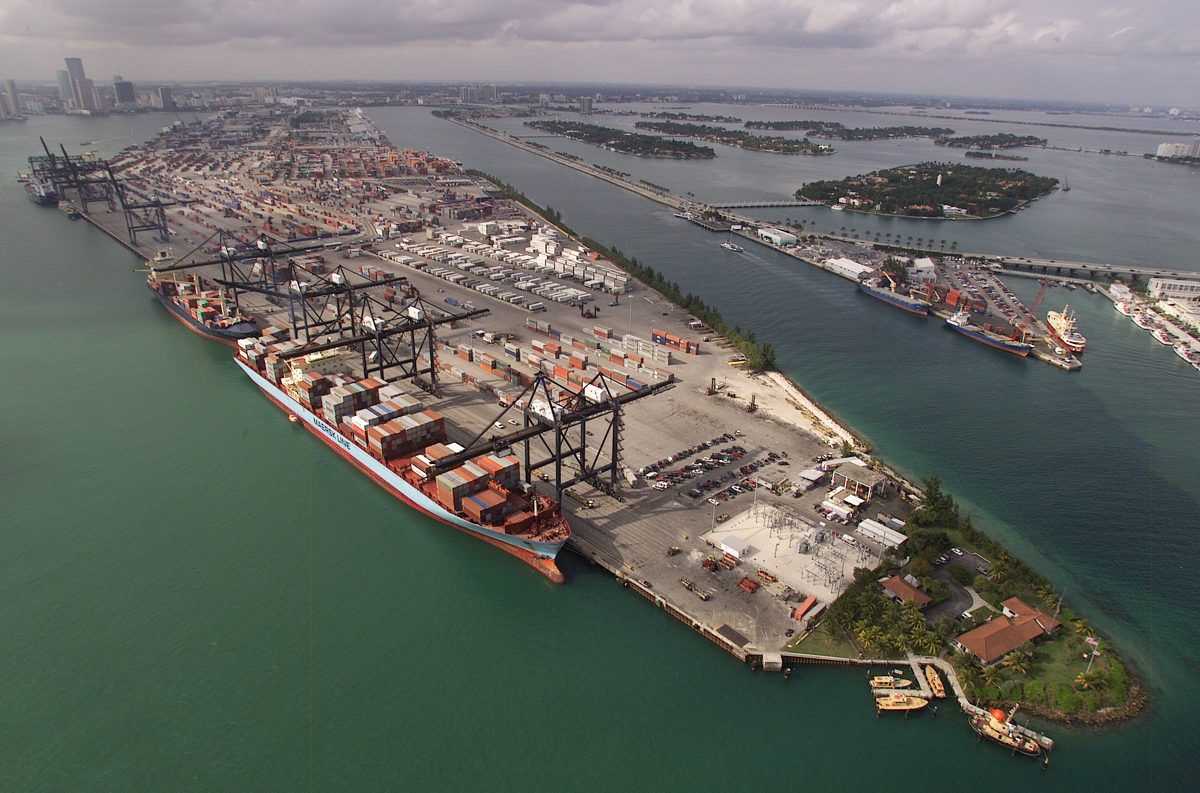
Read the release in a sequence: confirm the period and adjustment, inspect the total, look at the category responsible for the change, then compare orders with shipments and backlog. Keep any exclusion in the sentence you write. “Orders excluding transportation” is a different claim from “all orders,” not an editorial detail that can be dropped later. The archive logistics photograph is only an illustration of physical commerce, not a record of these orders or a substitute for manufacturing data. What makes the series useful is the structured question it answers, provided the reader does not turn a new commitment into a finished sale.
Source: U.S. Census Bureau.
Photo: Aerial photograph of the Port of Miami Container Port.jpg · James R. Tourtellotte · Public domain. Archive illustration only, not a survey observation or current economic evidence; resized and recompressed without cropping. Original image rights retained.

