
Initial unemployment-insurance claims rank sixth because they offer a frequent view of administrative activity connected with emerging job loss. The Department of Labor publishes weekly claims data reported through state programmes. An initial claim is not the same as a person being counted as unemployed in the household survey, and it is not a complete count of every layoff in the country. The programme's coverage, filing process and timing all matter. This makes claims useful for following changes, provided the reader keeps the administrative measure separate from the broader concept of unemployment rather than treating the two labels as synonyms.
Initial and continuing claims answer different questions. Initial claims relate to the beginning of a claim, while continued weeks claimed concern people continuing to claim unemployment benefits. The distinction resembles an inflow versus an ongoing condition, though the official definitions and reporting periods should always be consulted. A weekly rise in new filings does not by itself reveal how quickly claimants find work or how many unemployed people never appear in the programme. Likewise, a continuing-claims figure cannot simply be substituted for new claims because it is larger or seems to fit the argument someone wants to make about the labour market.
Initial versus continuing claims
Weekly data can be noisy, so a four-week moving average provides another perspective. Consider four invented weekly counts of 200, 220, 180 and 240: their average is 210. Adding a new week and dropping the oldest changes the average using overlapping information, not four entirely new observations each time. This example uses arbitrary units and is not a claims forecast or recent release. Its purpose is to explain why a smoothed series may move differently from the latest week. Neither view is automatically right for every question; the single week highlights immediacy, while the average reduces the influence of one unusual observation.
Calendar patterns and disruptions complicate interpretation. A seasonally adjusted series attempts to account for recurring patterns but can still be affected by events that do not follow the normal schedule. Administrative reporting can also be revised. Read the release's technical notes and retain the week-ending date rather than describing the number only by the day it was announced. A statement about “this week's report” may concern claims filed in an earlier week. That timing distinction is simple, but it prevents a specific event from being credited with a change that actually belongs to a different reference period.
Timing and broader labour evidence
Claims should be placed beside payroll employment and the household unemployment rate, not forced to replace them. New filings may help identify a developing issue, but they cannot describe all hiring, all separations or the full working-age population. An unchanged claims level can coexist with changes elsewhere in the labour market. Nor does a lower number establish that every household is secure or every job is good. The indicator ranks relatively high because of its frequency and its clear administrative subject, while remaining below broader labour measures for readers trying to understand the overall employment situation rather than one part of it.
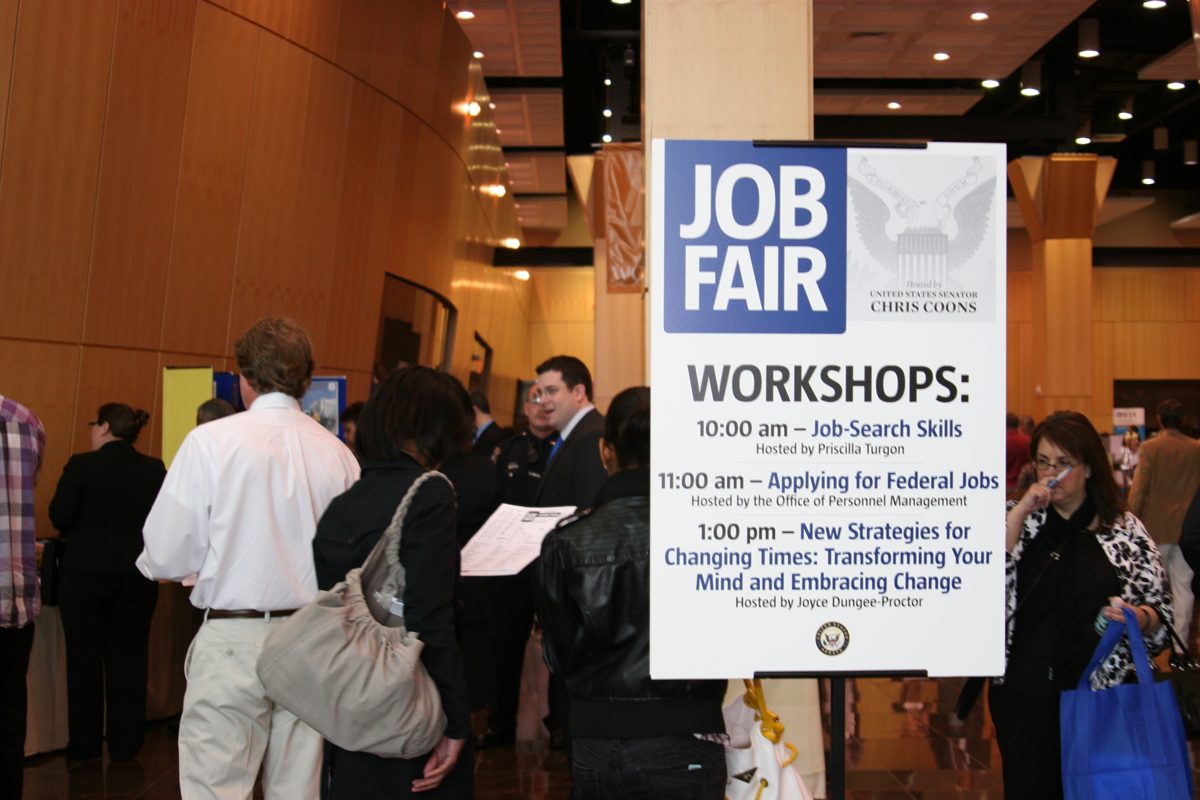
A useful summary asks whether the newest week, the moving average and any revisions point in a similar direction, then states what remains unknown. Avoid converting a claims release into advice about an individual's benefit eligibility; that is a separate administrative question with its own rules. The archive job-fair photograph illustrates the labour-market theme and is not evidence about claimants or current filings. Read the actual table, identify the programme and distinguish initial from continued claims. The reward is a more disciplined account of an early signal, rather than a dramatic headline that accidentally turns one administrative series into the entire economy.
Source: U.S. Department of Labor · U.S. Department of Labor.
Photo: Sen. Coons Job Fair.jpg · Senator Chris Coons · Public domain. Archive illustration only, not a survey observation or current economic evidence; resized and recompressed without cropping. Original image rights retained.

