
Who changed how we understand nature most: Isaac Newton, Albert Einstein or Charles Darwin? Each has a strong case, but the question does not have a scientific answer. This is a historical and editorial ranking, not an intelligence test or a claim that discovery is the work of a single person. We compare the explanatory reach of a person's research, its lasting influence on later inquiry and the way it opened new questions. Newton leads this selection because his mathematical account of motion and gravity connected events on Earth with the movements of the heavens. Einstein and Darwin follow, and a reader who prizes a different kind of influence could reasonably reverse that order.
Our scope is research into the natural world, from early modern astronomy to twentieth-century physics and biology. That leaves out many mathematicians, engineers, physicians and contemporary investigators whose achievements could support another list. Even within this narrower scope, a ranking across disciplines is an imperfect tool. The explanatory reach of natural selection cannot be converted into a common numerical unit with a theory of gravity. The choices below are judgments about historical significance, informed by evidence; their exact order is open to debate. The date of assessment is 7 November 2026.
Consider why the leading cases are so different. Newton's laws gave later researchers a common mathematical language for forces and motion, from falling objects to planetary orbits. Einstein transformed the concepts of space, time and gravity; his 1921 Nobel Prize in Physics particularly recognised his explanation of the photoelectric effect. Darwin marshalled evidence for evolution through natural selection, a mechanism independently developed by Alfred Russel Wallace. If the question is which framework most changed the study of living things, a case for Darwin at number one is easy to make. If the question is which account most changed fundamental physics, Einstein's supporters have a strong answer too.
Great work also has a social history. Marie Skłodowska Curie and Pierre Curie investigated radioactive materials after Henri Becquerel's discovery of radioactivity; their collaboration does not diminish Marie's distinctive achievement. Rosalind Franklin's X-ray research, conducted with colleagues including Raymond Gosling, supplied evidence central to the DNA story alongside work by James Watson, Francis Crick and Maurice Wilkins. Readers should be wary of histories that turn complicated experimental teams into a single instant of inspiration. Recognition and access to institutions were uneven, and surviving fame is not a neutral measure of contribution.
The evidence behind a result matters as much as the famous name attached to it. Galileo's observations of Jupiter's moons gave a concrete example of objects orbiting something other than Earth. Gregor Mendel counted inherited traits across generations of pea plants. Michael Faraday studied electromagnetic induction experimentally, while James Clerk Maxwell later gave electromagnetic fields a mathematical description. Antoine Lavoisier's careful accounting helped make chemical transformations intelligible in terms of mass and oxygen. These scientists worked with predecessors, critics and collaborators; later experiments revised and extended their ideas.
Some readers may choose a different set altogether. Louis Pasteur's work on microbes, Charles Lyell's geology, Emmy Noether's mathematical physics or the achievements of researchers beyond Europe could justify places under a different scope and weighting. Awards are not our ranking method: the Nobel Prizes began long after several people on this list had died, and even a shared prize cannot capture every contributor. The order is not a recommendation to memorize ten names in isolation. It is an invitation to trace the questions, instruments and networks that made particular explanations persuasive.
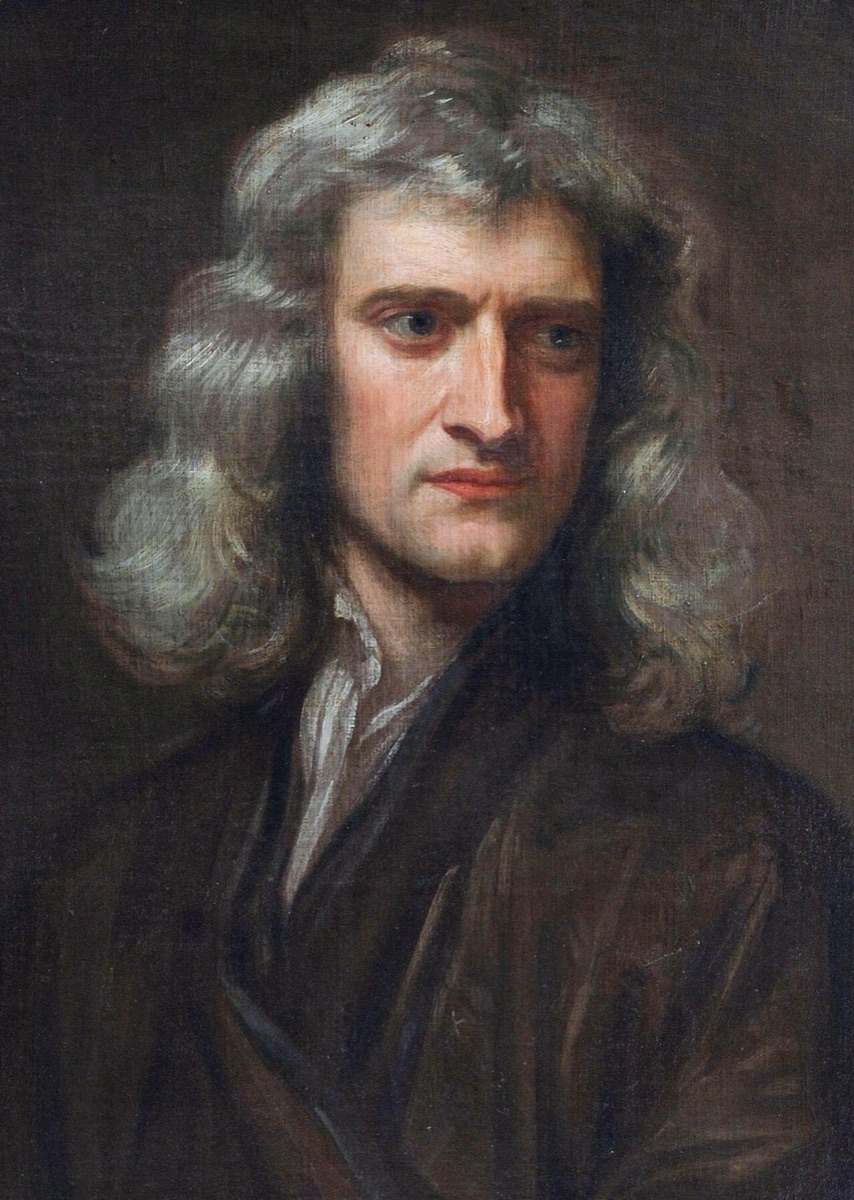
For another view of scientific progress, explore our greatest space telescopes and large moons guides. The opening image is Godfrey Kneller’s 1689 portrait of Isaac Newton. The entry images identify their subjects or context; they are not photographs of discoveries. Each entry links to sources that give the work more context. Who deserves your first place, and which achievement would you add to the debate?
Sources: NASA.
Sources: Nobel Prize.
Sources: Natural History Museum.
Image: Godfrey Kneller · 1689; public domain; resized and recompressed.
