
Super Bowl XIX ranks third for turning a major quarterback matchup into a demonstration of a complete team. On 20 January 1985, San Francisco defeated Miami 38–16 at Stanford Stadium. Joe Montana earned the game's MVP award after passing for 331 yards and three touchdowns. The score belongs to the championship of the 1984 season, a distinction worth keeping beside the calendar date. Our ranking recognizes more than an attractive offensive total. The game offers a clear example of a team taking control after an opponent had started effectively, making it an excellent first watch for someone interested in how a convincing victory develops.
Miami led 10–7 during the first quarter. The 49ers then scored twenty-one unanswered points in the second quarter, reaching a 28–10 advantage before Miami added field goals. That progression is more informative than the final margin alone. It gives a reader a sequence to follow: an early exchange, a decisive change in control and the work required to sustain it. Avoid explaining the entire game as inevitable from the opening kickoff. The early lead belonged to Miami. Understanding how that changed preserves the opponent's role and makes San Francisco's achievement more specific than simply announcing that the better team won comfortably.
Craig and the defensive contribution
Roger Craig is essential to that account. He scored three touchdowns, combining receiving and rushing contributions, while Montana also reached the end zone on the ground. Looking at who finished the drives complicates the easy habit of reducing a championship to the quarterback's passing line. A useful review follows one scoring sequence through the players involved and then distinguishes the scorer from the full work that made the opportunity possible. That does not require inventing a blocking assignment from an incomplete camera angle. It means keeping collective execution visible even when an individual play is the easiest moment to remember.
The defensive performance gives XIX its strongest argument for a higher place. The official 49ers retrospective records four sacks and two interceptions of Dan Marino, with Miami's quarterback limited to one touchdown pass. Those outcomes are part of the reason an offensive headline should not stand alone. A team can establish control both by scoring and by restricting the response. For a beginner, compare the first-quarter score with the later game state and ask which possessions changed the balance. Statistics help locate those changes; they do not automatically explain every coverage, pressure or adjustment without fuller evidence from the game record.
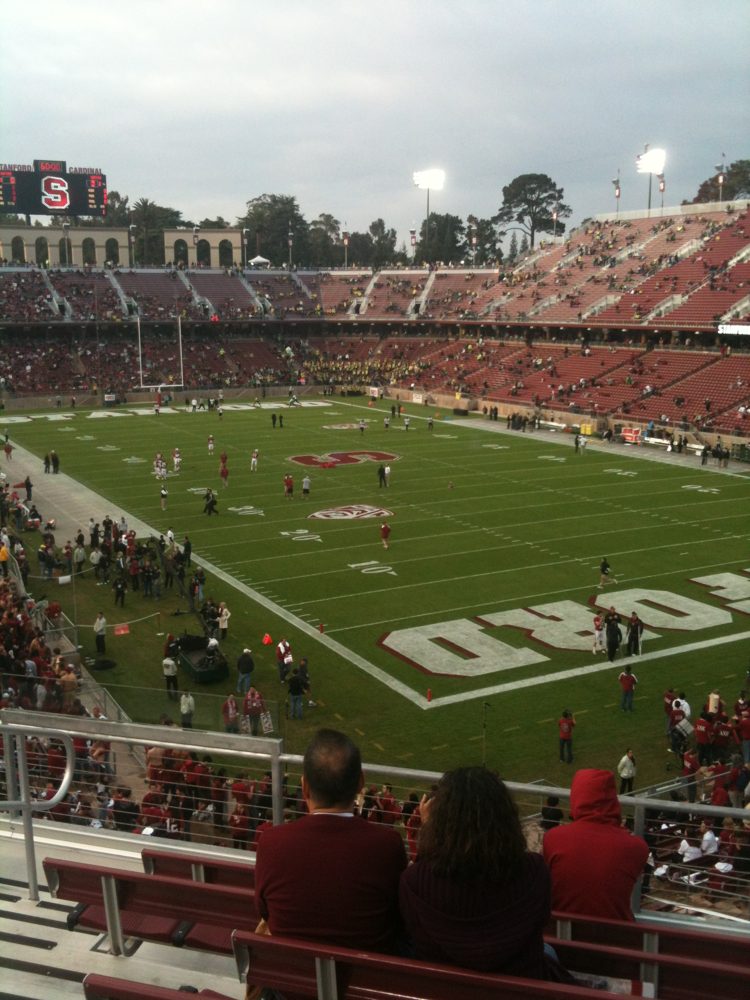
A later view of the host venue
The setting adds historical texture without making this a home-stadium claim. Stanford Stadium hosted the game; it was not the 49ers' regular Candlestick Park venue. The photograph used here shows the later Stanford ground, not the 1985 event. Stanford's official history documents the reconstruction completed for the 2006 season. An image from after that work can help identify the location while remaining a different physical view from the old championship setting. Keep that distinction when browsing venue photographs, just as you keep the playing date separate from the publication date of a modern anniversary article.
Third place reflects the strength of the two games above it under our stated priorities. XXIV offers an even more emphatic display of dominance; XXIII supplies a tighter championship finish. XIX could win for someone who values a balanced team performance against a notable offensive opponent, and its case should remain serious. The lasting lesson is that a large final margin can contain an interesting change of momentum and contributions across the roster. Start with Miami's early advantage, follow Craig's scoring role and keep the defensive stops in the same story. The result becomes a game with a structure, rather than merely a line beneath Montana's name.
Source: San Francisco 49ers · Stanford Athletics.
Photo: Feardabeard10 · CC BY-SA 3.0. Stanford Stadium before a Stanford–Oregon game, 12 November 2011; rebuilt after the 1985 Super Bowl. Later venue illustration, not championship action. Resized and recompressed without cropping; original license retained.
