
Mark Price is second because a franchise history should reward the work that makes good basketball repeatable, not only the possession most often replayed. His nine Cleveland seasons give this selection a different scale from Irving's six. The Cavaliers' historical guide records four All-Star appearances and an All-NBA First Team selection in 1992–93, showing that the case is more than local nostalgia. Those honors do not mechanically settle the ranking, but they establish a high individual level alongside the longer Cleveland commitment. Under our stated preference for sustained responsibility, that combination narrowly wins the argument behind LeBron James.
Price's case starts with shooting, but it should not end there. A defender who must respect a guard's shot has a different problem from one who can simply retreat. That changes the questions an offense can ask: when should the ball move, how closely should a screen be defended and where might another player receive space? This is a general way to understand the value of a shooting playmaker, not a claim that every Cleveland possession followed the same pattern. The historical guide also notes Price's repeated appearances among the league's leading assist producers during his Cavaliers years. His role therefore cannot be adequately described by remembering only a shooting contest.
The evidence and the basketball question
The best way to appreciate that role is to watch what happens before the obvious highlight. A guard can help an offense by moving the ball at the useful moment, keeping a defender engaged or making a teammate's next decision easier. Those contributions may produce fewer isolated images than a difficult finish, but a franchise ranking should leave room for them. We are not assigning Price credit for every good choice made by his teammates. Instead, we value the sustained responsibility of directing an offense, while distinguishing a player's own work from the collective result. That distinction applies equally to stars on championship teams and to stars whose teams did not reach that destination.
Price also belongs to a Cleveland era that needs more than a summary of the opponents who eliminated it. His partnership with Brad Daugherty is an important reason to consider the period on its own terms. Daugherty offers a strong countercase for this shortlist, especially if you value an interior player's contribution more heavily than we do. Our selection of Price does not make him the lone creator of that team's success. It identifies the combination of shooting, playmaking and sustained role that we find especially persuasive. A team history becomes less informative when all its players are treated only as supporting characters in somebody else's championship narrative.
The competing case and our verdict
The objection is obvious and fair: Irving helped complete the title that Price's Cleveland teams never won. If the largest postseason achievement determines second place, Irving has the stronger argument. We stop short of using that rule because opportunities differ across teams and eras, and a championship cannot isolate one individual's entire value. Nor do we claim that Price would necessarily have won with Irving's teammates, or that he would translate unchanged into any modern offense. Those are hypothetical questions. Our actual decision is smaller: Price's longer, highly recognized Cleveland work deserves a narrow preference under a method that begins with continuity rather than the biggest ending.
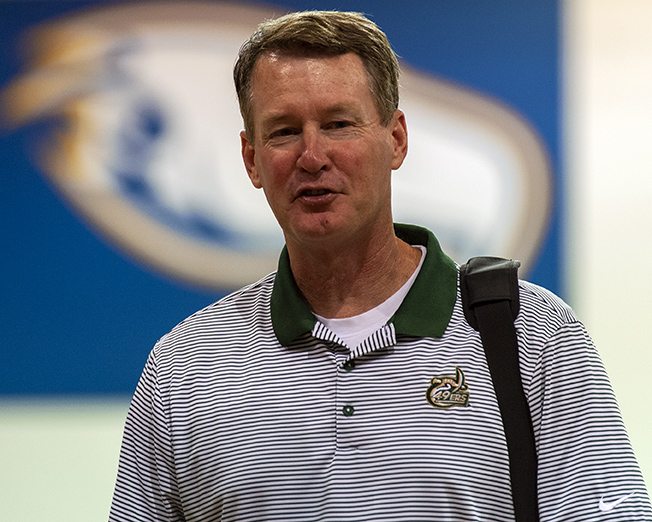
His second place should therefore invite a better comparison, not demand agreement. Watch a sequence of possessions and ask how an attack is being organized, which actions draw attention and whether the same player remains responsible when the first option disappears. Use that exercise to examine Irving as well, rather than applying different standards to an older favorite and a more recent star. Price's photograph here was taken at the University of British Columbia in 2016, long after his Cleveland playing period; it identifies the person, not a supposed Cavaliers game. He earns second for a substantial Cleveland body of work whose value survives even when championship memory makes another choice emotionally compelling.
Source: Official NBA / Cavaliers historical record 1 · Official NBA / Cavaliers historical record 2.
Photo: Ubcwwong · CC BY-SA 4.0. Mark Price at the University of British Columbia, 11 August 2016; later coaching-era context, not his Cavaliers playing years. Resized/recompressed; source framing retained, no added crop, recoloring or AI. Image retains its original linked license; no endorsement.
