
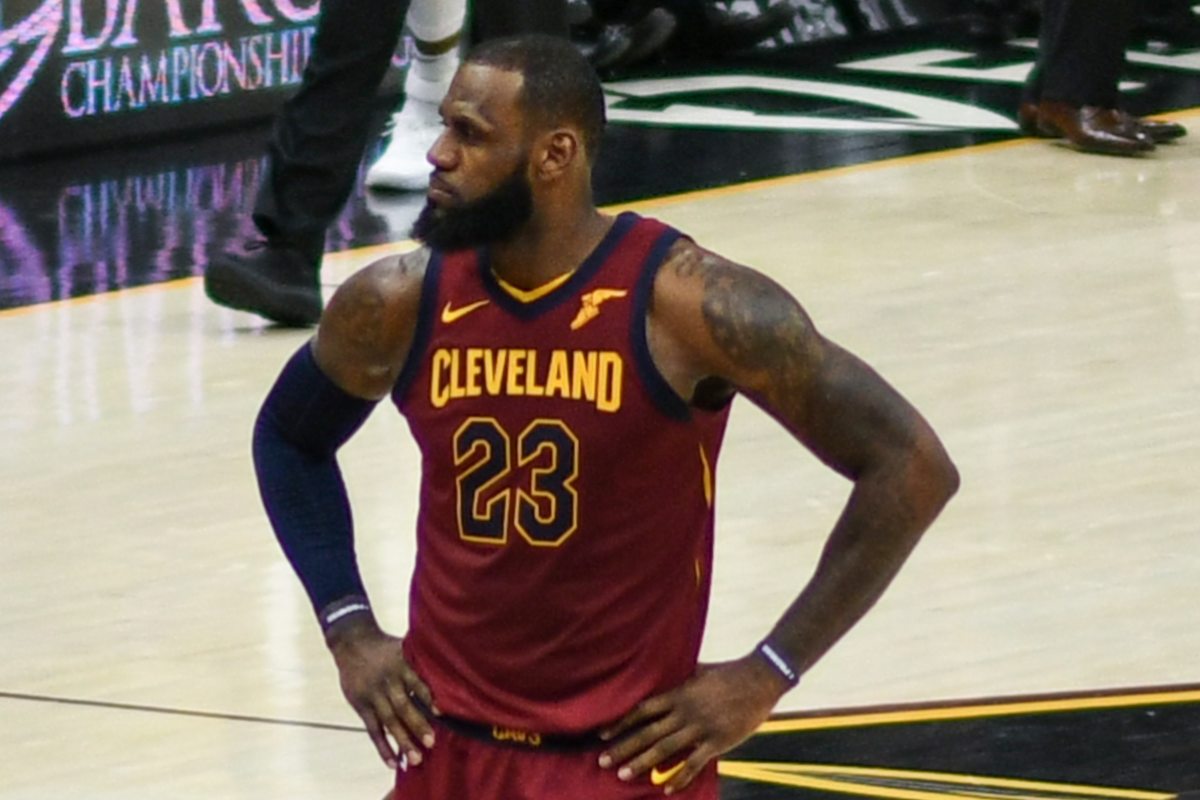
LeBron James finishes first because he wins this comparison on more than one of its central ideas. His Cleveland work through 2017–18 supplies both the long body of responsibility that strengthens Price's case and the championship-level impact that strengthens Irving's. The Cavaliers' 2016 title is a decisive part of the story, but our choice does not depend on treating one trophy as an automatic answer. James also provided a sustained individual standard that can be evaluated separately from the final outcome. That combination makes his position clearer than the close contest between the two guards behind him.
Keep the geography of the argument straight. We count his two Cleveland periods through the 2017–18 season, not achievements for Miami or Los Angeles and not anything after this historical cutoff. His Cavaliers years included consecutive league MVP awards in 2009 and 2010. Those awards identify a high regular-season level before the later championship, so the ranking need not pretend that his Cleveland significance began with the title. Neither should honors be used as a substitute for explaining a role. They are evidence within a larger case about how much responsibility a player could carry over time, rather than an independent points system that settles every comparison by addition.
The evidence and the basketball question
Our basketball reason for first place is breadth of influence. A player who can be a major scoring threat and an organizer forces a defense to consider more than the immediate shot. A possession may turn on the decision to attack, release the ball or change where the next advantage appears. James's case is especially strong when we ask who can shape several parts of a team's work rather than excel at one narrow task. This is an editorial reading of his Cleveland role, not a claim that he was flawless in every possession or superior at every individual skill to every teammate. Ranking overall value does not require pretending that specialization has no value.
The championship is the clearest demonstration of why individual and collective credit must coexist. Cleveland recovered from a 3–1 Finals deficit in 2016, and James received Finals MVP. Irving's scoring contribution remains his own, just as a crucial defensive action or a teammate's possession can matter without changing the identity of the leading figure. James's late chase-down block in the decider is an especially useful contrast with Irving's go-ahead shot: one preserves a possibility, the other changes the score. Remembering both is more informative than insisting that a title can be compressed into a single hero, a single play or a single kind of basketball work.
The competing case and our verdict
Could another priority overturn first place? A reader could prefer a different player as a favorite, or place special emotional value on an earlier Cleveland era. Those are legitimate personal attachments. They are different from demonstrating a stronger historical case under this article's criteria. Price's argument depends on sustained organizing work; Irving's on an extraordinary contribution to the biggest result. James has powerful evidence in both categories, which is why this ranking finds the first position much less uncertain than the second. We do not need later career totals, outside-team rings or speculative comparisons with the current roster to reach that conclusion within the stated window.
For a final viewing exercise, follow a possession without watching only the ball. Notice who changes the defense's choices, who provides a passing outlet and what happens when the original plan breaks down. Then compare an offensive example with a defensive one. That wider frame helps explain why the winner is not simply the player with the most attractive scoring clip. James takes first for the combination of sustained Cleveland excellence, broad responsibility and the championship peak. The discussion remains open where the evidence is closer: behind him, do you reward Price's longer foundation or Irving's title-defining creation more heavily, and would you use that same rule consistently for other franchises?
Source: Official NBA / Cavaliers historical record 1 · Official NBA / Cavaliers historical record 2 · Official NBA / Cavaliers historical record 3.
Photo: Erik Drost · CC BY 2.0. LeBron James with Cleveland, 27 February 2018; historical photograph. Resized/recompressed; source framing retained, no added crop, recoloring or AI. Image retains its original linked license; no endorsement.
