
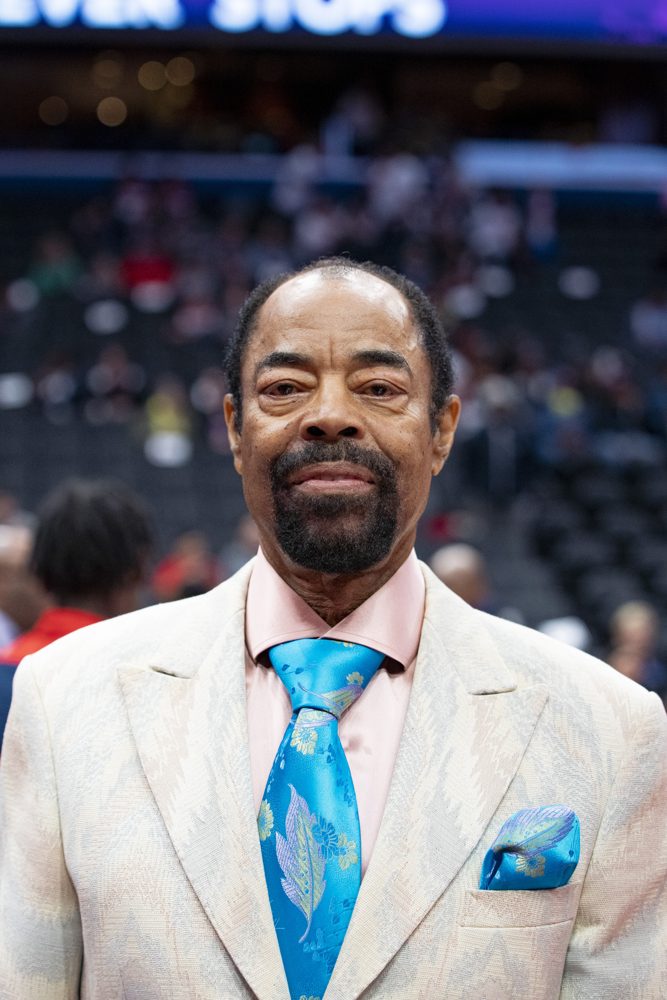
Walt Frazier ranks second because his case joins offensive responsibility, perimeter defense and championship contribution without requiring those categories to be considered separately. The Hall of Fame records seven consecutive selections to the All-Defensive First Team beginning in 1969, alongside his place on the Knicks' 1970 and 1973 championship teams. Those anchors make him more than an elegant supporting character in someone else's story. They also create the most immediate challenge to our choice of Reed. If controlling a team from the guard position at both ends is the decisive definition of a cornerstone, Frazier can reasonably become the winner.
Consider what it means to evaluate a guard beyond points. Bringing different offensive responsibilities into a coherent possession is a different task from simply ending it with a shot. Defense adds another set of decisions, including when to pressure, when to maintain position and how to avoid compromising the team while attempting a disruptive play. We are not assigning invented grades to those decisions or claiming that every contemporary game unfolded the same way. The point is that a broad role deserves a broad assessment. Frazier's documented defensive recognition supports taking that side of the comparison seriously, rather than treating it as a stylistic detail.
A decisive game and a sustained role
The official Knicks historical media guide supplies an essential counterweight to simplified memories of the 1970 title. In the deciding seventh game, Frazier recorded thirty-six points and nineteen assists. The figures matter because they show why the championship story cannot be reduced to Reed alone. A famous image can dominate recollection even when another player's work carries a large share of the actual contest. We use the official historical account rather than claiming to have independently re-scored film. The record supplies a clear reason to ask whether the player who directed and finished so much offense should receive first place in a discussion of that team's defining achievements.
There is also a difference between celebrating one performance and explaining a career. Frazier's Game Seven is a powerful starting point, but the repeated defensive recognition prevents his case from depending on one exceptional evening. The two forms of evidence answer different questions: one shows a particularly consequential result, while the other demonstrates repeated recognition across seasons. Neither is a complete measurement of every possession. Together, however, they justify a much stronger argument than nostalgia or a reputation for composure alone. A reader can favor Frazier because those responsibilities seem to offer the most complete model of a guard's influence within a championship team.
The closest challenge to Reed
Why does he remain second? We give Reed the advantage because our first priority emphasizes the decorated championship peak as a whole, with his regular-season and Finals recognition providing the distinguishing evidence. That is a close editorial decision rather than a claim that awards settle every question about shared team success. Frazier's counterargument is strongest precisely where our method is vulnerable: a team's most memorable leader and its most complete game manager need not be the same person, and recognition can distribute credit imperfectly. If you put greater weight on the combination of offensive direction and sustained perimeter defense, our top two positions should reverse.
Our runner-up verdict respects the seriousness of the challenge. When a title is shared, how should a ranking distinguish the player who sets the tone from the player who organizes so much of the decisive work? If the second responsibility carries more weight for you, Frazier is a persuasive number one.
Source: Naismith Hall of Fame · Knicks media guide.
Photo: All-Pro Reels · CC BY-SA 2.0. Walt Frazier portrait, 10 March 2020; not the 1970 Finals. Resized and recompressed without additional cropping; source license/status retained.
