
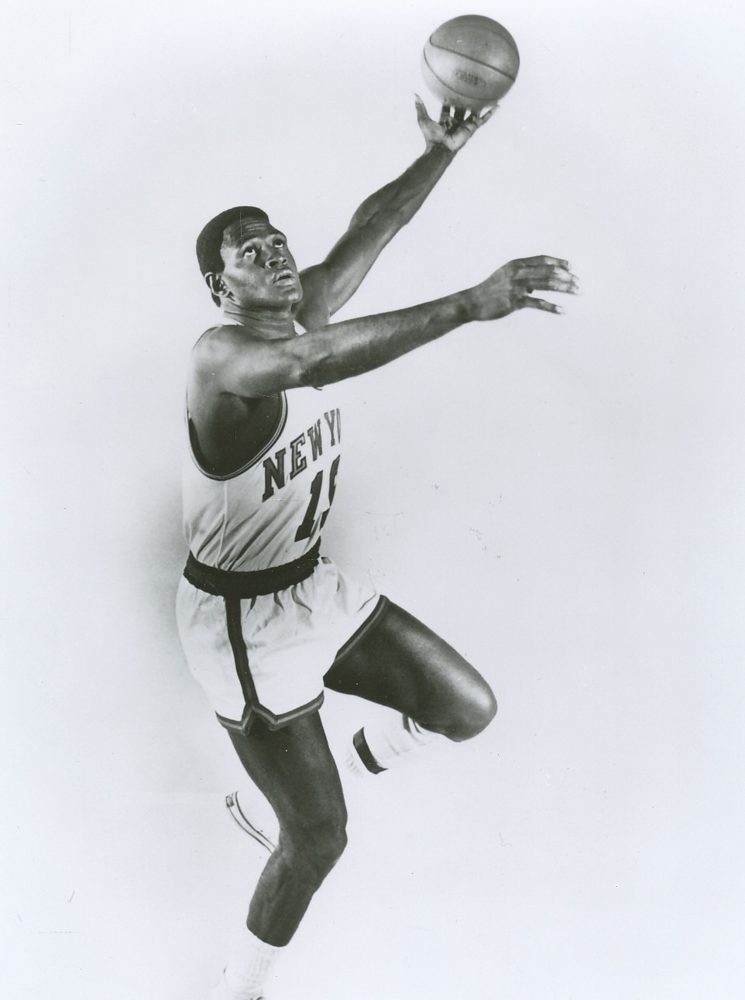
Willis Reed takes first place because this ranking puts the strongest weight on a decorated championship peak before the breadth and duration of franchise service. The Hall of Fame records the 1970 regular-season MVP award and two Finals MVP honors, while identifying his contribution to New York's 1970 and 1973 championships. Those are the factual anchors; the conclusion that they give him the edge over Frazier and Ewing is editorial judgment. We are not treating an award as an infallible measurement of individual value, but the combination provides a particularly direct answer to the criterion that comes first in this list.
The distinction between regular-season and Finals recognition matters. One concerns a wider campaign, while the other concerns the championship series. They should not be added together as though they were interchangeable points in a universal formula. Instead, they supply evidence that the case extends beyond a single image or an isolated burst of fame. Reed's strongest argument is the convergence of high individual recognition and team achievement at the moments this ranking prioritizes. A list led by longevity would ask a different question and likely produce a different conversation. Being explicit about that choice is more useful than pretending the same winner must emerge from every method.
Shared credit and a different era
The most important qualification comes from his own teammate. Frazier's decisive-game production shows that New York's championship story cannot fairly become a one-man narrative. Credit for leadership does not erase the work of the player directing possessions, and a center's recognition does not turn his teammates into accessories. Reed remains first only if we can acknowledge that shared responsibility while still identifying a distinguishing peak. This is why we discuss championship contribution rather than simply count rings. The collective result provides context, but the individual honors help explain why Reed separates himself under these priorities from another central contributor to the same success.
The Ewing comparison exposes a second limitation. A longer period of repeated franchise responsibility can carry enormous value even without the same championship outcome. Our ranking does not resolve that trade-off by inventing hypothetical games or assuming that one player could simply be transplanted into another era with unchanged results. The useful question is what kind of historical importance we want the list to reward. We choose the concentrated peak here. A supporter who values the long burden of being a franchise's central figure can reject that choice coherently, rather than accept the misleading idea that a title-free New York career has no case against a decorated champion.
The verdict and its limits
Reed's leadership also needs a basketball explanation. The importance assigned to him by the historical record does not let us measure every teammate's private reaction. Leadership is most useful in this comparison when it concerns shared responsibility, the expectations attached to a central role and the relationship between individual recognition and collective performance. A dramatic story cannot establish all of those things by itself. The argument therefore needs evidence that extends beyond the most familiar moment in a player's public image. The documented combination of peak recognition and championship contribution already provides a strong foundation. Treating that evidence seriously leaves room to admire the person without turning admiration into an unsupported explanation of every team result.
The final verdict is therefore Reed first, Frazier second and Ewing third among these selected classic Knicks, using playing contributions through 2000. It is not a ranking of later generations or a claim about the franchise's only title-winning periods. What should change the order is a change in priorities, supported by an argument: sustained responsibility for Ewing, complete guard influence for Frazier or the championship peak that gives Reed our vote. Which of those definitions matters most to you, and can you explain the choice without reducing the other two players to what they did not win?
Source: Naismith Hall of Fame · Knicks media guide.
Photo: New York Knicks · Public domain in the United States. Willis Reed publicity photograph issued by the New York Knicks, 1972; not a photograph of a game discussed. Resized and recompressed without additional cropping; source license/status retained.

