
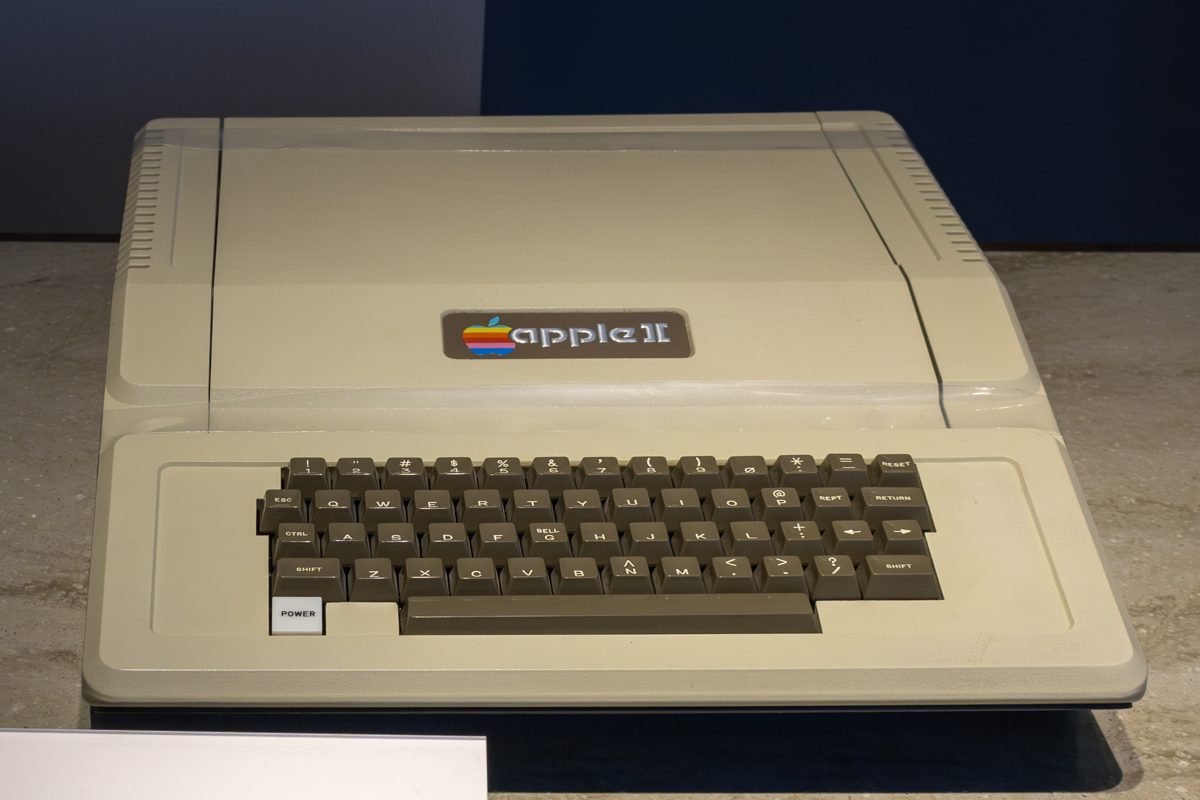
Which early personal computer changed everyday computing most: the Apple II, the IBM PC or the Macintosh? Our answer is Apple II first, IBM PC second and Macintosh third. We rank ten commercially offered personal-computer designs associated with introductions from 1975 through 1985. The priority is their contribution to making a computer useful to individuals, followed by the software and peripheral ecosystem around them, then the new habits they encouraged. That is an editorial judgment about influence, not a benchmark result, a sales championship or a claim that one machine invented personal computing alone. Changing the criteria can change the winner.
Apple II wins because our definition rewards the bridge between approachable hardware and a compelling reason to use it. IBM PC has the strongest competing case if compatibility and an industry platform matter most. Macintosh can take first if the central question is how people interact with documents and tools on screen. These are different arguments, and a useful debate should keep them separate. A computer can be historically important without being the fastest, cheapest or most pleasant machine in every comparison. Equally, affection for the machine you grew up with is a good starting point for a conversation, but it does not settle the history.
Our scope includes hobbyist kits, home machines, educational systems and business-oriented personal computers. It excludes mainframes, game consoles and systems introduced outside the selected window. This is a deliberately limited comparison, not a complete world history. The examples lean toward the United States and Britain, reflecting the evidence and traditions compared here; important Japanese and other regional designs deserve their own treatment. The selection also leaves out credible contenders within the window. A place on this list is not proof that every omitted model mattered less everywhere. We prefer ten contrasting lessons to an apparently exhaustive hierarchy that hides how differently people encountered computing.
Treat each entry as the named design rather than a license to transfer every later family achievement backward. The original Macintosh is not every later Mac, and the Amiga 1000 is not the later Amiga 500. A photograph may show a surviving specimen, a particular display or accessories attached long after launch. Its date is the photograph's date, not necessarily the machine's manufacturing year. Our BBC image deliberately shows rear connections rather than the whole machine. We identify that limitation because expandability is the point being illustrated. None of the photographs documents an original launch event or proves the working condition of the pictured computer today.
Dates and factual descriptions were checked on 4 November 2026 against museum collections, IBM's history and an original Apple press release preserved at Stanford. Manufacturers' contemporary publicity is evidence of what they offered and claimed, not independent proof that every promise came true. We therefore avoid repeating promotional learning-time claims or predictions. Nor do we compare disputed lifetime sales totals across different model definitions. Introduction, announcement, retail availability and a later revision can have different dates. The entries use a year or a clearly identified event instead of pretending that every computer has one universally comparable birthday.
Search research gives the topic a practical entry point without deciding the order. On 4 November 2026 we inspected Google Trends Explore for the United States, past 90 days, all categories and Web Search. In one comparison, “Commodore 64,” “Apple II” and “IBM PC” displayed relative averages of 11, 24 and 1. Related IBM searches included “ibm pc 5150” at +110% and “first ibm pc” at +50%. These are relative interest and growth signals, not monthly search volumes. Ambiguous and irrelevant related queries were excluded; we do not infer a seasonal cause. For another perspective, explore our operating-system ranking and computer museums guide. Read tenth to first, then choose your standard: access, compatibility or interaction. Which would put your winner ahead?
Sources: Osborne 1 · TRS-80 Model I · Altair 8800 · Macintosh 128K · IBM PC 5150 · Apple II.
Photo: The wub · CC BY-SA 4.0. Downscaled without cropping or upscaling and recompressed; derivative retains the linked license. No endorsement.
