
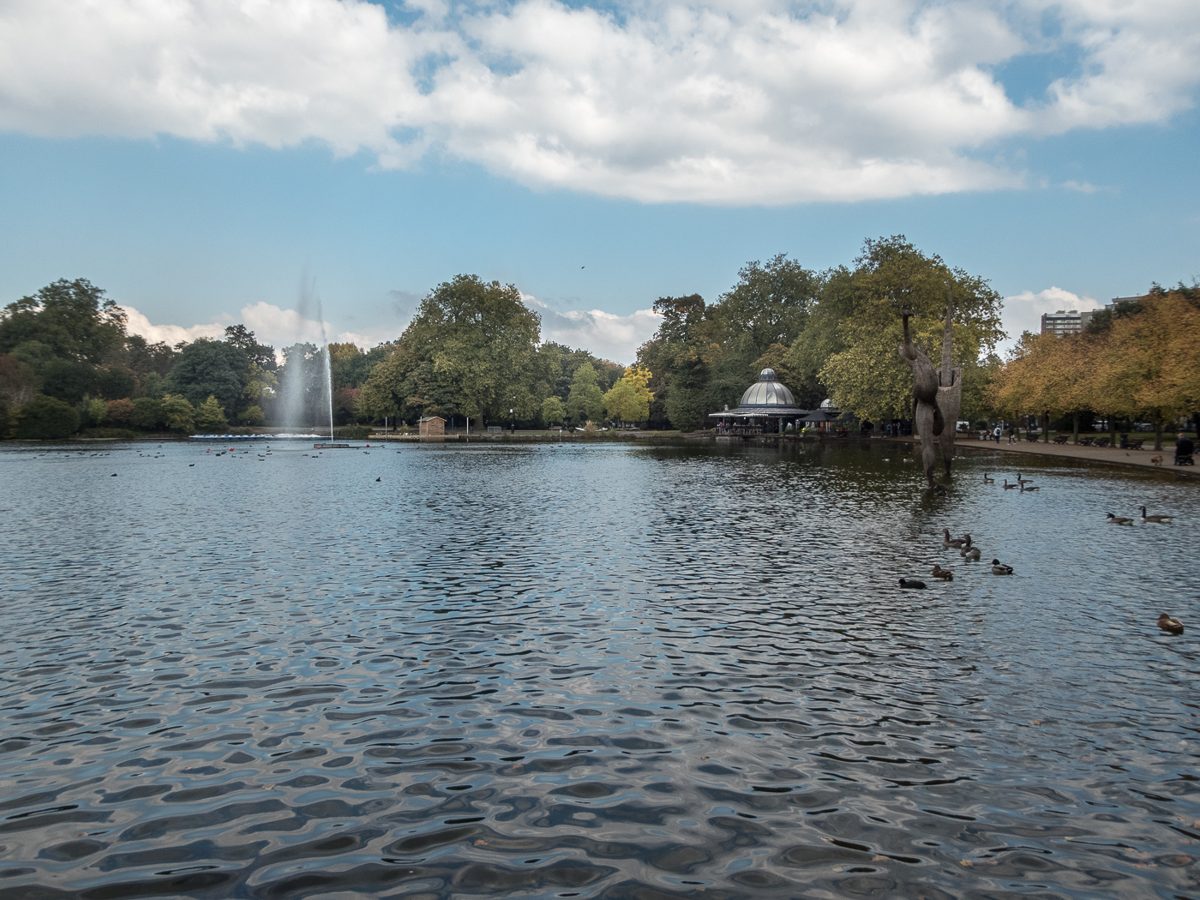
Victoria Park ranks sixth as a strong choice for seeing a different side of London from the royal and ceremonial centre. Tower Hamlets describes its history as a park created for the East End's working-class population, opening in 1845. That social purpose is a useful lens for a walk: this is a shared neighbourhood landscape as well as a visitor destination. It earns its place through water, trees and the experience of an everyday public park rather than proximity to the city's most photographed palaces. For someone already exploring east London, its location may make it a better practical choice than several higher-ranked entries.
A first visit can focus on one lake-side section rather than covering both the park and every nearby green route. Use the council's current map to choose an entrance and a finish that fit your onward journey. A walk built around water offers a clear visual anchor without requiring a strict checklist. If the opposite side catches your interest, leave room to extend, but do not make an extension compulsory before seeing how the first section feels. This is particularly helpful for mixed-energy groups: a recognisable place to pause and a known return can make the outing easier to share than an ambitious circuit chosen at a distance.
A shared landscape and a tree walk
Look for the contrast between formal features and ordinary use. Paths, trees and water provide a frame, while people moving through the landscape give it a changing rhythm. You do not need to photograph strangers to notice how a public space works. Watch how routes meet, where people pause and how a bench or a waterside edge changes the pace of a walk. Those observations make the visit more specific than simply counting picturesque objects. The lake image illustrates one part of the park, but it should not stand in for the whole experience or imply that the scene will be empty, calm or lit in exactly the same way.
The council publishes tree-walk material, which is a useful starting point if the changing season is your main interest. Treat the named trees and route information as a way to learn to look, not as a guarantee of colour on a particular date. Leaves, weather and path conditions vary. Old downloadable material may also carry older operational details, so current entrance notices and the main visitor page should guide today's opening arrangements. This distinction is practical: a historical or educational map can remain useful even when a timetable printed on it should no longer be used without checking. Carry the idea of the walk forward, not every old assumption attached to it.
Events and an everyday visit
Events are another reason to look at current information. A public park can host organised activities without every area being equally available at every moment. This article recommends ordinary outdoor walking, not admission to a festival, a sports booking or a guaranteed quiet route through an event footprint. If your aim is a calm lakeside visit, check what is happening before travelling specifically for it. You can still choose a different section or another park if the day does not suit your purpose. Free entry is valuable, but the usefulness of an outing also depends on matching the place's actual activity to what you hoped to do there.
Victoria Park beats the outer landscape choices here because it offers a strong, varied park outing with a clear urban identity, while losing to the central leaders on easy integration into a first-time sightseeing day. That balance changes immediately for an east-London itinerary. Consider it alongside Battersea as a comparison between a neighbourhood-and-lake walk and a riverside-and-lake walk. Neither needs a paid attraction to justify the visit. Choose one appealing section, allow time to sit and observe, and let the park's everyday role be part of the attraction. A successful visit can be a modest pause in the city rather than another landmark to collect and leave behind.
Source: Tower Hamlets · Tower Hamlets.
Photo: Lake, Victoria Park, Hackney, London - geograph.org.uk - 5158732.jpg · Christine Matthews · CC BY-SA 2.0. Archive illustration, not a report of current weather, foliage or access. Resized and recompressed without cropping; original image license retained.
