
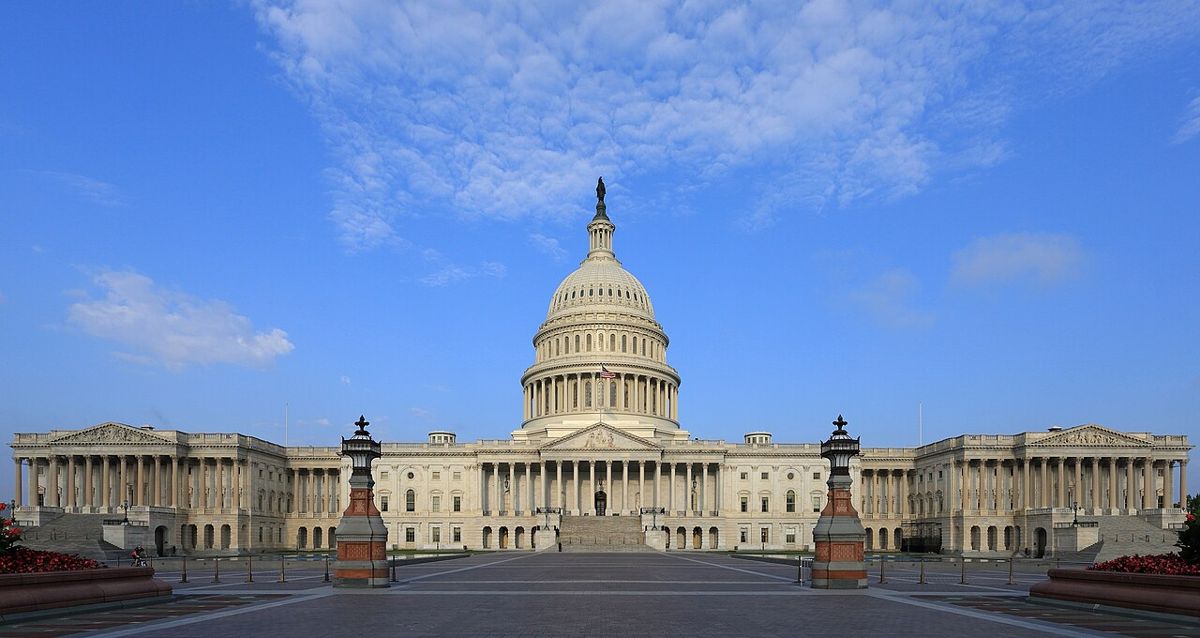
Congress is the legislative branch of the United States federal government, composed of the House of Representatives and the Senate. It is not a third chamber above those two, and it is not another name for the presidency. This is one of the most useful distinctions for reading national political coverage. We rank Congress second because it supplies the institutional container for many of the other terms in this guide. Without it, a headline about congressional elections can sound like one contest for a single office rather than elections affecting membership across two different chambers.
Imagine an invented report saying that one party gained the House while the Senate remained differently composed. A reader expecting a single winner of Congress might see a contradiction. The bicameral structure explains why there need not be one unified outcome. Each chamber has its own membership, constituencies and election cycle. A careful article will specify which chamber it is discussing. If a headline simply says Congress, read the body before paraphrasing it as a claim about both chambers. Broad institutional shorthand is common, but the underlying claim may be narrower than the first line suggests.
The word congressional usually points to this federal legislative setting. It should not be confused with a state legislature or with an election for an executive office. An international reader may be familiar with a national parliament and find the analogy helpful, but familiar institutions elsewhere do not supply all the United States rules. Use comparison as an orientation, not a substitute for the source's actual description. The important first step is to identify the branch and chamber before interpreting an argument about power, responsibility or what an election can change.
Congress also appears in stories about lawmaking outside election season. Membership matters, but a campaign result and a completed law are different kinds of event. When a candidate promises action, ask what institutional steps the promise would require rather than assuming that election alone completes it. This guide does not provide a full legislative procedure manual. It explains why a political statement about gaining influence should not automatically become a factual statement that a policy has already taken effect. Follow the relevant bill or official record for that separate question.
Descriptions of Congress can also refer to different times. A report may discuss the current membership, the institution expected after an election or a historical period. Pay attention to tense and publication date. An older explanation of party composition is not a current seat count merely because it uses the same institutional name. We deliberately provide no live partisan totals here. The stable definition helps readers understand the system, while a changing composition requires a dated and properly sourced account. Keeping these kinds of information separate makes both more reliable and easier to update.
A useful summary expands the word into its two chambers when precision matters. It says which election affects which membership and distinguishes a result from a claim about later governing capacity. Congress ranks just below midterm election because the cycle supplies the immediate question and the institution explains much of the answer. A reader interested mainly in how laws are made could put Congress first. The ranking is a learning aid rather than a constitutional hierarchy. Its purpose is to make political sentences more exact, so disagreement can focus on evidence and judgment instead of confusion about the institution being discussed.
Sources: USAGov: congressional elections · House: institutional explanation.
Photo: Martin Falbisoner (US Capitol east side.JPG) · CC BY-SA 3.0. United States Capitol east front, 2 September 2013; historical institutional context, not a record of the 2026 election or the invented examples. Existing optimized JPEG reused unchanged; earlier resizing and recompression retained. Image derivative retains CC BY-SA 3.0; no endorsement implied.
