
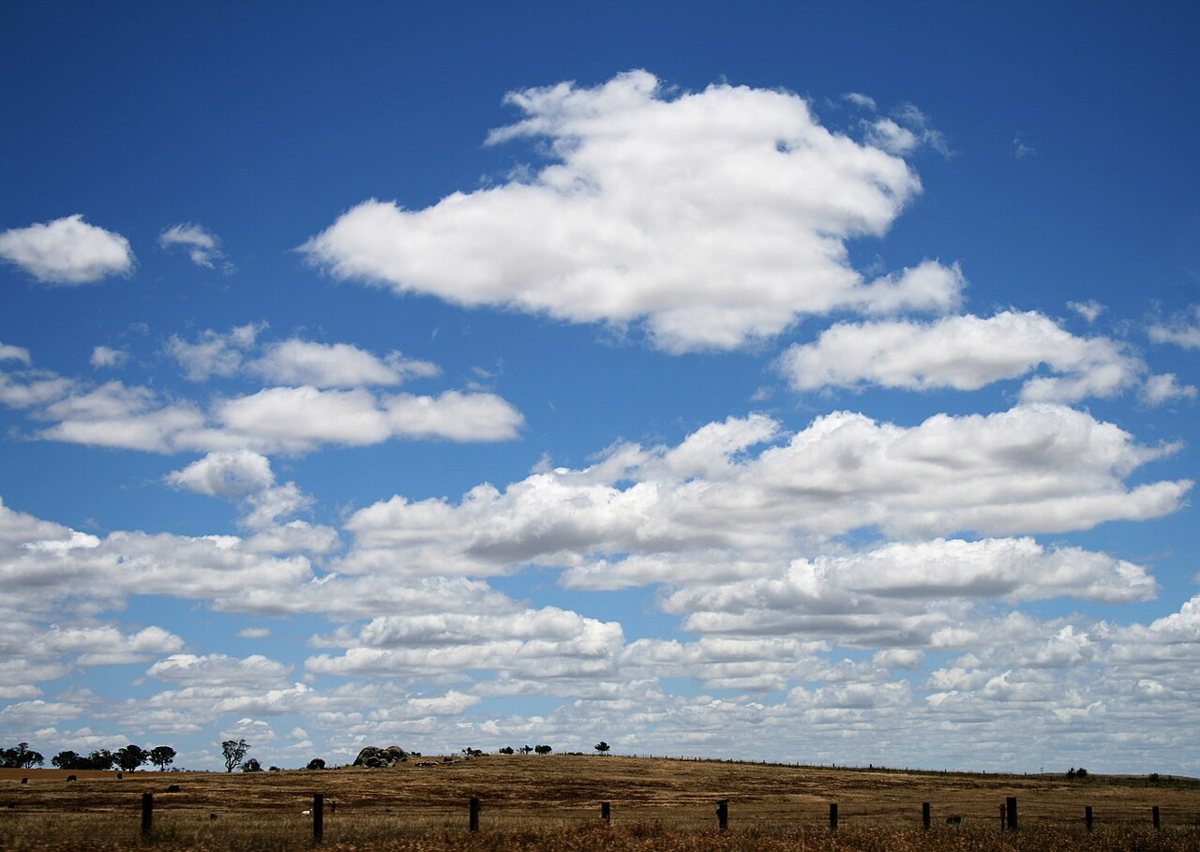
A sky full of clouds is a free field guide, if you know which details to notice. This list covers the ten cloud genera recognized by the World Meteorological Organization (WMO): from almost invisible veils to separate heaps and broad rain-bearing layers. It is designed for curious walkers, photographers and anyone who wants names for the shapes overhead.
The countdown order is our editorial choice of useful starting points, not a scientific ranking of beauty, frequency or forecasting power. Read from #10 to #1, or begin with cumulus at #1 and work backwards. We favour shapes that make comparisons easier; all ten genera belong because together they cover the basic classification.
Use three questions: is it a layer or a separate cloud, are its edges fibrous or rounded, and can you see a repeated texture? High, middle and low are broad groups, not fixed universal altitude limits. The boundaries vary with latitude, and some clouds span more than one level. The Hong Kong Observatory classification guide explains these overlaps.
This guide uses the WMO’s 2017 International Cloud Atlas, with sources checked on 6 October 2026. Photographs show selected appearances, sometimes alongside other clouds; they do not represent every species or variety. Lighting, perspective and incomplete views make some identifications uncertain. Treat cloud recognition as an observation skill, rather than a substitute for forecasts.
Keep a wide photograph and a note of the time, location and visible precipitation. Our useful smartphone features can help with everyday recording, while mountain escapes offer another setting for looking at the sky. Which shape will you try to recognize next?
Photo: Toby Hudson · CC BY-SA 3.0. Resized and recompressed; image retains its source license.
