
Desmond Howard takes second for the most direct offensive challenge to our winner. The Heisman Trust's table lists 61 receptions, 950 receiving yards and 19 receiving touchdowns before the bowl in his 1991 winning season. It also records a 93-yard punt-return touchdown against Ohio State. Those facts support a receiving-and-returning argument, not a claim that one remembered image alone explains the award. We put him ahead of Harmon because this particular kind of scoring threat is especially persuasive under our criteria, and behind Woodson because a primarily defensive foundation receives the greatest weight in our final choice.
The appeal of an offensive case is its apparent clarity. A reception or a touchdown produces a visible result that can be discussed directly. But clarity should not be confused with complete independence from the team. A receiver works within opportunities created by protection, passing decisions, route relationships and opponents. We do not subtract those relationships as though they make the achievement less real. Instead, they help describe what kind of excellence is being praised. Howard's case is that individual threat can make a team's next action more difficult to contain, not that a receiver operates outside a collective sport.
Returning adds another dimension because it begins from a different phase. A player who matters in receiving and in the return game gives a ranking more to consider than a single column of catches. That does not require inventing how often an opponent changed a decision because of him. It is enough to distinguish documented contribution from speculation about unseen reactions. The recorded Ohio State return supplies a concrete example, while the season's receiving figures keep the argument from resting entirely on that example. A memorable moment can introduce the season; it should not replace the sustained record that makes the moment meaningful.
The statistical boundary deserves care. The Trust’s profile prose elsewhere says 960 receiving yards; we use its 950-yard table figure, also supported by its separate receiving-yardage chart. The official table separates the Heisman-period figures from totals that include the subsequent bowl, so we identify the first set explicitly. Mixing a pre-bowl number from one player with an inclusive number from another would give an impression of precision while weakening the comparison. We are not building a universal numerical score, but a clear denominator still matters when using evidence. Readers can make the same check in other sports rankings: ask which games a total includes before deciding what it proves. The exercise improves the argument without requiring that every reasonable opinion collapse into the same result.
The strongest Howard-first position makes offensive finishing and return threat the leading priorities. Under that brief, second could become first naturally. Our response is that preventing or reshaping an opponent's opportunities can be just as fundamental as completing your own. That is the route by which Woodson wins our ranking. It does not make offense superficial, and it does not imply that Howard lacked dimensions beyond the few facts selected here. A short comparison cannot reproduce a whole season. It should make the decisive preference clear enough that a reader can disagree with its priorities rather than chase a supposed factual error that is actually a difference in judgment.
Choose Howard first if you want the strongest receiving-and-returning case in this defined field. Choose Harmon if an earlier all-purpose burden is the main concern, or Woodson if a defensive foundation with additional phases leads. We keep Howard second because he supplies the most persuasive test of our winner's underlying standard. There is no invented numerical gap between them. The useful discussion is whether visible offensive results deserve greater weight than influence that can begin before an opponent completes a play. If Howard is your number one, which part of that receiving-and-returning combination changes the order for you?
Sources: Heisman Trust 1 · Heisman receiving chart.
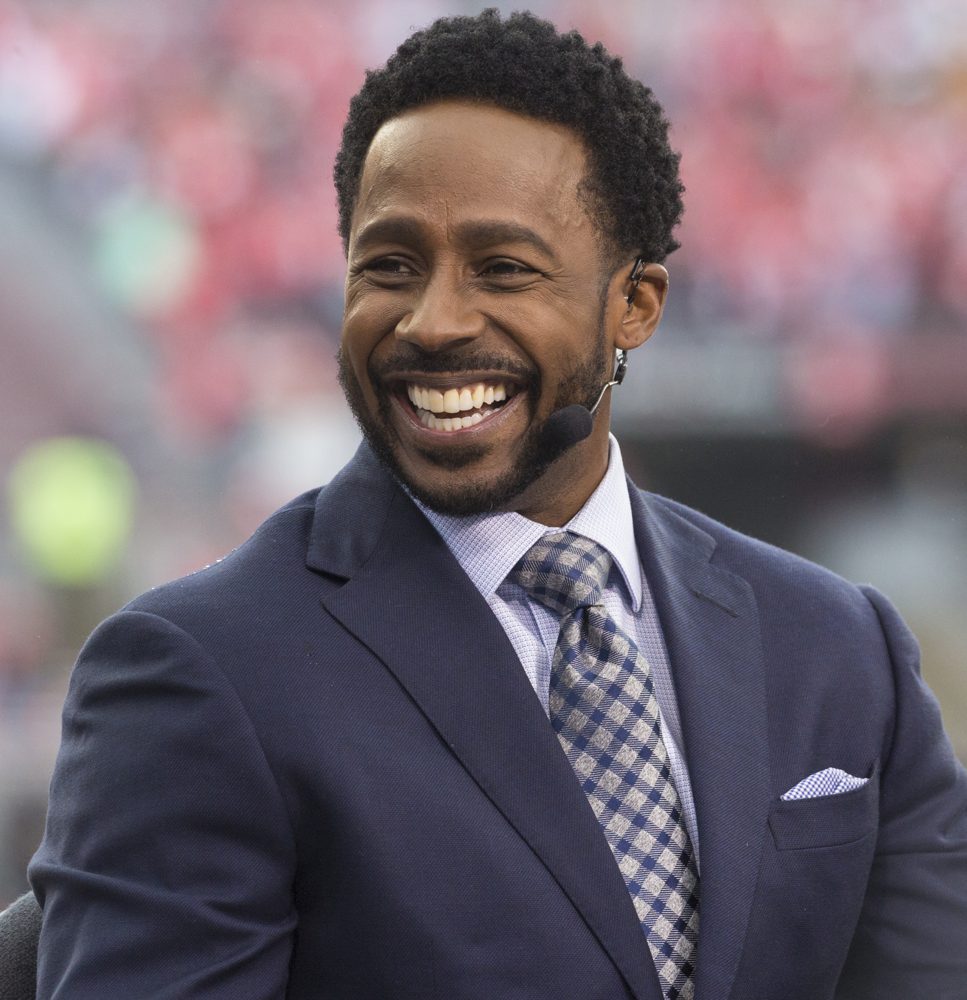
Photo: Maize & Blue Nation · CC BY 2.0. Desmond Howard, 24 November 2018; later portrait, not the 1991 season. Resized and recompressed, no additional cropping or upscaling; pre-existing source crop retained where present. CC BY 2.0 retained, no endorsement implied.
