
Which Michigan Heisman season deserves first place: Charles Woodson in 1997, Desmond Howard in 1991 or Tom Harmon in 1940? Our Top 3 ranks them in that order, with Harmon opening the countdown at third. The field is deliberately precise: Michigan's Heisman-winning seasons through 1997. This is not a ranking of every Michigan player, a comparison of their professional careers or a claim about the current team. It asks how three recognised individual seasons made their particular kind of football excellence visible. Facts were checked on 25 October 2026, and the order is editorial judgment rather than an official award within the award.
Our main criterion is how strongly a season can define a team's possibilities through a distinctive range of responsibilities. We then consider the clarity of the individual offensive or defensive case and how fairly that case survives comparison with another period. Woodson leads because we put exceptional weight on a primarily defensive player whose contribution also extended into other phases. Howard has the strongest challenge if receiving production and scoring threat lead your evaluation. Harmon offers the counterargument that an earlier all-purpose role should not be made smaller merely because its language and surrounding game look less familiar to a modern audience.
The timely entry point is search interest. On 25 October 2026 at approximately 05:58 UTC, we inspected Google Trends Trending Now for United States, past 24 hours, all categories, explicitly sorted by search volume. The leading observed groups included ole miss vs texas, byu vs ucf and indiana vs michigan, each displayed at 500K+ and 1,000% growth. We selected the Michigan group for an original, lasting historical comparison rather than inferring a game's result. These are rounded search-volume buckets and displayed growth, not monthly volumes, Explore indices or a vote for any of our three players. Equal buckets do not establish exact equal search totals.
A season ranking needs boundaries that a career ranking does not. Later achievements can make an earlier season seem inevitable, while a famous image can compress months of performance into one remembered moment. We therefore use the Heisman Trust's winner profiles and tables as the factual foundation, keeping the winning season separate from what followed. We also distinguish the period before a bowl from a full season including that game when a statistic needs that distinction. The point is not to bury a debate under numbers. It is to avoid letting a persuasive story quietly change which performance is being compared.
Cross-era judgment still has limits. Roles, tactical expectations and the available record differ, so a raw total is not a universal translation of value. Defensive influence is particularly awkward to reduce to the plays in which the ball arrives nearby. A receiver's production also depends on a team creating and completing opportunities, while an all-purpose player's responsibilities may not fit a later position label neatly. These are reasons to explain a preference, not reasons to pretend that comparison is impossible. We offer the strongest competing case for each entry and make no prediction about a current game or advice about wagering.
Topnilo's undefeated college football teams ranking supplies a team-level comparison, while our Notre Dame Heisman winners article offers a different programme's award debate. The two provide related perspectives, not a shared numerical scale that would automatically settle this Michigan selection. Read our three entries in countdown order and decide which criterion you would change before changing the names. Should the best Michigan Heisman season be the one that expanded the award's familiar positional story, the one with the clearest receiving-and-returning threat, or the one whose older all-purpose workload most resists a modern label?
Sources: Heisman Trust 1 · Heisman Trust 2 · Heisman Trust 3 · Heisman Trust 4 · Google Trends Trending Now.
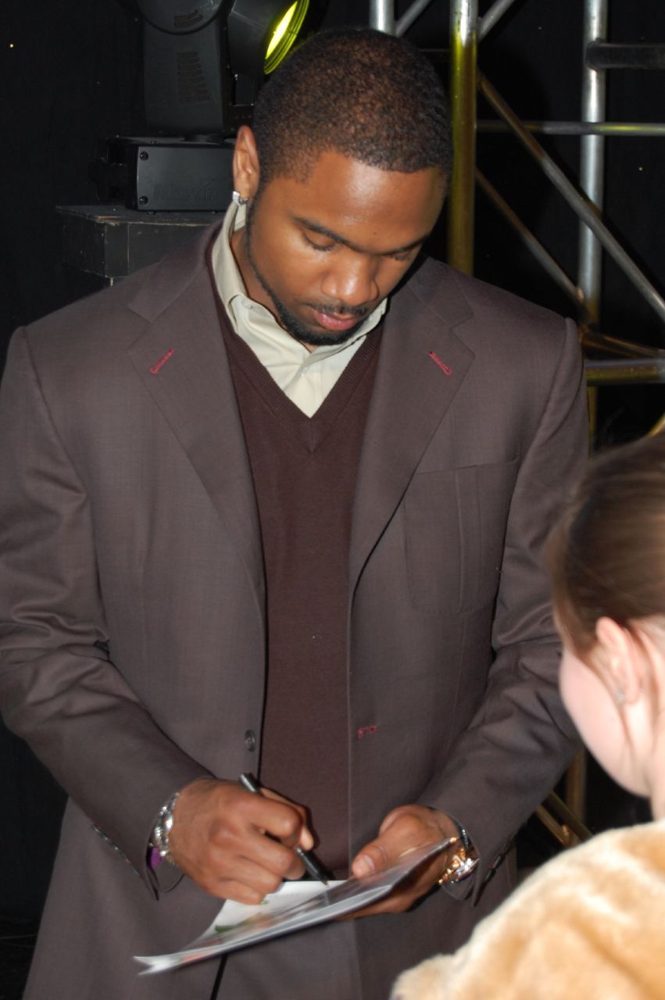
Photo: Johnny from Milwaukee, WI · CC BY 2.0. Charles Woodson signing an autograph, March 2008; later portrait, not the 1997 season. Resized and recompressed, no additional cropping or upscaling; pre-existing source crop retained where present. CC BY 2.0 retained, no endorsement implied.
