
Bill Russell is our greatest classic Celtic because the ranking puts sustained championship influence first. The Hall of Fame records eleven NBA titles and five league MVP awards, including a run of eight consecutive championships from 1959 through 1966. Those facts establish extraordinary context, but our decision is not simply that the largest ring total wins. We prioritize a defensive foundation capable of organizing how a contender works. Russell's first place is an interpretation of value within this historical Celtics scope, not a claim that every possible definition of basketball greatness must produce the same order or that teammates can be removed from the explanation.
A defensive centerpiece can affect a possession without producing its most visible ending. The important question is what choices become less attractive for an opponent and how the team is positioned to finish the defensive task. Thinking this way helps explain why a franchise ranking should look beyond individual scoring. The Hall's account identifies Russell with a major defensive influence; our own judgment gives that kind of foundational contribution exceptional weight. We are not supplying invented block totals, possession estimates or modern tracking values. The case is a stated interpretation of role and competitive achievement, with its limitations visible rather than disguised by retrospective numerical precision.
Championships matter here because they describe the objective around which a team is built, but they are shared achievements. A player cannot win a title alone, and a long run also reflects teammates, coaching and the opposition faced. Russell's case remains strongest for us when the results and the organizing role are considered together. Counting trophies without considering role would be too shallow; ignoring results because they are collective would discard part of the evidence. Our preference is to ask how a player's contribution helps make a contender coherent. That question does not eliminate uncertainty, but it is more useful than treating every championship as an identical individual unit.
Bird supplies the clearest objection. A fan can reasonably place the greatest offensive author above the greatest defensive foundation, especially when judging the range of answers available within a difficult possession. We do not answer that argument by claiming Russell would automatically dominate a different era or by reducing Bird to a scorer. Instead, we return to the priority announced at the start: sustained influence on a championship structure comes first. Under a peak-offense standard, Bird could lead. Under our franchise-foundation standard, Russell stays above him. The distinction makes the debate testable as reasoning even though history cannot be replayed as a controlled experiment.
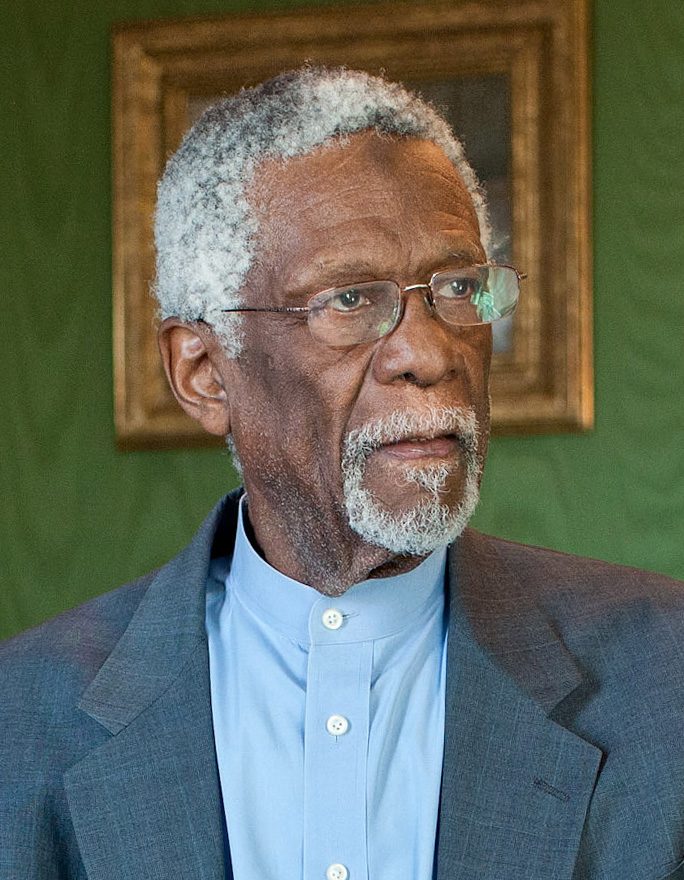
Havlicek raises another useful challenge by emphasizing the value of adaptable excellence across responsibilities. His case reminds us that a team is not built solely from one star's defining skill. Our winner is not a statement that flexible contribution is secondary in every roster, or that one model of greatness fits every question. It is a choice about this particular historical list. We exclude later careers and off-court comparisons rather than allowing unrelated achievements to change the standard halfway through. Likewise, the later-life photograph illustrates Russell's identity, not a basketball possession or evidence of current form. Clear boundaries help keep an emotionally engaging argument honest.
Russell therefore finishes first, with Bird second and Havlicek third, because our ordering consistently favors the championship foundation before offensive peak and adaptable longevity. A different fan can change the priorities and reach a different result without inventing facts or dismissing an entire era. The most interesting disagreement explains what the new order rewards and what it sacrifices. This shortlist should encourage watching and comparing basketball ideas, not treating reputation as proof. If you must choose one classic Celtic to represent what made the franchise formidable, is your answer Russell's defensive foundation, Bird's offensive imagination or Havlicek's enduring adaptability—and which criterion makes that choice persuasive?
Sources: Basketball Hall of Fame profile 1.
Photo: Pete Souza · Public domain. Bill Russell at the White House, 15 February 2011; later-life portrait, not a game. Image resized/recompressed, source framing retained. Original license or public-domain status retained; no endorsement. Existing source crop retained.
