
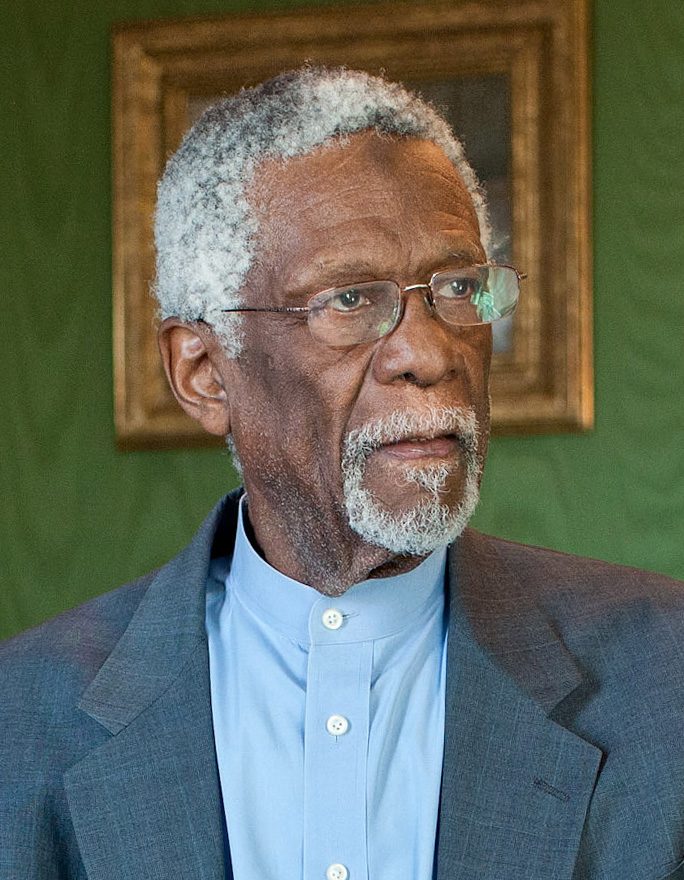
Who belongs above everyone else in the classic Celtics conversation: Bill Russell or Larry Bird? Our Top 3 puts Russell first, Bird second and John Havlicek third, but the interesting part is the standard behind that order. This is a historical Boston Celtics ranking restricted to players whose NBA playing careers were complete by the end of 1992. It evaluates their contribution as Celtics players, not later coaching, executive work or a comparison with today's roster. The cutoff gives the debate a defined field rather than pretending that a short list can settle every era of a long-lived franchise. Facts were checked on 24 October 2026.
We prioritize sustained championship influence, then the level of a player's individual peak and the breadth of his contribution to a team. Longevity matters when it adds meaningful seasons rather than merely increasing a total. These priorities are editorial judgment, not a statistical formula with invented weights. Russell wins because we place the strongest emphasis on a defensive foundation that can organize an entire contender. Bird has the clearest opposing case if offensive creation and peak versatility receive more weight. Havlicek represents the challenge that lasting, adaptable excellence poses to a debate often reduced to two famous names. Different priorities can reasonably change the order.
The timely entry point is search interest, not a claim about a game's result. On 24 October 2026 at approximately 17:31 UTC, we inspected Google Trends Trending Now for United States, past 24 hours, all categories, explicitly sorted by search volume. “world series score” led the observed groups at 1M+ and 600% growth. “knicks vs celtics” followed at 500K+ and 1,000% growth, with Celtics-related terms in its breakdown. We chose the latter for an original historical basketball debate rather than repeating existing World Series coverage. Those are rounded search buckets and displayed growth, not monthly volumes, polling or evidence that any historical player is better.
A useful cross-era comparison asks what a player contributes to the structure of a team. One route is preventing good opportunities and completing defensive possessions. Another is creating a good shot when the first action fails. A third is maintaining quality through different responsibilities and supporting casts. These are lenses for reading a career, not invented possession data. They help explain why a championship total should start a conversation rather than end it. Team success depends on teammates, coaching and opponents as well as the person being ranked. Conversely, individual scoring alone cannot describe everything that makes a contender difficult to beat.
The historical record comes principally from the Naismith Basketball Hall of Fame's player profiles. We use a compact set of verified honors and career context, then make our own reasoning explicit instead of presenting opinion as a measurable result. Awards from different periods do not form a perfectly uniform instrument, and a highlight collection is not a complete account of a player's decisions. Readers should notice the difference between a recorded achievement, an interpretation of its significance and a counterfactual about another era. We make no prediction about a current match, no betting recommendation and no claim to have recreated these players under identical modern conditions.
For a neighboring franchise perspective, Topnilo's classic Knicks legends offers another tightly scoped historical debate; essential NBA rules can help readers separate the sport's basic actions from reputation. This Celtics shortlist is deliberately selective, with Bob Cousy, Sam Jones and other eligible legends capable of supporting competing cases. Our three positions explain a preference rather than erasing those careers. Read the entries in countdown order and ask which standard you would change before changing the names. Should the greatest classic Celtic be the player who defined a championship team's defensive identity, or the one whose offensive imagination gives the strongest case for an unmatched individual peak?
Sources: Basketball Hall of Fame profile 1 · Basketball Hall of Fame profile 2 · Basketball Hall of Fame profile 3 · Google Trends Trending Now.
Photo: Pete Souza · Public domain. Bill Russell at the White House, 15 February 2011; later-life portrait, not a game. Image resized/recompressed, source framing retained. Original license or public-domain status retained; no endorsement. Existing source crop retained.
