
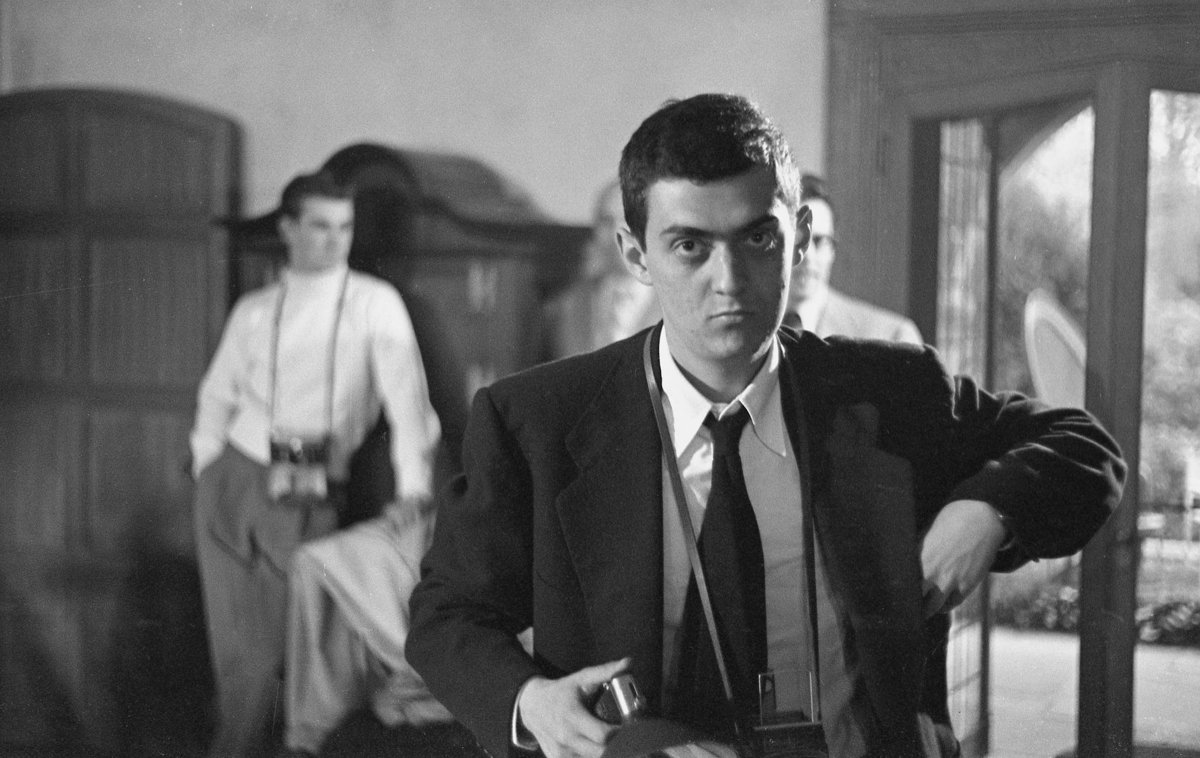
Kubrick earns third for making radically different genres feel unmistakably his. Start with Dr. Strangelove (1964), a nuclear-war satire, then try 2001: A Space Odyssey (1968). Compare the force of precise framing in a room with the scale and silence of space.
That formal range puts him above Scorsese in our ranking. Kurosawa stays ahead because we favour his connection between action and human stakes. If bold images and open-ended ideas matter more than emotional immediacy, Kubrick has a strong claim to first.
Source: BFI.
Photo: Phillip Harrington / LOOK / Library of Congress · Public domain. Resized and recompressed; original status retained.
.jpg)