
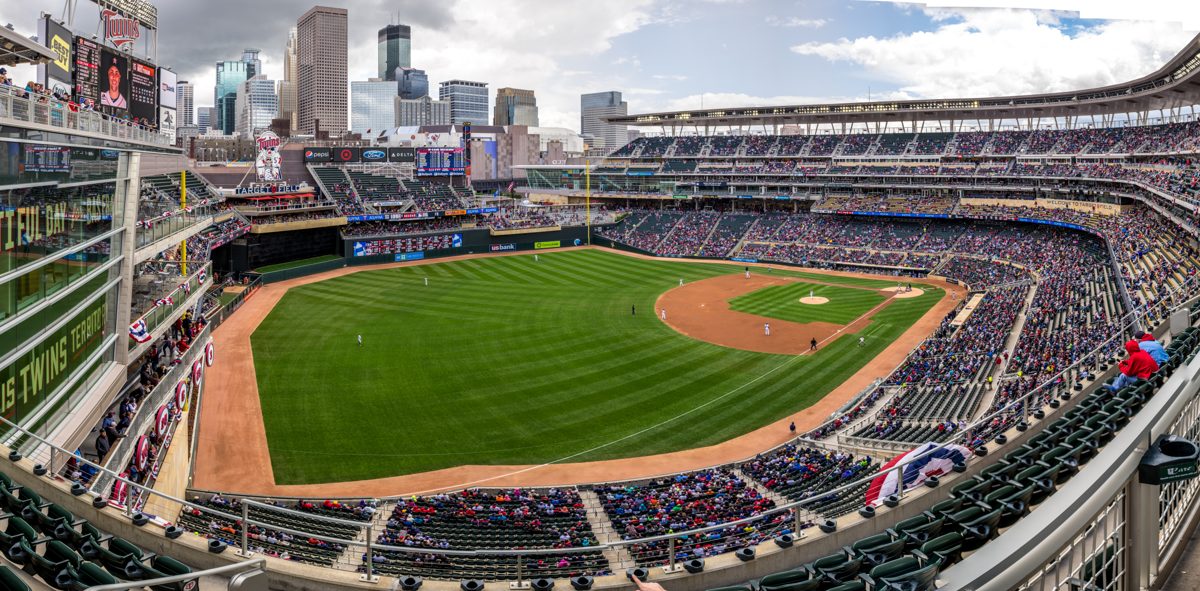
Target Field takes ninth place as a strong choice for combining a Twins game with time in Minneapolis. Its appeal in this countdown is the impression of an outdoor ballpark shaped by its urban setting. The Twins' timeline records its opening in 2010, and the building's limestone exterior offers a different visual character from the brick associations of several entries above it. I would choose it for a visitor who wants baseball to feel integrated into a city trip, rather than as an isolated excursion whose only memorable feature is the final score.
Give the exterior a little attention before going straight to your seat. Material and scale can explain a stadium more effectively than a list of amenities. Look at how the stone changes in different light, where the entrances meet the public surroundings, and how the bowl directs attention inward toward the field. These are observations to make for yourself, not promises about access to a particular terrace. A useful photo sequence would include one exterior detail, one broad view of the game and one image showing the relationship with Minneapolis, instead of ten nearly identical pictures of the scoreboard.
Select a seat for your priorities
Seat selection deserves a conversation about priorities. Someone who enjoys reading defensive positions may prefer a broad view; someone attending a first game may value feeling close to the action. Use the team's seating and three-dimensional maps to assess those choices. Do not assume that an expensive category solves every need or that a panoramic archive image represents the view from all sections. If your group needs particular access arrangements, consult the dedicated accessibility information before buying. Turning a general desire for comfort into a specific question is much more useful than choosing by section name alone.
Target Field's official pages collect an information guide, food options and tour information. That makes it possible to decide which extras actually serve your visit. A tour is a sensible possibility for a visitor interested in stadium design, but it is a separate booking decision from attending a game. Food can add local character, yet the memory of the outing need not depend on finding one advertised item. Pick a manageable plan and a backup, then spend the important part of the evening watching how the crowd follows the rhythm of the game.
Prepare for an outdoor evening
Target Field Station adds a practical reason to consider Minneapolis: the Twins identify direct METRO Blue and Green light-rail connections at the ground. Think of that as part of the city experience, not simply a way to avoid parking. You could choose a departure point that suits the rest of your sightseeing and compare the return service for the actual date. Check the current transit timetable rather than using an old service count. For an outdoor evening, also consider the forecast and how long your group wants to sit after a day on foot. A quieter afternoon can produce a better baseball evening than squeezing in another attraction.
Ninth place reflects the strength of the competition above it, particularly the unusual settings and longer historical associations of the leading grounds. Target remains a convincing alternative for someone who values a modern outdoor experience with a clear city identity. Compare it with Busch if you are deciding between a pair of city breaks, or with Seattle if roof design is part of your interest. The ranking is not a claim about which club has the best supporters. Let the destination you actually want to explore, the available fixture and a suitable seat decide whether Minneapolis becomes your first MLB visit.
Source: MLB / Twins · MLB / Twins · MLB / Twins · MLB / Twins.
Photo: Target Field (2017).jpg · Mac H (media601) · CC BY-SA 2.0. Archive illustration, not evidence of current facilities, weather, crowds or access. Resized and recompressed without cropping; original image license retained.
