
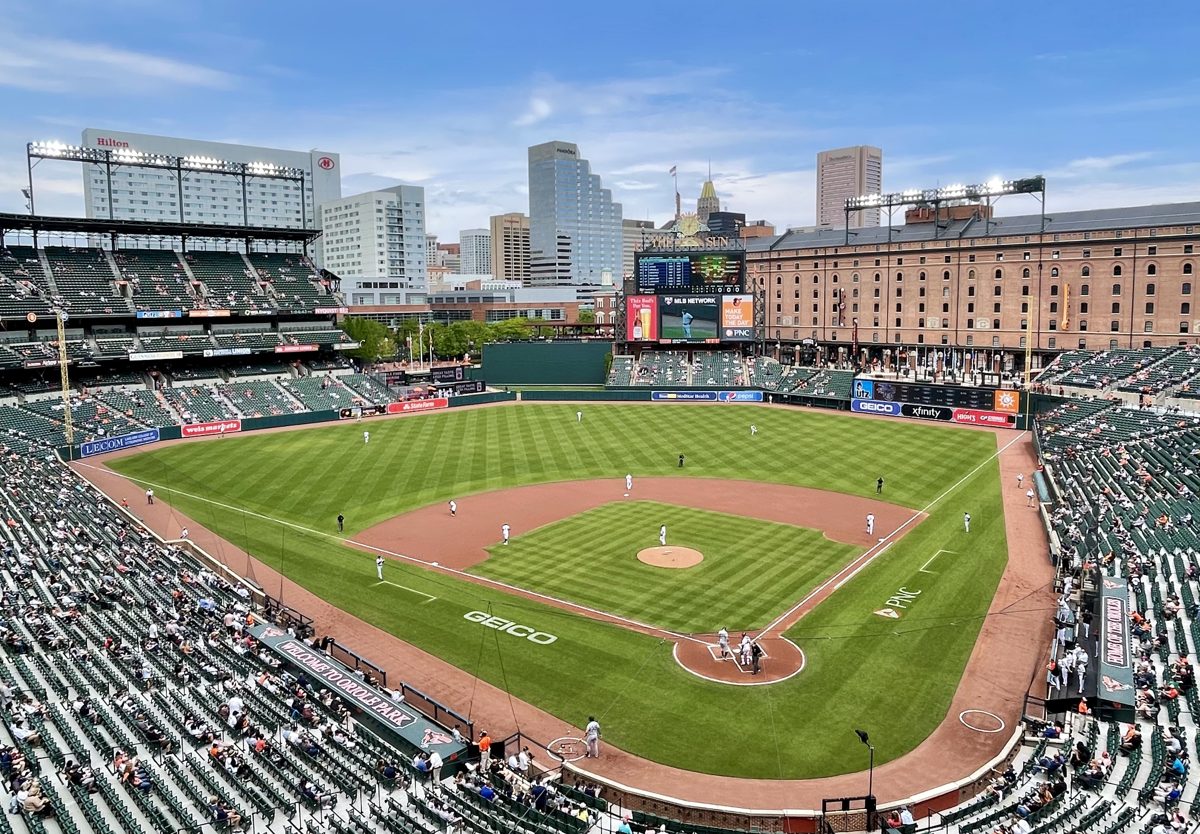
Oriole Park at Camden Yards takes sixth place for the way a ballpark and an industrial backdrop can form one recognizable image. The Orioles identify Eutaw Street as the area between the stadium and the Warehouse. That relationship is the heart of its appeal in this guide: baseball does not seem detached from the surrounding built environment. For a first visitor to Baltimore, it offers an opportunity to look at a sports venue as part of a city story. The setting is distinctive even before you start comparing individual seats or remembering a favorite Orioles player.
Eutaw Street offers a way to connect the setting with actual baseball. The Orioles explain that bronze baseball markers in the pavement record home runs that cleared the right-field fence. Rather than racing past, look at one marker and imagine the distance between the field and that landing point. A small object makes the surrounding space part of a sporting story. You need not find every marker or treat the street as a collection to complete. Follow the club’s current access information for your date, then let one detail give the Warehouse backdrop more meaning than a broad photograph alone would provide.
Research the current seat
For the game itself, use the current seating map rather than relying on a remembered layout from an older broadcast. Sports grounds change, and the section name, perspective and access conditions matter more to your purchase than the nostalgia of a photograph. Think about whether your group wants to follow the pitch closely or understand the whole field. If a particular background view is central to the trip, investigate it before buying. Choosing deliberately is especially valuable when travelling a long way, because the seat and the surrounding spaces together determine the actual experience you take home.
The Orioles publish separate information on game-day planning, concessions and accessibility. Read the parts relevant to your group rather than trying to memorize the whole guide. For example, a family might begin with entry arrangements and breaks, while a visitor bringing specialist equipment should ask what is permitted. Treat food as a way to enrich the outing, not a challenge to complete a long menu. One well-chosen stop leaves more time to watch the changing field and crowd. That balance suits a venue whose surroundings can reward attention just as much as the activity on the diamond.
Compare kinds of atmosphere
Camden Yards is also a good comparison point for the other modern grounds in this countdown. After visiting, ask yourself whether its atmosphere came primarily from the exterior setting, the internal view, the supporters or your own company. Those are different kinds of satisfaction, and naming them helps you choose the next trip. Someone drawn to buildings may favor Baltimore over a more scenic waterfront; someone who mostly wants open water may prefer Oracle. The purpose of the ranking is to clarify those choices, not to insist that a single visual style defines what every baseball stadium should become.
Sixth place reflects a strong architectural identity with credible competition from both older venues and the leading landscape settings. It is an editorial judgment about a first visit, not a poll of Orioles fans or a capacity ranking. Choose Baltimore when the meeting of baseball, street and building is what excites you. Keep enough time to observe that relationship rather than rushing straight from entrance to concession to exit. The Warehouse can become a memorable part of your day, but the most rewarding visit will still include time simply watching a game and noticing how its surroundings shape your response to it.
Source: MLB / Orioles · MLB / Orioles · MLB / Orioles.
Photo: Camden Yards.jpg · Chris6d · CC BY-SA 4.0. Archive illustration, not evidence of current facilities, weather, crowds or access. Resized and recompressed without cropping; original image license retained.
