
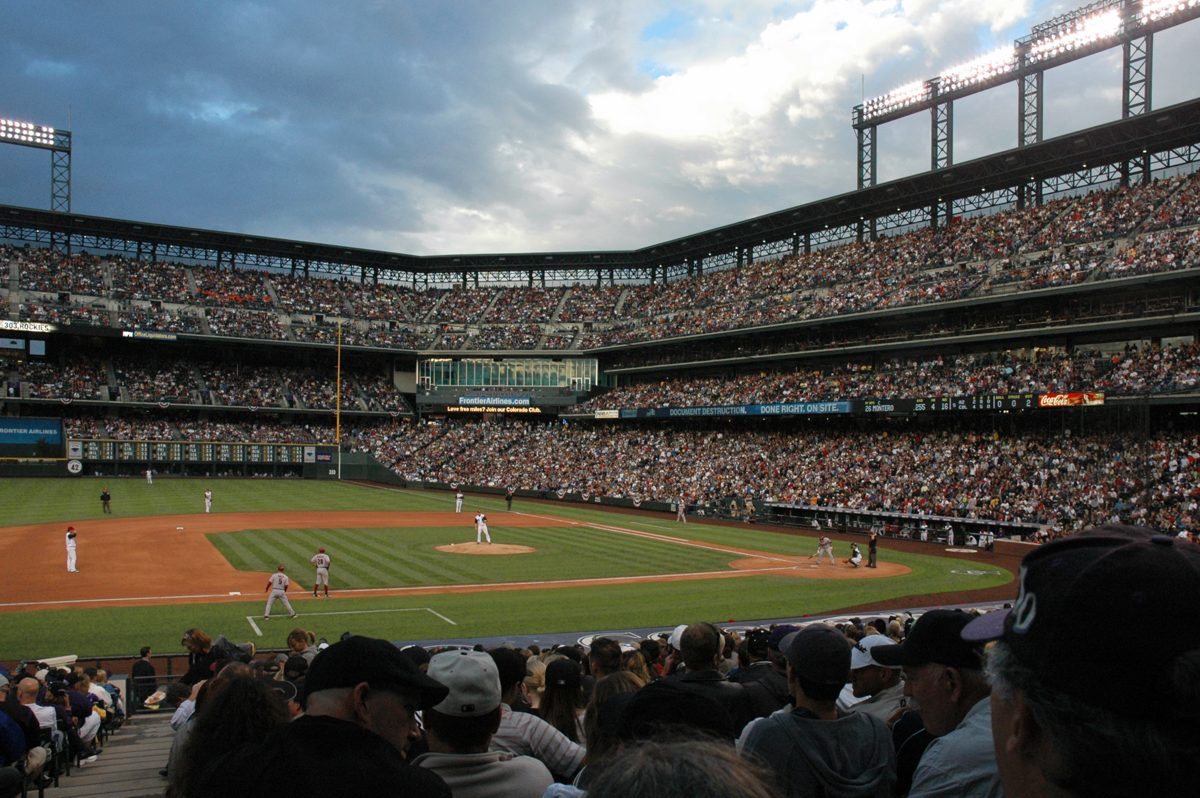
Coors Field earns seventh place for visitors who want a baseball ground that prompts them to notice its setting. It is the Rockies' Denver home, and the team documents a purple row of upper-deck seats marking one mile above sea level. That small visual device makes an otherwise abstract geographic fact easy to remember. Our ranking values that kind of connection between a venue and its city. You need not build the visit around a scientific explanation of altitude; looking for the marker can simply become a satisfying detail within a day spent watching baseball.
The purple row is also a useful reminder that the elevation marker is not the elevation of every seat or the whole playing field. Precision matters when a memorable stadium fact travels through social media. If you photograph it, keep the caption as specific as the feature itself. Do not turn a seating detail into a claim that every part of Denver or the ballpark lies at exactly the same height. This guide is not comparing measured ball flight or predicting a high-scoring game, and the location alone cannot tell you how a particular fixture will unfold.
A view and a geographic detail
When choosing a seat, distinguish the experience of observing the field from that of admiring a broad setting. Check the club's map and available views, then decide which matters most to your group. Someone interested in strategy may want to see the spaces between fielders; someone travelling mainly for atmosphere may prefer a different perspective. Both are valid reasons for attending. A visible landmark in an archive photograph is not a guarantee that it will be visible from your section, under future weather conditions or after dark. Use the photograph as an introduction, not a personalized seat preview.
The Rockies' official ballpark hub provides links for visitor information and tours. If architecture or local context is your main interest, investigate whether a tour fits the date you are considering. If the game itself is the priority, resist scheduling so many extras that the first inning becomes an interruption to your sightseeing. A simple plan could be to arrive with enough time to orient yourself, look for one distinctive feature and settle down. You can leave broader exploration for another time rather than trying to cover every concourse before the first pitch.
A simple outdoor plan
Prepare for an outdoor visit using the actual forecast rather than the sunny mood of a promotional image. Consider layers, your route back and the amount of sitting your group wants after a day on foot. This is practical trip planning, not medical advice about altitude or a promise that a particular precaution will suit everyone. Anyone with a personal concern should seek advice appropriate to their circumstances. Likewise, review current venue rules for items and bags instead of assuming that a practice accepted in another city transfers automatically to Denver. Those checks make the outing more predictable without pretending the weather is controllable.
Coors is placed above Seattle because its geographic identity adds a particularly memorable layer to the visit under our criteria. It remains below the leading historic and waterfront grounds because those provide a stronger overall first impression in this editorial order. A visitor who wants to combine baseball with a Denver holiday may reach a different conclusion, and that is entirely reasonable. Choose it for a sense of place, a deliberate seat choice and the pleasure of noticing details. The purple seats are an excellent starting point, but a good visit continues well beyond finding one photographable row.
Source: MLB / Rockies · MLB / Rockies · MLB / Rockies.
Photo: 4th of July Colorado Rockies - Arizona Diamondbacks game, Coors Field, Denver, 2009.jpg · DimiTalen · CC0. Archive illustration, not evidence of current facilities, weather, crowds or access. Resized and recompressed without cropping; original image license retained.
