
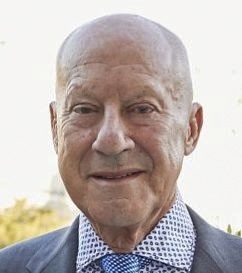
Norman Foster takes eighth place because his work connects the architectural object with the larger systems that people use every day. The 1999 Pritzker laureate's documented projects include the Hongkong and Shanghai Bank headquarters, the Sainsbury Centre for Visual Arts, the Reichstag transformation and major airport work. These are different institutions, not interchangeable examples of glass and steel. Our interest is in the way a career can make structure, circulation and technical organization part of public architectural understanding. Foster's place would rise substantially in a ranking that prioritized infrastructure and the international reach of large design practices over experiments in sculptural form.
The Sainsbury Centre offers a useful place to begin because an arts building can be read through the relationship between enclosure and interior activity. Rather than beginning with a label such as high-tech, ask what the large envelope makes possible and how the visible components establish its rhythm. A label is useful only if it helps direct attention to specific choices. It becomes an obstacle when it supplies an explanation before the building has been examined. The Pritzker archive dates this project to 1978, giving a historical anchor for a comparison with the later civic and transport projects in the same career.
Old institutions and large systems
The Reichstag brings the problem of an existing institution into the discussion. The prize archive identifies Foster's parliamentary intervention with 1999. A historic building and a modern addition do not have to be treated as mutually exclusive ideas. The interesting question is how a new architectural layer changes movement, visibility and the public reading of the old structure. This is not a guarantee of present-day visitor access or a claim that transparency in construction automatically produces transparency in government. Architectural symbolism can be powerful while remaining different from a measured political outcome. A careful interpretation preserves that distinction.
Hong Kong's banking headquarters and airport projects widen the comparison again. A workplace and a transport hub organize people under different pressures, yet both can make the coordination of large systems visible as a design concern. Consider the sequence from arrival to destination, the way a large space is divided and the relationship between an overall framework and smaller components. Those are questions a reader can pursue without inventing a performance metric. We make no unsupported claim about energy savings, passenger convenience or financial success. The purpose is to identify the architectural problem and explain why its treatment matters to this editorial ranking.
Teams and a competing case
Foster also complicates the habit of assigning a vast body of work to a single pair of hands. Foster and Partners was founded in 1967, and a large practice necessarily involves teams and specialist collaborators. Naming the laureate is an organizing device, not a denial of collective labor. That applies to every architect in this countdown, but it becomes especially important when discussing infrastructure and projects of considerable scale. The useful comparison with Rogers and Piano concerns different approaches to related technical questions. It should not become a story in which one person alone invents systems that emerge through sustained collaboration.
Eighth place leaves a strong alternative argument open. If influence means changing the everyday architectural language of workplaces, airports and civic institutions, Foster may be a top-three choice. We place greater emphasis on the clarity of the individual spatial proposition and its ability to redirect a beginner's expectations. To test our decision, compare one cultural project with one infrastructure project and explain what remains consistent across them. If your answer concerns organization rather than appearance, you have found the strongest reason to move him higher. The ranking should help articulate that preference, not discourage it behind a supposedly objective number.
Source: The Pritzker Architecture Prize.
Photo: Diario de Madrid · CC BY 4.0. Norman Foster — Madrid, 1 June 2017. Resized and recompressed without new cropping; existing source edits and license retained.
