
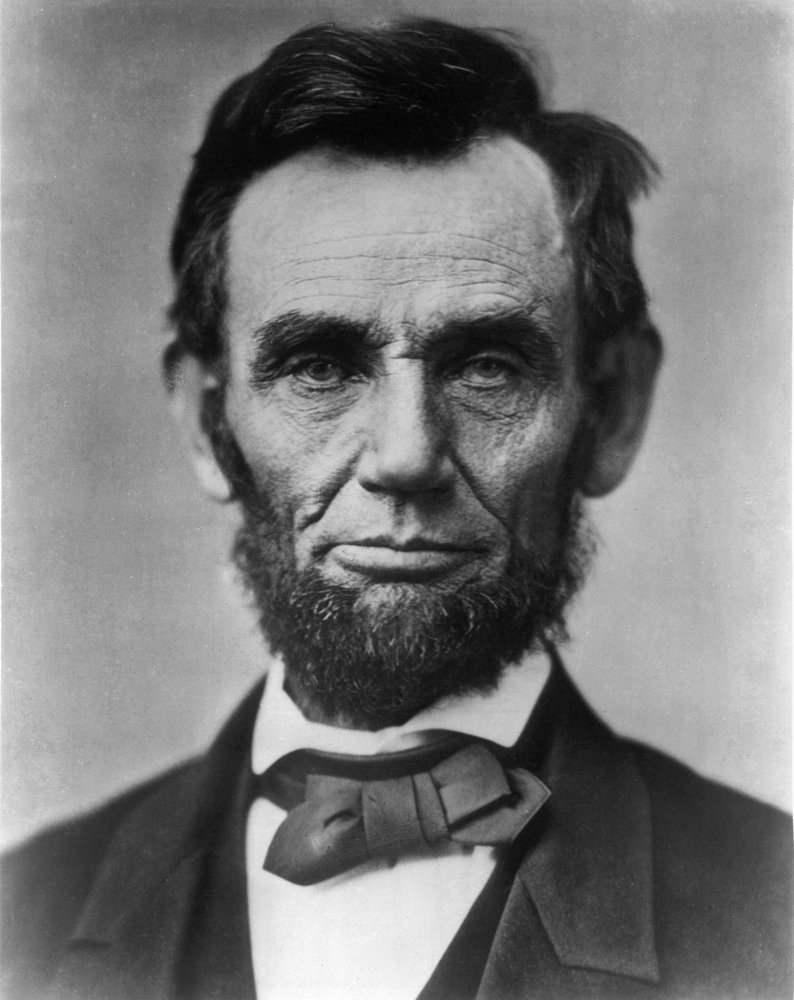
Abraham Lincoln takes first place in our ranking of the greatest US presidents, ahead of George Washington and Franklin D. Roosevelt. We give the greatest weight to preserving democratic institutions and expanding civil rights, then consider crisis leadership and lasting achievements. The table gives the complete order, each president's years in office and the main case for inclusion. Open the individual entries for the limitations and comparisons that explain why a celebrated achievement does not automatically settle a president's position.
This is an editorial ranking, not a historian survey or an objective score. It assesses completed presidential terms through 20 January 2025. Joe Biden's presidency and Donald Trump's first term are eligible, but neither makes our chosen ten; Trump's second term and actions after the cutoff are outside scope. Sources and introductory explanations were reviewed on 3 November 2026. Keeping that boundary explicit allows a historical comparison without treating an unfinished presidency as a completed legacy.
| Rank / president | Presidency | Main case for inclusion |
|---|---|---|
| 1. Abraham Lincoln | 1861–1865 | Union and abolition |
| 2. George Washington | 1789–1797 | Founding precedents and succession |
| 3. Franklin D. Roosevelt | 1933–1945 | Depression and wartime leadership |
| 4. Lyndon B. Johnson | 1963–1969 | Civil-rights legislation |
| 5. Theodore Roosevelt | 1901–1909 | Conservation and regulation |
| 6. Dwight D. Eisenhower | 1953–1961 | Korean armistice and infrastructure |
| 7. Harry S. Truman | 1945–1953 | Military desegregation |
| 8. Thomas Jefferson | 1801–1809 | Partisan succession and Louisiana Purchase |
| 9. Ronald Reagan | 1981–1989 | Cold War diplomacy |
| 10. Barack Obama | 2009–2017 | Health-coverage legislation |
Our first question is what a president did to the institutions through which other people exercise power and claim rights. We then ask how the administration handled crises and whether its achievements endured. Serious harms count against the record rather than becoming footnotes. These priorities are qualitative: we do not award invented points for a war, a law or an economic change. A reader who puts avoiding military intervention first can reasonably reach a different order using the same historical evidence.
Lincoln leads because preserving the Union and advancing abolition connect institutional survival with a wider claim to freedom. The Thirteenth Amendment passed Congress in January 1865 and was ratified after his death, in December. That distinction matters: neither emancipation nor constitutional change was one person's work. His restrictions on civil liberties also require scrutiny. Washington has a strong rival case if establishing the office and relinquishing power matter most; his ownership of enslaved people remains a fundamental contradiction.
Franklin Roosevelt can lead a ranking that prioritizes economic security and leadership through national emergencies. His response to the Depression and role in World War II give him a different case from Washington's founding precedent. But Executive Order 9066 enabled forced removal and incarceration of Japanese Americans, a grave violation of rights. Third place recognizes his reach without treating emergency leadership as permission to overlook those victims. The competing arguments explain why the top three are a debate rather than a settled measurement.
The most contentious choice below them is Lyndon Johnson in fourth. The Civil Rights Act of 1964 and Voting Rights Act of 1965 carry substantial weight under our criteria, while escalation in Vietnam weighs heavily against him. Ranking his civil-rights legislation above other presidents' achievements does not erase that failure. The same approach applies throughout: read Reagan alongside Iran-Contra, Obama alongside drone warfare, and Jefferson alongside slavery, rather than judging each only by a signature success.
We compare actions during the presidency, not a lifetime popularity contest. Jefferson's authorship of the Declaration of Independence before taking office does not itself earn a presidential rank. Military fame before inauguration likewise needs to be distinguished from decisions made in office. Historical circumstances differ, so counting laws or years in power would be misleading. The linked entries identify sources, explain neighbouring positions and offer a reason you might reverse a particular choice instead of asking you to accept a name on reputation alone.
For background on the institutions behind these choices, read our democracy landmarks. Our US presidential addresses ranking compares speeches, a different question from overall presidential performance. Start with the summary, then examine the arguments for your preferred candidate. Would Lincoln, Washington or Franklin Roosevelt come first under your criteria, and which specific accomplishment or failure would justify changing the order?
Image: Alexander Gardner · Public domain. Resized and JPEG compressed.
