
A presidential address can offer a plan, justify a decision, define a national purpose or warn that familiar institutions are becoming dangerous. Those are different tasks, and a memorable sentence does not prove that its speaker succeeded at any of them. This guide ranks ten American presidential addresses from 1796 to 1987 as political arguments worth reading closely. It does not rank presidents, parties or administrations. The distinction matters: an effective text may expose tensions that the speaker never resolved, and a historically important intervention may deserve attention even when a reader rejects its assumptions or its proposed policy.
The selection includes inaugurals, messages to Congress, farewells and a speech delivered abroad. Washington’s Farewell Address is an important special case: it appeared in print in September 1796 rather than being publicly delivered by him. We therefore use addresses as the broader category instead of pretending that every entry was a recorded performance. Our reference date is 22 October 2026, while the historical scope ends in 1987. This is a deliberately bounded reading list, not a claim that later presidents produced nothing significant. Limiting the period lets the reader compare different forms of political communication without making current approval ratings a substitute for analysis.
The argument and its structure
Three editorial criteria determine the order. First, how clearly does the address identify a political problem and connect it to an argument? Second, how well does its structure move between circumstances, principles and proposed action? Third, how much does a careful reader gain from returning to the full text after recognizing the famous line? These criteria favor sustained argument over a collection of quotable phrases. They do not measure goodness, factual accuracy in every assertion, or the total effect of an administration. Each entry should be read with the question of what the words establish, what they merely promise and what they leave unanswered.
Read the historical setting before judging a sentence in isolation. An inaugural has a different audience and immediate purpose from a request for congressional action. A farewell can sound detached while still advancing a political position. A speech made at an international landmark can address several audiences at once. For each text, identify the people being asked to act, the action requested and the reasons supplied. Then look for a shift in scale: an immediate event may become a statement about the nation, or an abstract principle may be turned into a practical demand. Those transitions often explain more than the best-known quotation alone.
The ranking and a second reading
The primary references are transcripts and original documents held by presidential libraries, the National Archives, the Library of Congress and the Senate. Historical records establish dates and circumstances; our assessments of structure and reading value remain editorial judgments. A later policy outcome cannot simply be credited to one performance. Congress, movements, institutions, international actors and changing material conditions also shape events. In particular, a presidential appeal for voting rights must not erase the people whose organizing made the issue unavoidable, and a demand concerning the Berlin Wall must not become a claim that one sentence alone brought it down. Rhetorical force and historical causation require different kinds of evidence. For the places that preserve these records, see our presidential library guide.
Lincoln’s Gettysburg Address occupies first place because its compression turns a ceremonial occasion into an argument about continuing political responsibility. His Second Inaugural has a compelling rival claim for its treatment of conflict and moral accountability. Readers who prefer a clear program of action may favor Roosevelt, while those interested in the obligations of citizenship may choose Kennedy or Johnson. These are useful disagreements because they reveal different expectations of political language. After the countdown, return to the whole text of your preferred address. Does it still persuade when separated from the familiar excerpt, and which omitted speech would most seriously challenge this ranking under the same criteria?
Source: Original text / archival record 1 · Original text / archival record 2.
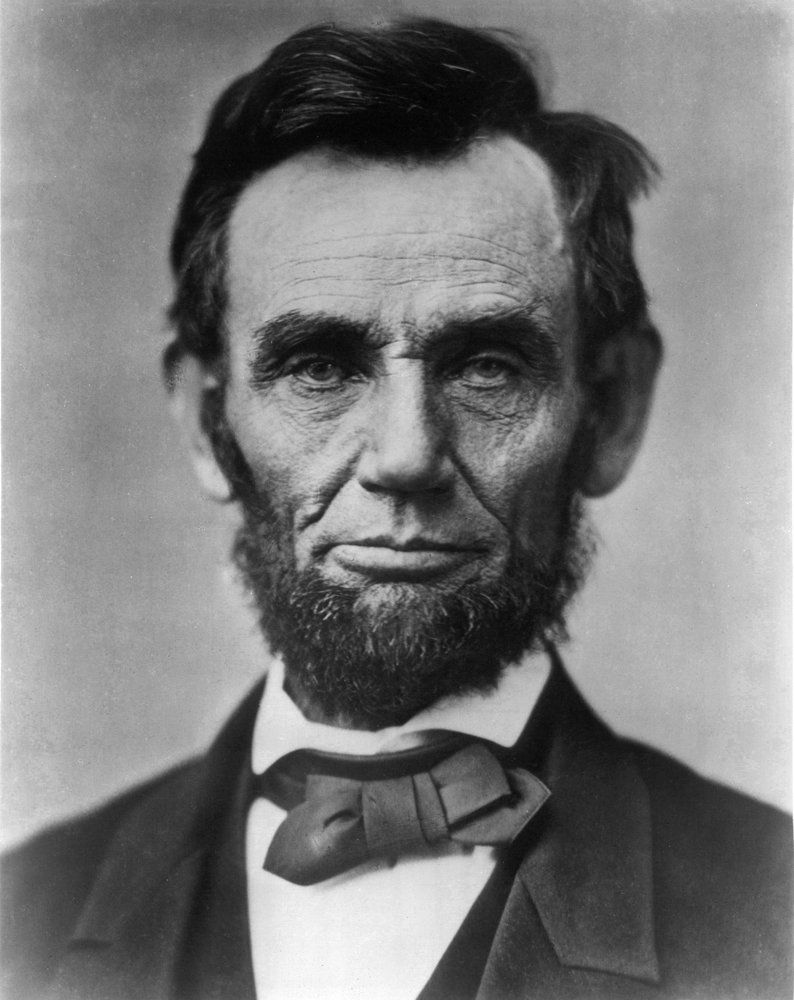
Photo: Alexander Gardner; existing digital adjustments by Scewing · Public domain. Abraham Lincoln, Alexander Gardner portrait, 8 November 1863; existing Scewing digital corrections retained; context image, not a photograph of the ranked address being delivered. Source frame and existing corrections retained; resized/recompressed without new crop, colorization or AI enhancement.
