
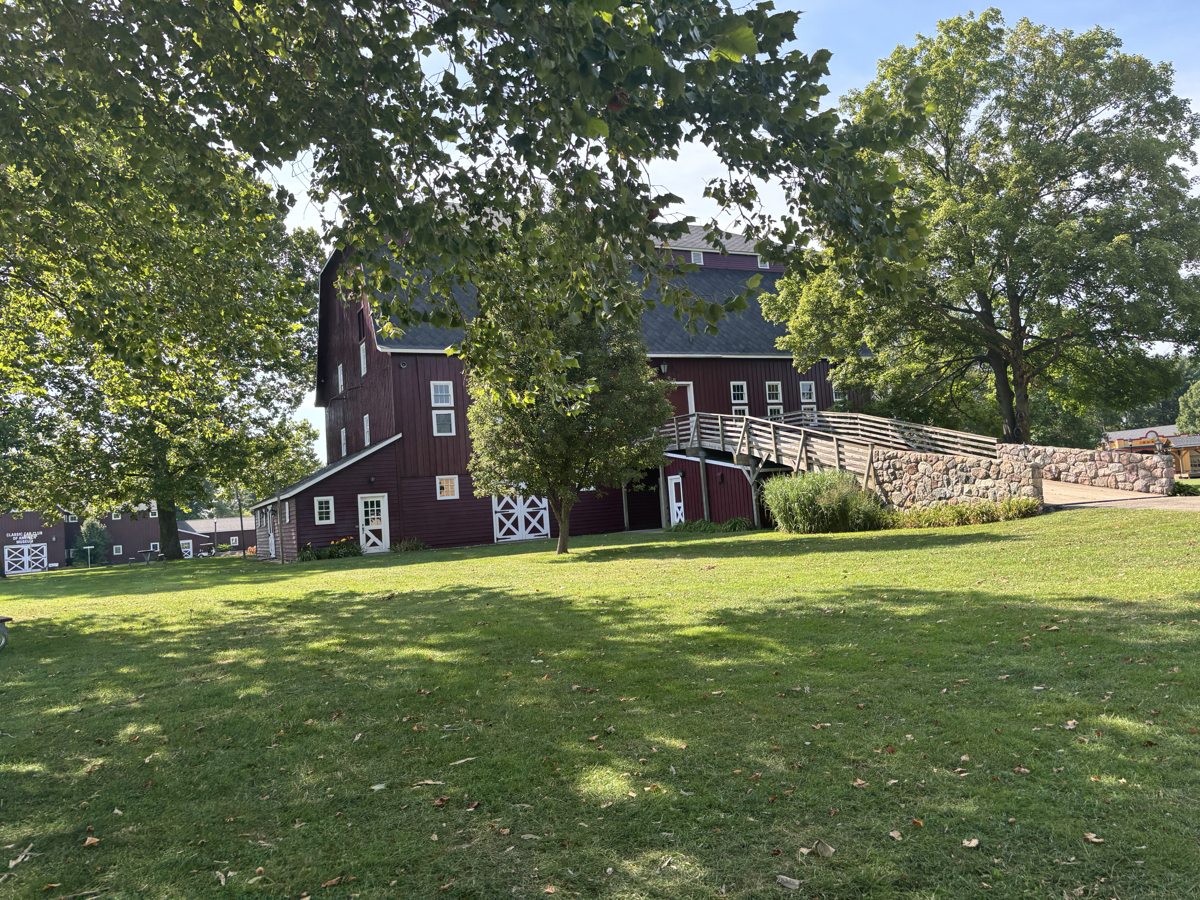
Gilmore Car Museum in Hickory Corners, Michigan, occupies eighth place because its campus encourages a different pace from a single enclosed gallery. Its official visitor pages describe permanent, seasonal and visiting exhibitions, dining options and a program of vintage rides. The attraction is the opportunity to turn automotive history into a varied day, with breaks between different kinds of display. For a group whose members tire of long rows of vehicles, that variety matters. It also creates a planning obligation: the experience depends on what is operating on the chosen date, not simply on the museum being open.
Think of the visit as a set of connected chapters. Start by deciding which aspect of car history interests the group most, and use the current exhibit information to choose a first stop. A campus can tempt visitors to rush from building to building in search of completion. A more rewarding approach gives each chapter a comparison: changes in body form, the way a marque presents its history, or how the displays explain the people who used the cars. Seeing more buildings is not necessarily the same as understanding more history. Plan time for a few objects to receive sustained attention.
What to look for and plan
The museum's visitor information identifies an authentic 1941 Silk City Diner as one of its food options. That is an opportunity to connect the vehicle with the services and social spaces that grew around motoring. A meal setting can raise questions about roadside business, leisure and the rhythm of a journey. Do not assume that the survival of a period structure means every feature around it recreates one exact historical moment. Read the interpretation for what is original, what has been relocated or adapted, and what role the setting plays in the museum's explanation. Context makes a building more than an attractive background.
Vintage Rides is described as a chance to ride with a trained museum docent. Treat it as a specific program to confirm, not as general permission to enter or operate display vehicles. Weather, season, staffing and the published program can affect what is available; the current official information should decide your expectations. The same principle applies to food service and individual campus attractions. If outdoor movement is difficult for someone in the group, ask about the practical route and facilities before travelling. A campus description cannot establish that every path, building or activity meets a particular person's needs on every date.
The ranking and alternatives
Gilmore's lower position than the more concentrated museums is a deliberate tradeoff. Its range can be excellent for an unhurried day, but a first-time visitor with only a short window may find a single clear interpretive route easier to use. Auburn delivers an unusually coherent connection between vehicles and their original commercial setting; Lane makes a sharp argument about alternative engineering solutions. Gilmore's advantage is variety and the possibility of making automotive history a shared outing. If your group values that campus experience, eighth place should not discourage you. The ranking is designed to explain choices rather than flatten different museums into interchangeable products.
Before leaving, compare the museum's treatment of the car itself with its treatment of the world around the car. Do the displays help explain how vehicles were sold, maintained, enjoyed or remembered? Which parts of that story come from an original object, and which from a recreated setting? These questions are especially useful on a campus where buildings and activities carry part of the interpretation. Confirm the season's available experiences, allow realistic time between stops and leave room for a proper break. Gilmore earns its position by offering several ways into automotive heritage, provided you shape the day around learning rather than a race to cover everything.
Source: Official museum research and visitor information 1 · Official museum research and visitor information 2.
Photo: Todd Van Hoosear · CC BY-SA 4.0. Gilmore campus at Hickory Corners, 11 August 2025. Resized/recompressed with orientation corrected; framing retained, no AI or added color treatment. Image remains under the linked original license; no endorsement.
